When we talk about cyberattacks, we used to think almost exclusively of viruses, data theft, or system outages, but today the scenario is much more complex.
Technology, and especially artificial intelligence, has opened a new dimension to digital conflict: cognitive warfare. It’s no longer just about breaking systems, but about influencing, confusing, and manipulating people’s and organizations’ perceptions.
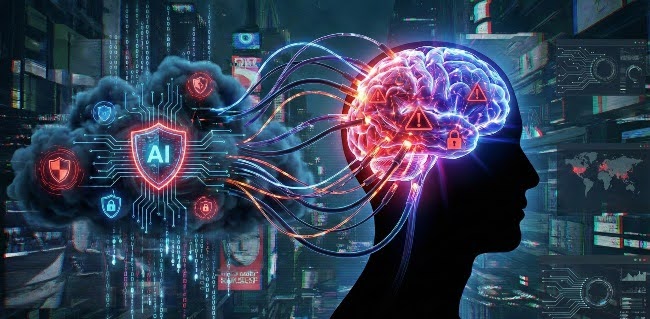
AI in cognitive warfare has become an essential concept for understanding how cyberattacks evolve and why traditional defense is no longer sufficient. Threats target not only technical infrastructure but also decision-making, reputation, and trust.
What is cognitive warfare, and why does it matter?
Cognitive warfare is a form of conflict that seeks to influence how we think, decide, and react. In the digital environment, this translates into disinformation campaigns, identity theft, narrative manipulation, and attacks aimed at eroding trust.
Unlike classic cyberattacks, the objective is not always technical.. Sometimes, all it takes is one person clicking where he shouldn’t, believing a false message, or making a bad decision under pressure.
AI in cognitive warfare amplifies this problem by enabling the automation and scaling of these attacks with a precision that did not exist before.
From systems to minds
Today, attackers no longer just look for vulnerabilities in servers or applications. They also look for human weaknesses such as lack of information, overconfidence, fatigue, urgency, and stress.
AI allows analyzing behaviors, adapting messages, and launching customized attacks in real time.. The result is a type of threat that is much harder to detect and stop.
The role of artificial intelligence in new attacks
Artificial intelligence is neither good nor bad in itself. The problem arises when it is used for malicious purposes.. In the field of AI in cognitive warfare, its use has spread rapidly.
More credible and personalized attacks
Thanks to language models and data analysis systems, attackers can create fake emails, messages, or documents that are almost indistinguishable from the real thing. This has increased the levels of phishing and spear phishing.
Large-scale disinformation
AI also facilitates the creation and mass dissemination of fake content, including manipulated news, fake social network profiles, and coordinated campaigns to damage the reputations of companies and individuals.
At this point, AI in cognitive warfare ceases to be a theoretical concept and begins to directly affect business, brand image, and the internal stability of organizations.
Why do traditional cybersecurity models fall short?
Many security strategies still rely on a reactive approach: protecting the perimeter, installing patches, and responding only after an incident occurs. The problem is that in cognitive warfare, damage often occurs before any technical alerts are triggered.
The limit of reactive safety
When an employee falls for a well-designed deception or a false narrative is spread internally, the impact can be immediate:
- Erroneous business decisions
- Loss of trust from customers and partners
- Unnecessary exposure to new threats
This is where a more advanced approach comes into play, focused on the Continuous Threat Exposure Management (CTEM).
CTEM: anticipate instead of reacting
The CTEM approach starts with a simple idea: Protection is not enough; we must continuously understand the threats we face.. This includes both technical assets and human and contextual factors.
In an environment shaped by AI in cognitive warfare, this type of management becomes especially relevant. The CTEM model
Cyber surveillance: a fundamental element in cognitive warfare
Cyber surveillance has become a fundamental tool for detecting early signs of attacks, especially those aimed at influencing or manipulating.
This is where Enthec adds value with its specialized solutions.
Kartos: cyber surveillance for companies
Kartos is geared toward organizations that need a clear, continuous view of their threat exposure. It goes beyond simply detecting technical vulnerabilities; it helps understand how and where an attack could originate, including those related to AI and cognitive warfare.
Among its capabilities are:
- Continuous monitoring of the attack surface
- Identification of emerging risks
- Support for CTEM strategies adapted to the business
This approach allows for informed decisions to be made before the problem escalates.
Qondar: protection for individuals in a hostile environment
Cognitive warfare doesn’t just affect large companies. Managers, professionals, and individual users are also common targets.
Qondar Enthec’s solution for individuals offers tools for cyber surveillance designed to protect digital identity and reduce personal exposure to increasingly sophisticated threats.
In a context where AI in cognitive warfare is infiltrating emails, social networks, and work platforms, having this type of support is no longer optional.
The human factor remains decisive
No matter how much technology is implemented, the human factor remains at the heart of the problem. The difference is that now the attacks are designed to exploit it systematically and rely on AI.
Awareness and context
It’s not just about training users, but about giving them context:
- Understanding how threats evolve
- Knowing how to identify subtle signs of manipulation
- Having systems in place to support their decisions
The combination of awareness, clear processes, and CTEM tools is the best defense against AI in cognitive warfare.
Looking to the future: a silent but constant conflict
All indications are that these types of attacks will continue to grow. Artificial intelligence will continue to evolve, and with it, manipulation and deception techniques will evolve as well.
The question is no longer whether an organization or a person will be targeted by AI in cognitive warfare, but when and with what level of preparedness.
Adopting a Continuous Threat Exposure Management approach, supported by cyber-surveillance solutions such as Kartos and Qondar, enables a shift from a defensive posture to a conscious, proactive strategy.
Understanding to better protect
Cognitive warfare has changed the rules of the game. Cyberattacks no longer just seek to exploit technical flaws, but also to influence how we think and act.. AI in cognitive warfare is a reality that affects both companies and individuals.
Given this scenario, the key lies in understanding the actual exposure to threats, anticipating them, and having tools that offer continuous visibility.
If you want to know how to reduce your exposure and prepare for this new type of attack, discover the cybersecurity solutions from Enthec and take the first step towards a more conscious and present-adapted security.