Most organizations invest in firewalls, antivirus software, and authentication systems, yet still experience incidents. The reason is usually the same: detecting a threat is not the same as stopping it, and stopping it without understanding what’s happening creates blind spots. That’s where IDS and IPS systems become essential.
This article explains what they are, how they differ, and, above all, how they fit into a security strategy that aims to go beyond reaction.
What is an IDS or an IPS, and what is it used for?
Before discussing differences, it’s important to be clear about what we’re talking about.
IDS: Detect to understand
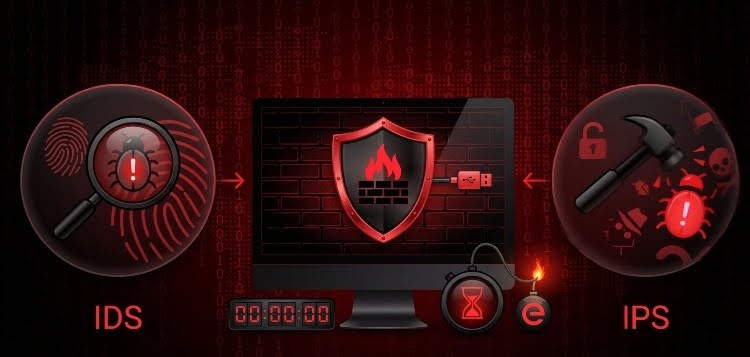
An IDS (Intrusion Detection System)
monitors network traffic or system activity for suspicious behavior or known attack patterns. When it detects something out of the ordinary, it generates an alert.
What an IDS doesn’t do is act.. It observes, records, and alerts, but it doesn’t block. This might seem like a limitation, but it makes sense: the IDS is designed to give you visibility, not to interfere with legitimate traffic.
IPS: detect to block
An IPS (Intrusion Prevention System) goes one step further.. It works similarly to an IDS, analyzing traffic and detecting threats, but it can also act automatically by blocking a connection, discarding malicious packets, or isolating a network segment before an attack materializes.
The essential difference, therefore, is the capacity for response. While the IDS reports, the IPS intervenes.
IDS vs IPS: What are the real differences?
When discussing IDS vs IPS, the comparison is often limited to “one detects and the other blocks.” But the difference is more nuanced.
Network position
The IDS is typically placed outside the main traffic flow, in passive mode. It receives a copy of the traffic (via a mirrored port, for example) and analyzes it without interfering. This makes it ideal for environments where availability is critical, and a false positive that could disrupt a legitimate connection cannot be risked.
The IPS, on the other hand, is located on the path of actual traffic.. Everything that enters or leaves passes through it. This allows it to operate in real time, but it also means that a failure or misconfiguration can degrade performance or block legitimate traffic.
False positives: the Achilles’ heel of the IPS
This is a point that deserves attention. When an IPS blocks something incorrectly, that is, generates a false positive,the consequences can be immediate, such as a transaction that isn’t processed, a user who can’t access the service, or a service that goes down. Therefore, the
quality of the signatures and the detection rules is fundamental.
A well-configured IPS can drastically reduce containment time, but only if pre-detection is reliable.
The difference between IDS and IPS is not one of hierarchy, but of function.
A common mistake is thinking that IPS is “better” than IDS because it does more things. But the difference between IDS and IPS doesn’t mean that one replaces the other.
In many mature environments, both coexist: the IDS provides visibility and historical context, while IPS handles the automated response. . They are complementary, not competing, functions.
In fact, many manufacturers offer solutions that integrate both capabilities (the so-called IDS-IPS combined systems, or IDPS), allowing the organization to configure which actions are taken automatically and which require human validation.
What limitations do IDS-IPS systems have?
Although they are valuable tools, IDS-IPS systems have limitations that should be known.
Perimeter visibility, not comprehensive
Intrusion detection systems (IDS/IPS) analyze the traffic passing through them. If the attacker is already inside the network, if the threat arrives through a poorly managed encrypted channel, or if the entry vector is an employee with compromised credentials, these systems may detect nothing.
Dependence on well-known firms
Signature-based systems only recognize threats that have already been cataloged; zero-day threats, highly customized attacks, or living-off-the-land techniques (using legitimate system tools to attack) can go unnoticed.
Absence of external vision
Neither the IDS nor the IPS analyzes what happens outside your perimeter.Leaked credentials on cybercrime forums, exposed data in public repositories, mentions of your company on the dark web, or vulnerabilities in the digital supply chain. A different approach is needed for these.
How to complement IDS-IPS systems with a CTEM strategy
This is where many organizations make the leap to a more proactive model, such as CTEM (Continuous Threat Exposure Management).
The CTEM approach does not replace IDS-IPS systems but rather integrates them into a broader cycle: identify, prioritize, validate, mobilize, and remediate exposure to threats continuously, from both internal and external perspectives.
The external cyber-surveillance layer
While an IDS-IPS monitors what happens inside the perimeter, a cyber surveillance solution monitors what happens outside, that is, what information about your organization circulates on the surface, deep, and dark web; what digital assets are exposed without your knowledge; what vulnerabilities your attack surface has that are visible from the outside.
Kartos, Enthec’s automated monitoring tool, is designed to address this layer precisely. It enables organizations to maintain continuous visibility into their external digital exposure, detect data leaks, identify compromised assets, and anticipate threats before they trigger IPS alerts.
It’s not about adding another tool. It’s about to close the blind spot that IDS-IPS systems, by their nature, cannot cover.
What should you consider when choosing or evaluating your IDS-IPS system?
If you’re reviewing your security architecture, here are some criteria worth considering:
- Behavior-based detection capability not only in terms of signatures but also for addressing unknown threats.
- Integration with your SIEM or other event correlation tools, so that alerts have context.
- False positive management, especially if you opt for an IPS in active mode.
- Encrypted traffic coverage, since a growing portion of malicious traffic travels over HTTPS.
- Complementary visibility on the external attack surface, which IDS-IPS systems do not cover on their own.
The IDS-IPS systems are a relevant component in any serious security architecture. They enable detection of anomalous activity, response to known attacks, and maintenance of an event log that facilitates forensic investigations. But they are reactive in nature.
Modern cybersecurity demands going further: continuously monitoring external exposure, understanding how attackers perceive you before they act, and managing risks with a 360-degree view.
If you want to know how Kartos can complement your security infrastructure with continuous cyber surveillance focused on CTEM, discover what Enthec can do for your organization.
Do you have questions about how these solutions fit into your specific context? Contact the Enthec team and analyze your digital exposure without obligation.