


What is a CVE?
CVE, Common Vulnerabilities, and Exposures is a list of standardized names and codes for naming information security vulnerabilities and exposures to make them publicly known.
Each vulnerability has a unique identification number, which provides a way to publicly share data and information about them.
Thus, a CVE is a standard identifier for information security vulnerabilities. In addition to the unique number, a CVE assigns a brief description to each known vulnerability to facilitate its search, analysis, and management.
CVEs aim to provide a common, unified reference for vulnerabilities so that they can be easily shared and compared across different sources of information, tools, and services. CVEs also help to improve awareness and transparency about threats to information security and foster cooperation and coordination between the different actors involved in their prevention, detection, and response.
Before delving into how the CVE system works, it is worth clarifying what a vulnerability and an exposure are.
Differences between a vulnerability and an exposure
As indicated by INCIBE, a vulnerability is a technical flaw or deficiency in a program that can allow a non-legitimate user to access information or carry out unauthorized operations remotely.
An exposure is an error that allows access or unwanted people to a system or network. Exposures can lead to data breaches, data leaks, and the sale of personally identifiable information (PII) on the dark web.
An example of a data exposure could be accidentally publishing code to a GitHub repository.

How does the CVE system work?
CVE is a security project born in 1999 focused on publicly released software, funded by the US Division of Homeland Security. The CVE Program is managed by the Software Engineering Institute of the MITRE Corporation, a non-profit organization which works in collaboration with the United States government and other partners.
CVEs are issued by the CVE Program, an international initiative that coordinates and maintains a free, public database of vulnerabilities reported by researchers, organizations and companies around the world.
CVEs can be viewed on the official CVE Program website, where you can search by number, keyword, product, supplier, or date. They can also be consulted in other secondary sources that collect and analyze CVEs, such as the National Vulnerability Database (NVD) in the United States, which provides additional information on the impact, severity and the solutions for each vulnerability.
Criteria followed by CVEs
The CVE Glossary uses the Security Content Automation Protocol (SCAP) to collect information about security vulnerabilities and exposures, catalog them according to various identifiers, and provide them with unique identifiers.
The program is a community-based cooperative project that helps discover new vulnerabilities. These are discovered, assigned and published on the lists so that they are public knowledge. It does not include technical data or information on risks, impacts and remediation.
In this way, the CVE consists of a brief description of the error and the version or component that is affected. It also tells where to find out how to fix the vulnerability or exposure.
CVEs are released once the bug has been fixed. This, by pure logic, is done to avoid exposing affected users to a risk without being able to solve it. In fact, this is one of the criteria that CVEs follow: the vulnerability can be fixed independently of other bugs or vulnerabilities.
Recognition by the software or hardware vendor is also important. Or, the whistleblower must have shared a vulnerability report that demonstrates the negative impact of the bug and that it violates the security policy of the affected system.
CVE identification
As mentioned above, the identification of CVEs is unique. This nomenclature consists of an ID and a date indicating when it was created by MITRE, followed by an individual description field and a reference field. If the vulnerability was not reported directly by MITRE, but was first mapped by an advisory group or bug tracking advisory group, the reference field will include URL links to the advisory group or bug tracker that first reported the vulnerability. Other links that may appear in this field are to product pages affected by CVE.
Kartos by Enthec helps you locate the CVEs of your organization
Kartos Corporate Threat Watchbots is the Continuous Threat Exposure Management (CTEM) platform developed by Enthec for the protection of organizations. Working in an automated, continuous and real-time manner, Kartos alerts your organization of any corporate vulnerabilities and exposures so that they can be nullified before any attack is executed through them. Simply enter the company's domain into the platform, and the Kartos bots will begin crawling the three layers of the web in search of your organization's CVEs. If you want to learn more about how Kartos can help you locate and override your organization's CVEs, do not hesitate to contact us.


How can your credit card data be stolen?
With the proliferation of online commerce, credit card data theft has become a common crime. Billions of compromised data, such as these data, passwords, and bank accounts, are bought and sold on the Dark Web, and it is estimated that up to 24 billion illegally leaked data circulate there.
Theft of credit card data in non-face-to-face transactions
In recent years, EMV systems have been implemented to prevent the physical cloning of credit cards. EMV is a payment method based on a technical standard for smart payment cards, payment terminals, and ATMs that can accept them. EMV stands for "Europay, Mastercard, and Visa," the three companies that created the standard.
That's why credit card vulnerabilities are more common during card-not-present (CNP) transactions.
Most common ways to execute the theft of credit card data.
Cybercriminals use the evolution of technology to sophisticate their attacks and execute credit card data theft in online transactions.
Phishing
Phishing is a scam in which a cybercriminal impersonates a legitimate entity (e.g., a bank, e-commerce provider, or technology company) to trick a user into entering personal data or downloading malware without realizing it.

Web Skimming
This is malicious code that is installed on e-commerce site payment pages. The code is invisible to the user and can steal compromised bank account data.
Free public WiFi Network
Cybercriminals can access a network to steal third-party credit card details as the cardholder enters them. These networks are usually free public Wi-Fi hotspots.
Data Leak
There have been leaks of compromised data from companies that have suffered an attack on database systems. This method of obtaining data is more cost-effective from the criminals' perspective, as they gain access to a large amount of data through an attack.
Qondar helps you protect your credit card data
Qondar Personal Threat Watchbots is the cyber surveillance platform developed by Enthec for the online protection of people. Among many other capabilities, Qondar automatically and continuously monitors your credit card data on the Web, Dark Web and Deep Web to detect any leaks and fraudulent online use. In addition, Qondar issues alarms in real time, in order to cancel or minimize the negative impact of the filtration of said data. If you want more information on how Qondar can help you control the fraudulent use of your credit cards, contact us.

Keys to digital security in companies
Businesses prioritizing digital security are better prepared to face cybersecurity threats and thrive in an increasingly complex digital environment.
Here's what it is and how our cyber intelligence platform for companies can help you maintain your company's digital security.
What is digital security, and why is it essential for businesses?
Digital security refers to the practices and technologies employed to protect computer systems, networks, devices, and data from unauthorized access, cyberattacks, and damage. It concerns all actors in the digital environment, people and organizations. In an organization, digital security is crucial to safeguarding sensitive information, ensuring business continuity, and maintaining the trust of customers and business partners.
Protecting sensitive information is one of the main aspects of digital security in companies. Organizations handle large volumes of data, including customer personal information, financial data, intellectual property, and other confidential and sensitive information types.
A security breach that exposes this data will likely cause devastating consequences, including significant financial losses, damage to customer reputation and trust, and legal penalties for non-compliance with data protection regulations.
Benefits of Digital Security in Business Continuity
Beyond information protection, digital security is essential because it helps prevent operational disruptions. Cyberattacks like ransomware can stop an organization's operations by blocking access to critical systems and data. This affects productivity and leads to economic losses due to the interruption of business activities. Implementing robust security measures helps minimize the risk of these attacks and ensures that the business continues to operate even amid an incident.
Customer trust and organizational reputation are also highly dependent on digital security. Consumers and business partners expect companies to protect their data adequately. Therefore, investing in digital security protects against cyber threats, strengthens the organization's position in the market, and improves customer confidence.
Another critical factor in digital security is compliance with regulations and standards. In most countries, protecting sensitive data is a business obligation established by law. As a result, European organizations are subject to strict data protection laws and regulations, such as the General Data Protection Regulation (GDPR).
Failure to comply with these regulations results in significant penalties and legal actions. Implementing proper digital security practices ensures the company complies with these regulations, avoiding fines and protecting its legal reputation.
Finally, digital security is and should be considered an investment in the company's future. As cyber threats evolve, organizations must be prepared to address new security challenges proactively. Investing in advanced security technology, training employees in secure practices, and developing robust security policies are essential steps in building a resilient security infrastructure capable of adapting to emerging threats.
Types of IT Security You Should Consider
Computer security extends through different types that have to be addressed together when establishing a strategy.
Application Security
It protects a company's software and applications, from internal programs to mobile and web-based applications. It involves performing security testing to identify and fix vulnerabilities, implementing secure development policies, and using web application firewalls (WAF) to protect against attacks such as SQL injection and cross-site scripting (XSS).
Information Security
It focuses on protecting company data, both at rest and in transit. It includes data encryption, identity and access management (IAM), and implementing data retention and deletion policies. Protecting confidential information such as customer data or intellectual property is essential to prevent theft, subsequent malicious use, and industrial espionage.
Cloud Security
With the increasing use of cloud services, cloud security has become a priority for any organization. Businesses must ensure that cloud service providers adhere to rigorous security standards and that appropriate security controls are in place to protect data stored and processed in the cloud. This includes using identity and access management tools, data encryption, and continuous monitoring of cloud activities.
Network Security
Protecting the company's network infrastructure against unauthorized access, attacks, and other threats involves firewalls, intrusion detection and prevention systems (IDS/IPS), and security solutions for wireless networks. In addition, segmenting the network to limit the scope of a potential attack and continuously monitoring network traffic for suspicious activity is essential.
Keys to establishing an effective digital security strategy
In addition to covering the different types of digital security, to ensure digital security in the company it is necessary to carry out a series of actions regularly:
Analysis of potential risks
Conducting a thorough risk analysis is the first step in establishing an effective digital security strategy. This involves identifying critical business assets, assessing potential vulnerabilities and threats, and determining the impact a security incident could have. Based on this analysis, resources and efforts can be prioritized in the most critical areas, and a risk mitigation plan can be developed.
Staff training
The human factor is often the weakest link in the security chain. Therefore, it is essential to train staff on secure practices and make them aware of cyber threats.
This includes training on identifying phishing emails, the importance of using strong passwords, and the need to report suspicious activity. A strong safety culture starts with knowledgeable and vigilant employees.

Security policies
Security policies establish the rules and guidelines employees must follow to protect company assets. These policies should cover aspects such as acceptable use of company systems, password management, handling sensitive data, and procedures to follow during a security incident.
Policies should be reviewed and updated regularly to reflect new threats and changes in the company's technology infrastructure.
Security audits
Regular security audits are essential to check the effectiveness of the digital security strategy and detect possible failures. An advanced cybersecurity solution that allows constant auditing through continuous threat monitoring is highly recommended.
Digital security and well-being in the workplace
Digital well-being in the workplace is a comprehensive concept that encompasses protecting against cyber threats and creating a healthy and safe working environment in the digital sphere.
Digital security and employee well-being are closely linked. A secure environment allows employees to work more efficiently and with less stress, which means less risk from social engineering attacks.
- Digital security in the workplace. It involves protecting the company's systems, networks, and data from cyberattacks. It includes using advanced security tools, such as firewalls, intrusion detection systems, and antivirus software, as well as implementing strict security policies. However, it is also crucial to consider the human factor in the equation. Training employees on good security practices, such as identifying phishing emails and using strong passwords, is critical to preventing security incidents.
- Digital employee well-being. This involves creating a work environment where employees can use technology safely and healthily, preventing digital burnout, promoting healthy work practices, and supporting employees in managing their digital time and resources.
- Culture of cybersecurity and digital well-being. Fostering a culture of cybersecurity and digital well-being within the organization is essential for digital security. It involves implementing policies and tools and creating an environment where employees feel supported and valued.
Cyber intelligence for digital security
Cyber intelligence is vital for companies' digital security. By collecting and analyzing threat intelligence, companies anticipate attacks, mitigate risks, and respond effectively to security incidents. Implementing cyber intelligence protects digital assets and business continuity and strengthens resilience and adaptability in the ever-changing digital landscape.
Cyber intelligence provides deep, objective, and up-to-date insight into active threats and exposed vulnerabilities. This information is crucial for making informed decisions and developing effective security strategies focused directly on the organization's vulnerabilities.
Cyber intelligence analytics involves using advanced technologies, such as machine learning and artificial intelligence, to process large volumes of data and extract accurate information about the organization's digital security status and the actions needed to protect it from ongoing threats. These analytics make it possible to identify threats in real-time and predict future malicious activity.
A crucial aspect of cyber intelligence today is that it assesses and protects against the risk of third parties, one of the threats that are becoming more important due to the inevitable digital interconnection between organizations and their value chains.
Kartos reinforces your organization's digital security strategy.
Kartos Corporate Threat Watchbots is the Cyber Intelligence platform for companies developed by Enthec. It helps your organization detect leaked and publicly exposed information in real-time.
Kartos continuously and automatically monitors the external perimeter to locate open gaps and exposed vulnerabilities in real-time, both within the organization and its value chain. Thanks to the issuance of immediate alerts, Kartos allows the organization to take the necessary remediation and protection measures to minimize or nullify the risk detected.
Contact us for more information on how Kartos can strengthen your organization's digital security.

5 tips to improve your company´s access management
Good access management is crucial to protect sensitive information, prevent security breaches, and comply with regulations to ensure business continuity.
Why is good access management crucial in your company?
Access and identity management have become a fundamental organizational pillar in today's digitalization. Who has access to what resources within the organization protects sensitive information and ensures business continuity and regulatory compliance.
Some key reasons why good access management is crucial for any organization are:
Protection of sensitive information
Sensitive information, such as financial data, intellectual property, and personal data of employees and customers, is one of an organization's most valuable assets. Proper access management ensures that only authorized people can access this information, reducing the risk of data breaches and theft.
This is especially important in finance, healthcare, and technology sectors, where data protection is critical.
Security breach prevention
Security breaches have significant negative consequences for organizations, including substantial financial losses, reputational severe damage, and legal sanctions. Effective access management helps prevent these breaches by limiting access to critical systems and data to only those who genuinely need it.
In addition, implementing measures such as multi-factor authentication or continuous monitoring allows you to detect and respond to unauthorized access attempts quickly.
Business continuity
Business continuity highly depends on the company's ability to protect its critical systems and data. Proper access management ensures that employees can access the resources they need when they need them to perform their jobs safely and efficiently, even in emergencies.
This minimizes downtime and ensures that the company continues to operate without interruption.
Reduction of internal risks
Not all security risks come from the outside; employees can also pose a threat, either intentionally or accidentally. Effective access management helps mitigate these risks by limiting access to data and systems to those employees who really need it to do their jobs.
In addition, implementing identity and access management (IAM) policies and conducting regular audits can identify and remediate potential internal vulnerabilities.

5 keys to improve your company's Access Management
Access management is a corporate activity that must be constantly updated and reviewed to incorporate the most advanced procedures and tools.
Today, following these five steps is crucial in ensuring good identity and access management in your organization:
Use multi-factor authentication
Multi-factor authentication (MFA) is one of the most effective measures to protect access to company systems. MFA requires users to provide two or more verification forms before accessing a resource. This can include something the user knows (such as a password), something the user has (such as a security token), or something the user owns (such as a fingerprint). Implementing MFA significantly reduces the risk of unauthorized access, because even if one password is compromised, attackers will still need to get through the other layers of security.
In addition, MFA can be adapted to different levels of security depending on the sensitivity of the data or systems being accessed. For example, more authentication factors may be required to access highly sensitive information. It's also essential to educate employees about the importance of MFA and how to use it correctly to maximize its effectiveness.
Implement a robust identity and access management policy
A well-defined identity and access management (IAM) policy ensures that only the right people can access the right resources at the right time. This policy should include procedures for creating, modifying, and deleting user accounts and assigning roles and permissions. In addition, regular cybersecurity audits are essential to ensure that policies are being followed and that there is no unnecessary or dangerous access.
The IAM policy should be clear and understandable to all employees. It should also be reviewed and updated regularly to accommodate company structure changes and security threats. Integrating IAM with other security solutions, such as multi-factor authentication and continuous monitoring, is crucial to creating a cohesive and robust security approach
Discover cyber intelligence applied to access management
Cyber intelligence provides valuable insights into threats and vulnerabilities that could impact a company's access management. Using cyber intelligence tools makes it possible to identify suspicious patterns of behavior, locate open breaches and exposed vulnerabilities that affect access, such as compromised credentials, and respond quickly to potential security incidents. Cyber intelligence helps predict and prevent attacks before they occur, thereby improving the company's security posture.
Implementing cyber intelligence involves using advanced technologies such as big data analytics, machine learning, and artificial intelligence to analyze large volumes of data and detect threats in real-time. It is also important to collaborate with other organizations and share threat intelligence to improve the ability to respond to and defend against cyberattacks.
Perform continuous automation and monitoring
Automating access management processes improves efficiency and reduces the risk of human error. Automation tools can manage tasks such as provisioning and deleting user accounts, assigning permissions, and performing audits. In addition, continuous access monitoring allows detecting and responding to suspicious activity in real-time. Implementing monitoring and automation solutions ensures that access management is proactive rather than reactive.
Continuous monitoring should include monitoring all access to critical systems and data, identifying anomalous behavior patterns that may indicate an unauthorized access attempt, and detecting compromised credentials. Automatic alerts and detailed reports help security teams quickly respond to incidents and take preventative action to prevent future attacks.
Encourage good security practices
Educating and raising employees' awareness of good security practices is critical to effective identity and access management. This includes creating strong passwords, identifying phishing emails, and not sharing credentials. Conducting regular training and attack simulations helps keep employees aware, alert, and prepared to deal with potential threats.
In addition, it is crucial to foster a culture of cybersecurity within the company, where all employees understand their responsibility to protect the organization's data and systems. This should include implementing clear security policies, promoting open communication about potential threats, and, as a complement, rewarding safe behaviors.
Benefits of optimized access management
The main benefit of optimized access management is its contribution to business continuity and success.
In addition, and reinforcing the previous one, we find other benefits such as:
Increased protection of sensitive information
Streamlined access management ensures that only authorized individuals can access sensitive company information. This reduces the risk of data breaches and protects intellectual property and other valuable assets. In addition, good access management prevents unauthorized access to critical systems, minimizing the impact of potential security incidents.
Increased operational efficiency
Implementing efficient access management improves employee productivity by ensuring they have fast and secure access to the resources they need to do their jobs at the exact time they need them. Automating processes such as provisioning and deleting user accounts and assigning permissions reduces administrative burdens and allows IT teams to focus on more strategic tasks. This, in turn, leads to higher productivity and better resource use.
Improved Regulatory Compliance
National regulations and international standards, such as the General Data Protection Regulation (GDPR) in Europe, the Health Insurance Portability and Accountability Act (HIPAA) in the United States, or ISO 27001, require companies to implement appropriate access controls to protect sensitive information. Good access management helps to comply with these requirements, avoiding possible sanctions and fines. In addition, strict regulatory compliance strengthens the company's reputation and increases the trust of customers and business partners.

Discover how Kartos by Enthec can strengthen your organization's identity and access management
Kartos Corporate Threat Watchbots, the threat monitoring platform developed by Enthec, allows the organization to monitor beyond its IT perimeter to locate member credentials leaked and open security breaches that may compromise identity and access management.
Kartos by Enthec locates and transfers to the organization the corporate passwords that are exposed to the reach of any cybercriminal on the web, the deep web, and the dark web so that they can proceed to cancel them. In addition, it provides details about the possible security breaches that caused such a leak.
Do not hesitate to contact us to learn more about how Kartos by Enthec can help you strengthen your organization's identity and access management.
What is Spear Phishing: 5 keys to protect your business
What is Spear Phishing: 5 keys to protect your business
Spear phishing is a highly targeted form of cyber-attack executed through personalised emails or messages to deceive specific individuals, characteristics that make it very dangerous and effective.
What is spear phishing?
Spear phishing is defined as a cyber attack technique that focuses on specific targets, as opposed to traditional phishing that targets a broad audience. In a spear phishing attack, cybercriminals research and collect information about their victims to create personalised and convincing messages. These messages often appear legitimate and may include details such as names, job titles, and professional relationships, which increases the likelihood that the victim will fall for the scam. The main goal of spear phishing is to trick the victim into revealing confidential information, such as passwords, banking details or sensitive corporate information. Attackers can use this information to commit fraud, steal identities or infiltrate corporate networks.
What is the difference between phishing and spear phishing?
Phishing and spear phishing are cyber-attack techniques that seek to trick victims into revealing sensitive information, but differ in their approach and execution.
Phishing is a massive and widespread attack. Cybercriminals send emails or messages to a large number of people, hoping that some will fall for it. These messages often look legitimate and may include links to fake websites that mimic real ones. The aim is to obtain information such as passwords, credit card numbers or personal data. Due to their mass nature, phishing messages are often less personalised and easier to detect. Spear phishing, on the other hand, is a targeted and personalised attack. Attackers research their victims and collect specific information about them, such as names, job titles, and professional relationships. They use this information to create highly personalised messages that appear to come from trusted sources. Because of their level of personalisation, spear phishing attacks are harder to detect and have a higher success rate. The goal is the same - to obtain sensitive information - but the approach is much more sophisticated and targeted. If you want to find out more about phishing techniques, click here→ Phishing: what it is and how many types there are.
How spear phishing attacks work
Due to their high level of customisation, spear phishing attacks take a long time to prepare and involve the attackers' actions of recognising and searching for exposed sensitive information. The preparation and execution phases of a spear phishing attack typically include:
Choice of target
Targeting is the first step in this type of attack. Attackers carefully select their victims based on their position, access to sensitive information or influence within an organisation. To choose a target, attackers conduct extensive research using various sources of information, such as social networks, corporate websites and public databases. Depending on the attacker's desired outcome, the target can be a senior manager of an organisation or a person with significant wealth, but also an employee with sufficient leverage to provide certain keys or carry out a specific action.
Target research
Once the target has been selected, the attackers then set about gathering detailed information about the victim in order to increase the likelihood of the attack's success. This research phase involves the use of various techniques and sources of information. Attackers usually start by searching for publicly available information on social networks, corporate websites and public databases. They analyse profiles on LinkedIn, Facebook, Twitter and other platforms to obtain data on the victim's professional and personal life. They may also review press releases, news articles and blogs to obtain more context about the organisation and the victim's role within it. Once this information is obtained, attackers enter the rest of the layers of the web, the deep web and the dark web, in search of leaked and exposed sensitive information about the victim or the organisation to which he or she belongs. This type of information, as it is not public and the victim is unaware of its exposure, is the most effective for the success of the attack. In addition, attackers can use social engineering techniques to obtain additional information. This includes sending test emails or making phone calls to collect specific data without arousing suspicion. This information obtained includes details about the victim's contacts, communication habits, personal and professional interests and is used by attackers to personalise the attack.
Creating and sending the message
Creating and sending the message is the final step in a spear phishing attack. Once the attackers have selected and studied their target, they use the information gathered to craft a highly personalised and convincing message. This message is designed to appear legitimate and relevant to the victim, thus increasing the likelihood that they will fall for it. The message can take various forms, such as an email, text message or social media communication. Attackers mimic the communication style of a person or entity trusted by the victim, such as a colleague, a superior or a financial institution. The content of the message may include malicious links, infected attachments, or requests for confidential information or specific actions. To increase the credibility of the message, attackers may use spoofing techniques to make the sender appear legitimate. They also often use urgency or scare tactics to pressure the victim to act quickly without much thought or analysis. Once the message is ready, the attackers send it to the victim with the intention that the victim will open it and follow the instructions provided. If the victim falls into the trap, they may reveal sensitive information, such as login credentials, or download malware that compromises their device and the organisation's network.
Keys to preventing spear phishing cyber attacks
To prevent a spear phishing cyber-attack, the keys cover a wide field ranging from the organisation's strategy to the analytical attitude of the individual.
Avoid suspicious links and files
One of the main tactics used in spear phishing is sending emails with malicious links or attachments. These links may redirect to fake websites designed to steal login credentials, while the attachments may contain malware that infects the victim's device. To protect yourself, it is crucial to be cautious when receiving unsolicited emails, especially those containing links or attachments. Before clicking on a link, it is advisable to verify the URL by hovering over the link to ensure that it leads to a legitimate website. In addition, it is important not to download or open attachments from unknown or suspicious senders.
Keeping software up to date
Cybercriminals often exploit vulnerabilities in software to carry out their attacks. These vulnerabilities are bugs or weaknesses in code that can be exploited to gain access to sensitive systems and data. When software developers discover these vulnerabilities, they often release updates or patches to fix them. If software is not updated regularly, these vulnerabilities remain open and can be exploited by attackers. Therefore, keeping software up to date is crucial to close these security gaps. Furthermore, software updates not only fix vulnerabilities, but also improve system functionality and performance, providing a more secure and efficient user experience. This includes operating systems, web browsers, applications and security software. To ensure that software is always up to date, it is advisable to enable automatic updates whenever possible. It is also important to watch for update notifications and apply them immediately.

Cybersecurity training
Spear phishing is based on social engineering, where attackers trick victims into revealing sensitive information. Cybersecurity education and awareness helps individuals and organisations to recognise and avoid these fraud attempts. Proper cybersecurity training teaches users how to identify suspicious emails, malicious links and dangerous attachments. It also provides them with the necessary tools to verify the authenticity of communications and avoid falling into common traps. In addition, cybersecurity training fosters a culture of security within organisations. Well-informed employees are more likely to follow security best practices, such as using strong passwords, enabling two-factor authentication and regularly updating software. This significantly reduces the risk of a successful spear phishing attack.
Contact cyber-security and cyber-intelligence experts
Cybersecurity and cyber intelligence professionals have the knowledge and experience to identify and mitigate threats before they cause harm. By working with experts, organizations can benefit from a thorough assessment of their security systems and receive personalized recommendations to strengthen their defenses.
In addition, these professionals are aware of the latest cybersecurity trends and the tactics used by cybercriminals, allowing them to anticipate and neutralize potential attacks.
On the other hand, cyber intelligence experts specialize in data analysis and identifying suspicious patterns. They can monitor networks for unusual activity and provide early warnings about potential threats. Their ability to analyze large volumes of information and detect anomalous behavior and open security breaches is crucial to preventing spear phishing attacks.
You may be interested in→ Keys to preventing a data leak.
Establishing a proactive cyber security strategy
A proactive cyber security strategy involves anticipating threats and taking preventive measures before security incidents occur. This not only reduces the risk of successful attacks, but also minimises the impact of any intrusion attempts. The proactive security strategy starts with a comprehensive risk assessment to identify potential vulnerabilities in the organisation's systems and processes. Based on this assessment, appropriate security measures can be implemented. In addition, it is essential to establish clear policies and procedures for information security management. Finally, it is essential to continuously monitor the attack surface, both internally and externally, for suspicious activities, open breaches and exposed vulnerabilities.
Translated with DeepL.com (free version)
Relevant examples of spear phishing
There are numerous examples of spear phishing attacks in Spain and the rest of the world, demonstrating the proliferation of the technique.
Some highlights include:
- Santander Bank (2020). Victims received emails that appeared to be from the bank, asking them to update their security information. This led several customers to reveal their banking credentials.
- UK universities (2020). The attackers sent emails to students and staff at several UK universities, posing as the university's IT department and asking them to update their passwords. Several university accounts were compromised following the attack.
- Hillary Clinton presidential campaign (2016). John Podesta was Hillary Clinton's campaign manager when he was the victim of a spear phishing attack. After receiving an email that appeared to come from Google, and following the procedure it instructed him to do, he changed his password on the platform. This allowed hackers to access his emails, which were then leaked.
- Technology companies in Germany (2019). Attackers sent a group of German technology companies emails that appeared to come from IT service providers. In these emails, employees were asked to download important software updates, which led to the installation of malware on the companies' systems.
Enthec helps you to protect your organisation against spear phishing
Through its automated and continuous monitoring technology of the web, deep web, dark web, social networks and forums, Enthec helps organisations and individuals to locate leaked and exposed information within the reach of cybercriminals, to neutralise spear phishing attacks, implementing a proactive protection strategy. If you need to know more about how Enthec can help you protect your organisation and its employees against spear phishing, do not hesitate to contact us.
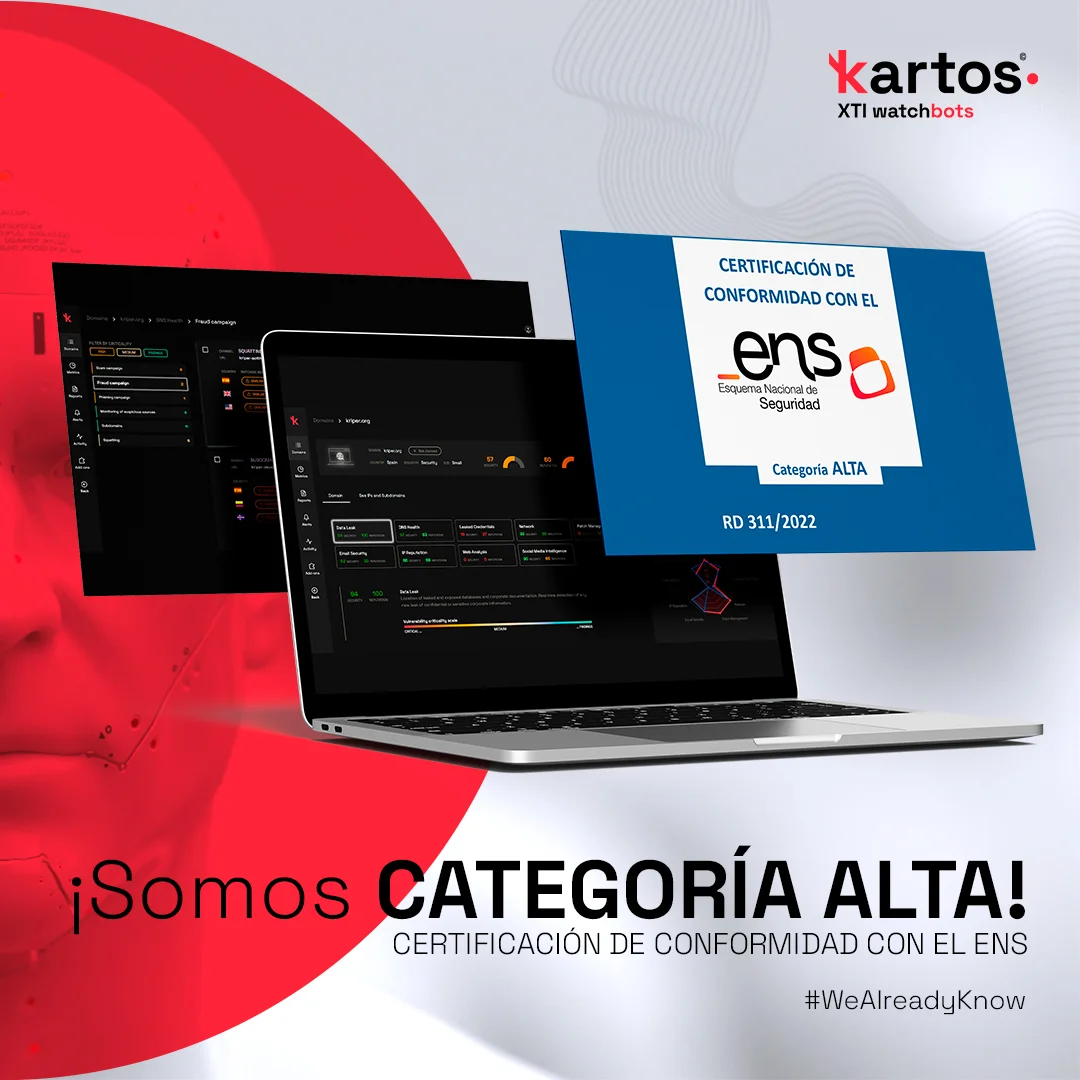
Enthec Solutions obtains ENS high level certification

Enthec Solutions obtains ENS high level certification
With great satisfaction, we are pleased to announce that Enthec Solutions has just successfully completed the certification process of its Cybersecurity Services in the National Security Scheme (ENS) with high level.
Since its inception, Enthec has been committed to an unwavering commitment to the security of our customers, as the basis of trust in the business relationship. This commitment translates into absolute control over the development and operation of our solutions. Our entire offer is made up of cybersecurity solutions that use technology developed entirely by our team and without back doors, as they do not depend at any time on third parties. This characteristic makes us unique in the cybersecurity software development sector. Now, in addition to this internal control of the development and operation of our solutions, we add other external controls that guarantee the security of our products and processes, with the achievement of prestigious security certifications such as ENS high level and ISO 27001, in whose certification process we are already immersed. In this way, we continue to reinforce our commitment to the security of our customers, both from our offer of solutions to complete their cybersecurity strategy and from our own internal corporate structure.


Relevance of perimeter cyber security for your business

Relevance of perimeter cyber security for your business
The concept of an organisation's cyber-security perimeter is bound to expand to adapt to the increasing sophistication of cyber-attacks to encompass the external surface of the organisation as well.
What is perimeter security in cyber security?
In cyber security, perimeter security refers to the measures and technologies implemented to protect the boundaries of an organisation's internal network. Its main objective is to prevent unauthorised access and external threats by ensuring that only legitimate users and devices can access the network. Perimeter security is crucial because it acts as the first line of defence against cyber-attacks, acting as a barrier. By protecting the entry and exit points of the network, it reduces the risk of external threats compromising the integrity, confidentiality and availability of data. Key components of perimeter security in cyber security include:
- Firewalls: act as a barrier between the internal and external network, filtering traffic based on predefined rules.
- Intrusion Detection and Prevention Systems (IDS/IPS): monitor network traffic for suspicious activity and have the capability to take action to block attacks if necessary.
- Virtual Private Networks (VPNs): allow secure and encrypted connections between remote users and the internal network. With the implementation of remote working, the use of VPNs in the enterprise has become widespread.
- Web security gateways: filter web traffic to block malicious content and unauthorised sites.
- Authentication and access control systems: verify the identity of users and control which resources they can access.
With the rise of remote working, the sophistication of attacks and the adoption of cloud technologies, perimeter security has evolved. Networks no longer have clearly defined boundaries, which has led to the development of approaches such as Zero Trust, where it is assumed that no entity, internal or external, is trusted by default, or concepts such as extended perimeter cybersecurity, which extends surveillance to the external perimeter of an organisation. If you want to keep up to date→ 5 cybersecurity trends you need to know about.
Network Perimeter Security Guidelines
In order to achieve effective network perimeter security, it is necessary for the organisation to follow, as a minimum, the following guidelines:
Authentication
Authentication ensures that only authorised users and devices can access network resources. It involves verifying the identity of users before allowing them access, which helps to prevent unauthorised access and potential threats. Different authentication methods include:
- Passwords. The most common method, but can be vulnerable if strong and unique passwords are not used or not stored securely.
- Two-factor authentication (2FA). It adds an additional layer of security by requiring a second factor, such as a code sent to the user's mobile phone.
- Biometric authentication. It uses unique physical characteristics, such as fingerprints or facial recognition, to verify the user's identity.
- Digital certificates. Used primarily in enterprise environments, these certificates provide a secure and official way to authenticate devices and users.
It is imperative that the organisation implements strong password policies, enforcing that they are complex and regularly changed, and that it is accountable for ensuring that these policies are known and followed. In addition, it is important that access attempts are monitored to detect and respond to suspicious or failed access attempts.

Integrated security solutions
Integrated security solutions are essential in network perimeter security by combining multiple technologies and tools into a single platform to provide more comprehensive and efficient protection. They enable organisations to manage and coordinate multiple security measures from a single point, making it easier to detect and respond to threats. Integrated solutions are recommended because they improve an organisation's operational efficiency by centralising security management and reducing complexity. They also provide a unified view of network security, making it easier to identify and respond to threats. They are also scalable, allowing organisations to adapt to new threats and security requirements without the need to deploy multiple standalone solutions. Integrated security solutions include:
- Next generation firewalls (NGFWs): offer advanced traffic filtering, deep packet inspection and intrusion prevention capabilities.
- Intrusion Detection and Prevention Systems (IDS/IPS): monitor network traffic for suspicious activity and can block attacks in real time.
- Web and email security gateways: protect against web and email-based threats such as malware and phishing.
- Security information and event management (SIEM) systems: collect and analyse security data from multiple sources to identify patterns and alert on potential incidents.
- Virtual Private Networks (VPNs): provide secure, encrypted connections for remote users.
For a correct integration of the solutions, it is advisable to carry out a gradual implementation, to minimise interruptions, to provide continuous training on the tools to the responsible personnel and to keep the solutions updated and monitored.
Shared security
Shared security is a collaborative approach to network perimeter security that has gained momentum since the expansion of cloud services. It involves cooperation between different entities, such as service providers, customers and partners, to protect the network infrastructure. This model recognises that security is a joint responsibility and that each party has a crucial role in protecting data and resources. The main characteristics of shared security are:
- Mutual responsibility: Both service providers and customers have specific responsibilities for network security. For example, providers may be responsible for physical and infrastructure security, while customers must manage the security of their applications and data.
- Transparency and communication: open and transparent communication between all parties involved is essential to effectively identify and mitigate potential threats.
- Common policies and procedures: Establishing security policies and procedures that are consistent and understood by all parties helps to ensure a coordinated response to security incidents.
For security sharing to be truly effective, the responsibilities of each party involved need to be clearly defined and delineated. In addition, communication channels must be established to allow for the rapid and continuous exchange of information on threats and best practices. Regular audits periodically assess the effectiveness of security measures and adjustments can be made as necessary.
Limitations of perimeter cyber security
As technologies have evolved, the original strict concept of perimeter security limited to the internal environment has presented some important limitations that affect its effectiveness in protecting organisations, such as:
Third-party risk
One of the biggest challenges for perimeter security is third party risk. This risk arises when external organisations, such as suppliers, partners or contractors, have access, for operational reasons, to a company's internal network. Third parties are a weak point in perimeter security as they often have different security standards and policies than the host organisation, which can lead to vulnerabilities. Cybercriminals can use these third-party vulnerabilities as a gateway to access the internal network. For example, a vendor with compromised credentials can be used to launch an attack. In addition, third-party management is complex and difficult to monitor. Organisations often have multiple vendors and partners, which increases the attack surface. The lack of visibility and control over the actual and updated cybersecurity status of these third parties ends up becoming an organisational vulnerability. Access our publication→ Third-party risk for organisations.
Complexity of IT systems
The complexity of IT systems is another important limitation of perimeter security. Modern IT systems are composed of a multitude of interconnected components, such as servers, network devices, applications and databases. This interconnectedness creates a large and difficult to protect attack surface. One of the challenges of complexity is managing multiple technologies and platforms. Each component may have its own vulnerabilities and require different security measures. In addition, integrating legacy systems with new technologies can lead to incompatibilities and security gaps. Complexity also makes visibility and control difficult. With so many and varied components and connections, it is difficult to have a complete view of the network and to detect suspicious activities. A relevant aspect of this complexity is patch and update management. Keeping all components up to date and protected against known vulnerabilities becomes an arduous task. Lack of updates leaves open doors for attackers.
Sophistication of cyber-attacks
Attackers are using increasingly advanced and complex techniques to evade traditional defences and penetrate corporate networks.
One of the key factors is the use of automated tools and artificial intelligence by attackers. These tools can scan networks for vulnerabilities, launch coordinated attacks and adapt in real time to the defences in place. The proliferation of targeted attacks, known as zero-day attacks, exploit unknown vulnerabilities in software. These attacks are difficult to detect and mitigate, as there are no patches available for the exploited vulnerabilities. In addition, attackers are employing more elaborate social engineering techniques to trick users into gaining access to sensitive information. In this respect, people are the weakest link in an organisation's cyber security chain. When an attacker manages to trick the user himself into providing his personal credentials, for example, there is no perimeter security system capable of preventing the intrusion. Read our publication→ How to protect yourself amid a wave of cyber attacks on businesses.

Cost of perimeter armouring
The high cost of perimeter armour is a significant constraint to its proper design. Implementing and maintaining perimeter security measures is extremely costly, especially for organisations with large and complex networks. These costs include the acquisition of security hardware and software, the hiring of specialised personnel, and regular security audits and assessments. One of the most significant challenges is that threats are constantly evolving, requiring continuous upgrades and enhancements to perimeter defences. This can result in a never-ending cycle of expense, as organisations must constantly invest in new technologies and solutions to keep up with the latest threats. Furthermore, the cost of perimeter security is not just limited to the purchase of equipment and software. It also includes the time and resources required to manage and maintain these solutions. Staff training, implementation of security policies and incident response also contribute to the total cost.
Extended cyber security as an enhancement to perimeter cyber security
External perimeter security in organisational cyber security, also known as extended perimeter security, is a strategy that goes beyond traditional defences to protect digital assets in an increasingly interconnected environment. This strategy recognises that threats can originate both inside and outside the corporate network and seeks to nullify or proactively mitigate risks with security before they reach the corporate perimeter security barrier. One of the key benefits of extended cyber security is the ability to monitor and protect external access points, such as VPN connections and mobile devices. This is especially important in a world where remote working and mobility are increasingly common. Extended cyber security also includes the protection of cloud services. With the increased use of cloud-based applications and services, it is crucial to ensure that these environments are protected against unauthorised access and vulnerabilities. This can be achieved by implementing robust access controls, data encryption and continuous monitoring of cloud activity. Among all the advantages of extended cyber security is the ability to detect ongoing threats at the external perimeter of the organisation in an automated, continuous and real-time manner through Cyber Intelligence solutions. Within these solutions, the most evolved ones also include third party risk management. Cyber Intelligence solutions use advanced technologies, such as artificial intelligence and machine learning, to monitor the web, deep web, dark web and social networks for leaked corporate information, open breaches and exposed vulnerabilities and analyse large volumes of data. This enables a fast and effective response to security incidents, nullifying or minimising the potential impact on the organisation's systems.
Extends corporate perimeter cyber security strategy with Kartos by Enthec
Kartos XTI Watchbots is the Cyber Intelligence platform developed by Enthec to extend the security perimeter controlled by organizations.
By simply entering the organization's domain, Kartos provides real-time information on exposed vulnerabilities and open breaches in nine threat categories outside its IT perimeter.
In addition, Kartos by Enthec allows organizations to continuously and automatically control third-party risk, providing real-time data.
If you want to learn more about extended cybersecurity, download our whitepaper, Extended Cybersecurity: When Strategy Builds the Concept.
Contact us for more information on how Kartos can extend your organization's perimeter security strategy.
How to protect yourself amid a wave of cyber-attacks on businesses
Recent waves of next-generation cyberattacks on large organizations have shaken the business world, exposing vulnerabilities and challenging information security.
The reality of recent next-generation cyberattacks
The information on the recent waves of cyberattacks on companies in Spain and worldwide is alarming.
At the end of 2023, 73% of companies worldwide reported a fear of receiving a cyberattack in the following year, an increase of 8% compared to the previous year.
The outlook in Spain is also worrying, as 94% of companies have suffered a cybersecurity incident in the last year. Already in 2022, Spain ranked third globally in terms of cyberattacks.
Recent next-generation cyberattacks are sophisticated, targeted, and persistent. They use advanced techniques to bypass traditional security systems and cause significant damage.
These attacks are not limited to small and medium-sized companies with less protection capacity, but large organizations are also proving to be vulnerable targets.
Attackers use techniques such as targeted phishing, ransomware, and brute force attacks to penetrate enterprise networks, as well as zero-day vulnerabilities and security flaws unknown to the public and the software manufacturer.
These techniques are effective because they use the latest technologies, such as Artificial Intelligence or machine learning, in the design and execution of cyberattacks.
The impact of these recent cyberattacks is not limited to the short term and, sometimes, endangers the business's survival in the medium term. Immediate damage includes loss of sensitive data, disruption of business operations and services, damage to the company's reputation, and the cost of recovery.

Sectors most affected by the waves of cyberattacks on companies
In Spain, according to data provided by INCIBE, in 2023 the sectors most affected by cyberattacks were:
- Industrial sector: Spain is the fourth country in Europe with the most cyberattacks against the industrial sector, and attacks are expected to continue increasing and affecting new subsectors such as agriculture or livestock in their most digitized production phases.
- Healthcare sector: According to ENISA data, Spain ranks second in episodes of cybersecurity attacks in the healthcare sector in Europe, with 25 incidents recorded between 2021 and 2023.
- Financial sector: The financial sector maintained 25% of cyberattacks recorded in 2022 and 2023, which is a stable trend compared to other sectors.
- Transportation sector: This sector has also accumulated more than 25% of cyberattacks in 2023.
- Energy sector: the energy sector has exceeded 22% of cyberattacks in 2023, making it a sector in the spotlight due to the importance of its services.
- Insurance sector: The insurance sector is another sector most affected by cyberattacks. Last year, 94% of Spanish insurance companies suffered at least one serious cybersecurity incident.
- Telecommunications and technology: 18.3% of the incidents managed in 2023 were related to this sector.
- Public Administrations: Public Administrations are in the crosshairs of cybercrime due to the large amount of sensitive data they handle and their importance in the hectic global socio-political environment.
- SMBs: SMBs continue to register a significant number of cyberattacks, and their strategy is based on the cumulative benefit of the success of a large number of lower-yielding attacks.
These data do not differ much from those provided by ENISA for the European Union. The increase in cyberattacks on the European financial sector and the health sector so far this year is noteworthy.
Why are there more and more cases of successful cyberattacks on companies?
The frequency of different types of cyberattacks worldwide has increased significantly in recent years.
Specifically, in Spain, according to the 2023 Annual National Security Report, CCN-CERT managed 107,777 incidents, Incibe, 83,517 incidents, and ESDF-CERT, 1,480 incidents in 2023. This represents a significant increase compared to previous years. In 2018, INCIBE reported 102,414 incidents, representing a 15% increase in the frequency of cyberattacks on companies in just five years.
Among the main causes of the success of the recent waves of cyberattacks are:
- Lack of risk perception. Many companies, especially small and medium-sized ones, do not have a clear perception of the risks they run and do not bother to adopt a true cybersecurity strategy.
- Vulnerabilities in hardware and software. Devices used by employees and systems critical to the operation of companies are vulnerable to attacks and are the main point of entry in 18% of cases.
- Cybersecurity culture. The lack of a cybersecurity culture among workers and collaborators leads to errors and vulnerabilities that cybercriminals can exploit. Keeping staff and collaborators up to date with the latest developments and trends in cybersecurity means reducing the chances of success of social engineering techniques and reinforcing the protection of systems.
- Lack of proactive approach to cybersecurity. Data stolen in cyberattacks or leaked by security breaches often ends up on black markets, on the Dark Web, or the Deep Web, where it is sold to other criminals for various illicit purposes, such as designing new cyberattacks. Implementing a proactive approach to corporate cybersecurity allows you to locate data and breaches before they can be used to attack the organization
- Operations by notoriety. Cybercriminal groups operate by notoriety and feed off each other with increasingly complicated challenges to expose the security of large organizations. The increase in cyberattacks is driven by the growing notoriety of attacks and feedback among cybercriminals. This has led to an increased frequency and severity of recent cyberattacks and the peculiarity that they are executed in what appear to be planned waves.
The lack of investment in cybersecurity
Of all the causes of the success of recent cyberattacks on any company, one triggers the rest and forms the basis of this: companies lack a real and solid culture of investment in cybersecurity.
Corporate cybersecurity strategies and tools require planned and continuous investment that responds to the objectives of permanent updating and incorporation of the latest technologies and the most evolved solutions.
To prevent attacks from succeeding, it is urgent that organizations incorporate into their investment culture the idea that they must be one step ahead of cybercriminals in technological updating and evolution as a foundation for business continuity and growth.
It is enough to compare what an organization may consider a high expenditure on cybersecurity with the value of its databases, industrial and intellectual properties, liquid assets, products and services, brand, the trust of customers, partners and investors, or the cost of an erroneous risk calculation, among other things, to visualize that it constitutes a profitable investment in the business.
In the current scenario, providing the corporate cybersecurity strategy with the most advanced technologies is not an option for organizations, but a necessity.
Cybercriminals quickly incorporate every technological innovation into the design and execution of their cyberattacks. Combating this growing and limitless sophistication with outdated tools or solutions not based on the latest technologies is impossible.

Actions to prevent cyberattacks on companies
Protecting yourself to avoid cyberattacks or minimising their consequences involves changing the traditional approach to cybersecurity and adopting one that goes beyond barrier protection with strategies such as:
Proactive Cybersecurity
In today's increasingly sophisticated cyberattack scenario, staying one step ahead is the only way to prevent them.
A proactive approach to cybersecurity involves anticipating threats before they occur. Instead of reacting to security incidents after they happen, a proactive approach seeks to prevent them.
This includes identifying system vulnerabilities in cybersecurity, implementing preventative measures, and ongoing staff training. Therefore, it involves using advanced technologies such as artificial intelligence to detect anomalous patterns, conducting penetration tests to discover weaknesses, and creating an incident response plan.
A proactive approach also involves keeping up with the latest trends and threats in cybersecurity and constant commitment from the organization to protecting its digital assets.
Third-party risk management
Due to the current scenario of interconnection between companies, a corporate cybersecurity strategy that does not include its third parties in the monitored and controlled attack surface is a failed strategy. Third-party risk management ensures that relationships with third parties do not compromise the organization's security.
This third-party risk management involves assessing and mitigating the risks associated with interacting with suppliers, partners, and other third parties. It includes access to sensitive data, systems integration, and reliance on critical services.
Organizations should conduct security audits, review third-party cybersecurity policies, and establish service-level agreements. However, it is crucial that the organization has state-of-the-art cybersecurity solutions that allow it to control and manage third-party risk continuously and in real-time for the duration of the business relationship.
NIS 2, the European Cybersecurity Directive that comes into force in 2024, elevates third-party risk management to a mandatory requirement for companies in critical or important sectors for the EU.
Locating Leaked Credentials
The location and identification of leaked credentials and passwords is essential to prevent the theft of data and critical information, as well as the execution of attacks that use social engineering techniques.
Detecting these breaches allows organizations to take steps to protect themselves, change compromised passwords, and strengthen their security policies. In addition, it helps identify patterns in leaks, which is useful to prevent future incidents.
Address the challenges of cyberattacks on businesses in the digital age with Kartos
Our Kartos by Enthec Cyber Intelligence platform enables organizations to implement a proactive cybersecurity approach based on detecting open breaches and vulnerabilities exposed for override before they are used to carry out a cyberattack.
Kartos XTI Watchbots continuously and automatically monitors the external attack surface of organizations to locate exposed vulnerabilities of organizations and their third parties.
In addition, Kartos uses self-developed Artificial Intelligence to ensure the elimination of false positives in search results.
To learn more about how Kartos by Enthec helps your organization protect against a wave of cyberattacks on companies, discover our solutions or contact us here.
Guidance on cyber security patch management
Guidance on cyber security patch management
By keeping systems up to date and protected against known vulnerabilities, organisations improve their security posture and reduce the risk of cyber attacks. This protection is achieved through cybersecurity patch management. Here we explain what it consists of, phases and best practices.
What is patch management in cybersecurity?
Patch management is an essential practice within cyber security that focuses on keeping computer systems up to date and protected against known vulnerabilities. Patches are software updates that vendors release to fix security flaws, software bugs and improve functionality. Patch management ensures that these updates are applied in a timely and effective manner, minimising the risk of exploitation by attackers. The importance of patch management lies in its ability to protect systems against cyber threats. Vulnerabilities in software can be exploited by attackers to gain unauthorised access, steal data, install malware or disrupt operations. Once detected, vendors provide updates, called patches, to correct them. By patching on a regular basis, organisations can close these security gaps and significantly reduce the risk of incidents. In this way, security patch management plays an important role in business continuity. Security incidents can involve significant disruptions to operations. By keeping systems up to date, organisations minimise the risk of disruption and ensure continuity of operations. In addition, patch management contributes to the stability and performance of systems. Importantly, updates not only fix security flaws, but can also improve the efficiency and functionality of software. This translates into a better user experience and increased productivity for the organisation. As an associated benefit, security patch management also aids in regulatory compliance. Many regulations and industry standards, such as the General Data Protection Regulation (GDPR) and the Payment Card Industry Data Security Standard (PCI DSS) or certifications such as ENS or ISO 27001, require organisations to develop a regular security patch management protocol to keep their systems up to date and protected against known vulnerabilities. Failure to comply can result in penalties and loss of certifications.

Phases of patch and update management
The patch and update management process generally consists of the following steps:
Identification
In this phase, vulnerabilities and necessary updates to corporate systems and applications are identified. It involves reviewing sources of security information, such as vendor security bulletins, vulnerability databases and security alerts. The main objective of this phase is to detect through proactive security any vulnerabilities that could be exploited by attackers. By identifying these vulnerabilities, the organisation can manage the necessary updates and patches to mitigate the risks. In addition, early identification of vulnerabilities allows the organisation to plan and coordinate the implementation of patches efficiently, minimising the impact on daily operations.
Asset management
During this phase, a detailed inventory of all IT assets, including hardware, software and devices connected to the network, is carried out. This inventory allows the organisation to have a clear view of the systems and applications that need to be upgraded. Asset management involves identifying and classifying each asset according to its criticality and function within the organisation. It helps prioritise patches and upgrades, ensuring that the most critical systems are upgraded first. It also allows for the detection of obsolete or unauthorised assets that could pose a security risk. Maintaining an up-to-date inventory of assets also facilitates the planning and coordination of updates, minimising the impact on day-to-day operations. You may be interested in→ The role of cyber intelligence in preventing digital fraud.
Patch monitoring
In this phase, the status of patches applied is continuously monitored to ensure that they have been installed correctly and that systems are functioning as expected. Monitoring involves the use of specialised tools and software that track and report the status of patches on all IT assets. It allows the organisation to quickly detect any problems or failures in patch deployment and take immediate corrective action. In addition, monitoring helps identify new vulnerabilities that may arise after patching, ensuring that systems remain protected. Maintaining constant vigilance also facilitates reporting and auditing, demonstrating compliance with security policies and regulations.
Prioritisation of patches
This phase involves assessing and ranking the available patches according to their importance and urgency. Prioritisation criteria may include the criticality of the vulnerabilities they address, the potential impact on systems and the availability of workarounds. During this phase, a risk analysis is performed to determine which patches should be applied first. Patches that fix critical vulnerabilities that could be exploited by attackers are usually given the highest priority. In addition, the impact on business continuity is considered, ensuring that patching does not disrupt essential operations. Effective patch prioritisation helps to minimise security risks and maintain operational stability. It is a balance between protecting systems and ensuring that updates are deployed in an orderly manner and without causing significant disruption.
Patch testing
In this phase, patches are applied in a controlled and isolated environment, known as a sandbox, before being deployed on production systems. The main objective is to verify that the patches do not cause unexpected problems, such as conflicts with other applications, system crashes or data loss. Extensive testing is carried out to ensure that the patch works correctly and does not introduce new vulnerabilities. In addition, the impact on system performance is assessed and critical functionalities are verified to ensure that they continue to operate as expected. This phase also includes documenting the test results and identifying any issues that need to be resolved before final deployment. The patch testing phase ensures that upgrades are performed in a safe and efficient manner, minimising risks and ensuring operational continuity.
Implementation of patches
The patch deployment phase is the last and critical step in an organisation's patch and update management process. During this phase, patches that have been tested and approved are deployed to production systems. The process begins with detailed deployment planning, including scheduling maintenance windows to minimise disruption to operations. Users are notified of the timing and expected impact of the upgrade. Patches are then applied according to a pre-defined plan, ensuring that the proper procedures are followed for each system. It is essential to monitor the process in real time to detect and resolve any problems that may arise. After implementation, additional testing is performed to confirm that the patches have been applied correctly and that the systems are functioning as expected. Finally, the process is documented and the success of the implementation is reported. This phase ensures that systems are protected and operational, with a minimum of disruption.
Best practice for patch management
In general, in order to maintain proper security patch management within the organisation, it is recommended:
Promoting accountability
Accountability implies that all team members understand the importance of timely and effective patching. It is achieved by implementing clear policies and assigning specific roles for patch management. In addition, it is essential to foster a culture of transparency and open communication, where patch status is regularly reported and potential vulnerabilities are discussed. Ongoing training and cyber threat awareness are also critical to ensure that staff are prepared to face challenges.
Creating a recovery plan
This plan ensures that, should a patch cause unexpected problems, the system can be restored to its previous operating state quickly and efficiently. A good recovery plan should include regular backups of all critical systems and data, as well as clear procedures for reverting changes made by patches. In addition, it is important to periodically test the recovery plan to ensure its effectiveness and update it as necessary. Detailed documentation and staff training are also crucial to ensure that everyone knows how to act in the event of an emergency. By implementing a robust recovery plan, organisations minimise downtime and reduce the impact of potential failures to maintain maximum operations.
Being intentional
Intentionality involves planning and executing patching with a clear and defined purpose. This includes carefully evaluating available patches, prioritising those that address critical vulnerabilities, and scheduling their implementation at times that minimise the impact on operations. In addition, being intentional requires effective communication with all team members, ensuring that everyone understands the objectives and procedures related to security patch management. It is also important to continuously monitor and evaluate results to adjust strategies as needed.

Find out how Kartos by Enthec can help you with patch and update management.
Kartos XTI Watchbots, the automated Cyber Intelligence platform developed by Enthec, provides organizations with information obtained from the analysis of CVEs in real time as defined in the standard.
In this way, organizations can know in real-time which corporate assets are outdated and, therefore, have exposed vulnerabilities that could be exploited to execute a cyberattack.
Contact us to learn about our cyber intelligence solutions and how Kartos can help you effectively manage your organization's patches and updates.