



Cyber-intelligence: what it is and what are its advantages of use at a strategic and tactical level
Cyberintelligence has become a strategic pillar of modern cybersecurity. In an environment where digital threats evolve at the same speed as the technology that fuels them, understanding what cyber intelligence is and how to apply it effectively becomes a determining factor for a proactive organization.
What is cyber intelligence?
Cyberintelligence is an emerging, constantly evolving field that combines elements of traditional intelligence and information technology to protect digital operations.
It is important to understand that cyber intelligence goes far beyond simply collecting data: it involves transforming that information into valuable intelligence and creating a continuous feedback loop that progressively strengthens defenses.
Phases of cyberintelligence
Understanding the phases of cyber intelligence is fundamental to its rigorous implementation. The process is structured in a structured intelligence cycle, which ensures that the information gathered is converted into actionable decisions:
1. Planning and direction
Every cyber intelligence process begins with defining intelligence requirements: what needs to be known, why, and for whom. This phase identifies the critical assets that must be protected and the most relevant threat vectors for the organization.
2. Compilation
Data is obtained from multiple sources, including open-source intelligence (OSINT), the dark web, the deep web, social networks, specialized forums, vulnerability databases, and threat feeds. Automated cyber intelligence tools allow for continuous, real-time monitoring of these sources.
3. Processing
Raw data is structured, normalized, and filtered to remove noise. By 2026, this phase will have been radically transformed thanks to artificial intelligence, which enables the processing of data volumes that are impossible to manage manually and eliminates false positives that so severely penalize operational efficiency.
4. Analysis
This is the core phase of cyber intelligence. Analysts, supported by AI, interpret processed data to identify patterns, attribute threats, correlate indicators of compromise (IoCs), and anticipate attack vectors. This analysis transforms data into actionable intelligence.
5. Diffusion
The intelligence generated is distributed to stakeholders in the appropriate format, whether through executive reports for management, technical alerts for SOC teams, or threat feeds for SIEM platforms. Cyber intelligence is only valuable if it reaches those who need it at the right time.
6. Feedback
The cycle concludes with an evaluation of the usefulness of the intelligence generated and the adjustment of requirements for the next cycle. This feedback loop ensures the continuous improvement of the cyber intelligence program.
These phases of cyber intelligence form an iterative, non-linear process that must constantly adapt to the evolving threat landscape.

Main Applications of cyber-intelligence
Cyber-intelligence has many practical applications within an organization's cybersecurity strategy.
Brand Protection
Brands, with their reputations, are among an organization's most valuable assets and, therefore, one of the most targeted by cybercrime.
Cyber-intelligence tools currently offer the best strategy for protecting the brand against fraudulent use or abuse.
Control of Third-party risk
In an environment where the IT perimeter has blurred its boundaries in favor of hyperconnection, controlling the risk of the value chain has ceased to be a voluntary protection strategy. It has become an obligation established by the most advanced legislation, such as the European NIS 2 Directive.
These tools allow organizations to control third-party risk using objective, real-time data collected nonintrusively, making third-party permission unnecessary.
Detecting and disabling phishing, fraud, and scam campaigns
Raising awareness among customers, employees, and third parties about phishing, fraud, and scams cannot be an organization's sole strategy for combating them. Organizations must actively protect all these actors, both for safety and for their brand's reputation.
Through Cyber-intelligence, organizations can detect, track, and mitigate phishing, fraud, and scams involving corporate identity theft on social networks.
You may be interested in our post→ Phishing: what it is and how many types there are.
Compliance
Legal systems are becoming stricter regarding organizations' compliance in protecting the personal and sensitive data they handle and controlling the risks posed by third parties.
Cyber-intelligence tools allow not only control over the value chain but also real-time detection of leaks or exposures of an organization's database, as well as the identification of open vulnerabilities that may entail legal sanctions.
Detection and removal of open and exposed vulnerabilities
Open and exposed vulnerabilities on the Internet, the Dark Web, the Deep Web, and Social Networks are within anyone's reach and are exploited by cybercriminals to design attacks.
The longer the vulnerability remains open, the more likely the attack is to succeed. Cyber-intelligence tools enable the organization to detect them almost as soon as they occur.
Locating Leaked Passwords and Credentials
The organization's knowledge of leaked passwords and credentials, along with its real-time location, allows it to change them before they can be used to execute an attack.
Locating Leaked and Exposed Corporate Databases
Cyber-intelligence tools allow the organization to detect any database leak in real time and act quickly to avoid sanctions and damage to corporate reputation.
Protection of intellectual and industrial property
Detecting the unauthorized use of resources on which the organization holds intellectual or industrial property rights is essential to protecting the corporate core's assets.
With cyber-intelligence tools, this fraudulent activity can be detected in real time, and the mechanisms to report and eliminate it can be activated.
Cybersecurity Scoring
The most advanced cyber-intelligence tools allow you to obtain cybersecurity scores for both your organization and third parties, based on objective, up-to-date data.
This capability facilitates decision-making in alliances and collaborations, positioning in contracts with the administration or other agents, and identifying weak points in the cybersecurity strategy.
The Three Types of Cyber-intelligence: Tactical, Strategic, and Technical
Among the different types of Cyber-intelligence, we can find three main ones:
Tactical cyber-intelligence
This type of Cyber-intelligence focuses on immediate threats. It includes identifying specific threat actors, understanding their tactics, techniques, and procedures, and detecting ongoing attacks.
Tactical Cyber-intelligence is essential for incident response and threat mitigation.
Strategic cyber-intelligence
Strategic cyber-intelligence deals with long-term trends and emerging threats. It includes analyzing cybercriminals' tactics, identifying new vulnerabilities, and understanding how the threat landscape will evolve.
Strategic cyber-intelligence is crucial for security planning and decision-making at the organizational level.
Technical cyber-intelligence
Technical cyber-intelligence involves the detailed analysis of technical data related to cyber threats. It includes analyzing malware, identifying indicators of compromise, and understanding how attacks are carried out.
Technical cyber-intelligence is essential for network defense and the protection of digital assets.
Each type of cyber-intelligence plays a crucial role in protecting organizations against threats. Together, they provide a complete view of risks, enabling organizations to protect themselves effectively in the digital environment.
Advantages of using cyber-intelligence at a strategic and tactical level
On a strategic and tactical level, implementing a cyber-intelligence tool offers several advantages to organizations:
- Cyber Threat Prevention: Cyber intelligence enables organizations to identify and mitigate threats before they cause harm. This includes identifying threat actors, understanding their tactics, and detecting vulnerabilities that could be exploited.
- Incident Response: When a security incident occurs, cyber intelligence helps determine what happened, who was responsible, and how to prevent it in the future. This includes actions such as malware analysis, attack attribution, and identification of indicators of compromise.
- Threat Intelligence: Cyber-intelligence provides valuable insights into emerging threats and security trends. It helps organizations stay one step ahead of cybercriminals and adapt their defenses accordingly
- Regulatory compliance: Organizations have compliance requirements, including protecting digital information and susceptible data identified by legal systems. Cyber-intelligence helps organizations comply with these regulations by providing information about the threats and vulnerabilities that must be addressed.
- Digital Investigation: In cases of digital crime, Cyber-intelligence is used to collect evidence and track criminals. This involves identifying the source of an attack, gathering digital evidence, and assisting in the prosecution of criminals.
Discover our cyber intelligence solution for businesses
Kartos, the cyber intelligence platform for businesses developed by Enthec, provides organizations with the most advanced cyber intelligence capabilities on the market.
Kartos obtains, in an automated and continuous manner, real-time alerts and issues reports generated by proprietary artificial intelligence.
An AI so advanced that it enables Kartos to be the only cyber-surveillance platform for businesses capable of eliminating false positives in search results.
If you need more information on how Kartos can protect your business, contact us.


False positives in cybersecurity: How to eliminate them
Imagine a security system that constantly issues alerts, but most of them don't correspond to any real threat. Each alert demands time, attention, and resources, even though in the end there's nothing to address.
In the world of digital security, this phenomenon has a technical name: false positive in cybersecurity.. It is essentially a security alert triggered by legitimate or harmless activity. It seems like a minor problem, almost an anecdote, but for system administrators, it's one of their biggest daily nightmares.
The invisible cost of unnecessary noise
When we talk about a false positive in cybersecurity, we're not just talking about a technical annoyance. We're talking about wasted resources, since security teams have to dedicate part of their time to investigating false positives and alerts that turn out to be false.
This creates two critical problems:
- Alert fatigue. Staff become so accustomed to irrelevant warnings that, when a real threat arrives, they let their guard down. It's the "boy who cried wolf" effect applied to servers.
- Opportunity cost. Every hour an expert spends verifying a false alarm is an hour not spent improving network architecture or searching for real vulnerabilities that an attacker could exploit.
Why do false positives occur?
To eliminate noise, you first need to understand where it comes from. Most traditional security tools operate on a detection scheme based on signatures or patterns.. If anything even remotely resembles suspicious behavior, the system triggers an alert.
Overly rigid configurations
Sometimes, for fear of something slipping through, companies configure their firewalls or intrusion detection systems (IDS) with sensitivity thresholds that are too low. This is like setting a metal detector so sensitive that it beeps even for dental fillings.
Lack of context in the analysis
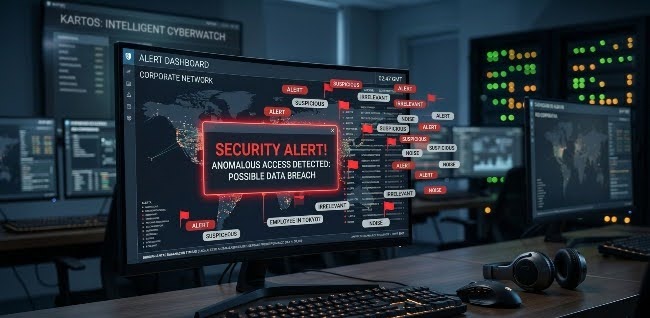
The software often lacks context. It might detect that an employee accesses the database at 4:00 AM from another country and flag it as a credential theft attack. However, if it doesn't know that the employee is on a business trip in Tokyo, the tool will generate an unnecessary false positive for cybersecurity.
Effective strategies for clearing the threat radar
Completely eliminating the risk of error is impossible, but reducing it to reasonable levels is a matter of using the right methods and technology. Here's how to start filtering out noise:
Refine the detection rules
It is not enough to install a tool and let it work on its own. Cybersecurity requires constant fine-tuning.. It's essential to review alert logs monthly and identify any recurring alerts without a valid reason. If an internal application consistently triggers an alert upon update, a specific exclusion rule should be created.
The role of CTEM (Continuous Threat Exposure Management)
This is where the approach changes. Instead of simply reacting to isolated alerts, many organizations are adopting a more proactive approach the CTEM model.. This paradigm does not only seeks to detect "fires" but to constantly analyze the exposure surface to understand which vulnerabilities are truly critical.
By continuously monitoring exposure, a much clearer picture emerges of what is normal and what is not, drastically reducing false positives in cybersecurity.
Kartos: the solution for companies seeking clarity
In this information-overload scenario, we at Enthec have developed Kartos. . This is not just another tool that adds more noise to a company's cybersecurity management, but a cyber surveillance solution designed with efficiency in mind.
Kartos acts as a platform for continuous threat exposure management for businesses. Its main function is to monitor what happens "outside" your perimeter, on the dark web, in leak forums, or in assets involuntarily exposed.
The key difference is that Kartos doesn't just throw raw data at you. Its artificial intelligence engine filters information so you receive only what truly poses a risk. By providing an external, contextual view of your infrastructure, it minimizes the risk of false positives in cybersecurity, allowing your team to focus on what really matters: protecting the business.
Benefits of integrating intelligent cyber surveillance:
- Automatic prioritization. Identifies which assets are truly at risk.
- Fatigue reduction. Fewer alerts, but more accurate.
- External visibility. Discovers what attackers see about your company before they act.
How to distinguish a false positive from a real threat
For technical teams, establishing a protocol is vital. Not all alerts should be treated with the same urgency. Here's a short guide of steps to follow:
- Verify the source: Does the alert originate from a critical system or a test network?
- Cross-referencing data: Are there other indicators of compromise (IoCs) occurring at the same time? A single event is usually a bug; three related events are usually an attack.
- Analyze behavior: Does the action taken make logical sense within the functions of the user or the affected system?
- Consult external databases: Use threat intelligence sources to verify if that IP or file has been previously reported by other professionals.
The future of detection: AI versus false positives
Paradoxically, the very technology that sometimes generates errors is the one that will help us eliminate them. Artificial intelligence and machine learning are evolving to learn from each company's usage patterns.
You might be interested in > The relevance of artificial intelligence in cybersecurity
An advanced system no longer simply says "this is unusual," but rather: "this is unusual, but it's typical behavior for this server on Monday mornings after a backup." This level of granularity is what will ultimately win the battle against false positives in cybersecurity.
Eliminating false positives in cybersecurity requires a combination of best practices, manual configuration, and, above all, intelligent tools that understand the threat context.. Solutions like the ones we offer at Enthec are designed precisely for that: to give you back the time that noise takes from you.
If you feel your team is overwhelmed by alerts that lead nowhere, or if you're worried about what company information is exposed online, it's time to take the step towards active and strategic monitoring.
Would you like to know how an attacker sees your company? Contact us and discover how continuous exposure management can clear your threat radar today. Don't let the noise prevent you from seeing the real danger.

What is a SIEM system, and how does it work in threat detection?
In a world where cyberattacks have gone from being isolated incidents to everyday occurrences, companies face a major challenge: managing a huge volume of data.
Every time an employee logs in, an email is sent, or a database is accessed, a record is generated. But who's monitoring to ensure all of this is normal? This is where understanding what a SIEM system is and why it has become the brain of security operations becomes crucial.
However, understanding what a SIEM system is is just the starting point. The real competitive advantage comes when your organization takes it a step further and complements that internal detection capability with continuous cyber surveillance of its external exposure surface. Platforms like Kartos automatically monitor your company's digital exposure in real time,so your security team can act before the attacker makes the first move. If you want to identify your organization's exposed vulnerabilities, keep reading.
What is a SIEM system, and why is everyone talking about it?
If we had to explain it simply, a SIEM (Security Information and Event Management) system is a tool that centralizes and analyzes security information from an organization's entire technological infrastructure. It is not limited to a single program; it combines security information management (SIM) with security event management (SEM).
The main objective is to offer a panoramic view.. Imagine you have security cameras, motion sensors, and smoke alarms in a building, but each one works separately.
The SIEM is the control center that receives all those signals, interprets them together, and alerts you if it detects a suspicious pattern.
The evolution towards modern SIEM solutions
Previously, these tools were complex, difficult to configure, and often generated many false positives. However, current SIEM solutions have evolved by integrating artificial intelligence and machine learning.. Now they not only collect data but also learn what "normal behavior" is in your company, so that when something deviates from the norm, the alert is truly useful.
How does the detection process actually work?
To understand the value of a SIEM system, one must analyze its internal workings. It's not magic, but a structured process in several phases:
1. Data collection
The first step is to gather information from all sources: servers, firewalls, antivirus software, cloud applications, and network devices. This data is known as logs or activity records.
2. Normalization and aggregation
Each device speaks a different "language." The SIEM translates all those logs into a common format for comparison. It also groups similar events to prevent the security team from receiving a thousand alerts for the same problem.
3. Correlation of events
This is the critical phase. The system uses predefined rules to connect seemingly unrelated points. For example, if there are three failed password attempts on an accounting server and, one minute later, a database attempts to export an unusually large file to a foreign IP address, the SIEM immediately triggers an alarm.
Examples in the SIEM system: Real-world use cases
To bring these concepts down to earth, let's look at some examples of the SIEM system, which demonstrate their daily usefulness in the IT department:
- Internal threat detection. An employee who typically works from 9 a.m. to 5 p.m. starts downloading confidential files at 3 a.m. on a Sunday. The SIEM detects this anomaly in both timing and data volume.
- Brute force attacks. If hundreds of failed login attempts are detected within a few seconds against an administrator account, the system blocks access and notifies the response team.
- Compliance. Many regulations (such as GDPR and PCI DSS) require keeping records of who accesses what data. SIEM facilitates the generation of automated audit reports.
The missing piece: from reactive detection to continuous management (CTEM)
While a SIEM system is essential, modern cybersecurity is shifting towards a more proactive approach. It's not enough to know what's happening within your walls; you need to know what the attacker knows about you before they press the attack button.
This is where the concept of Continuous Threat Exposure Management comes into play. While SIEM looks inward (at your systems and logs), the CTEM approach looks outward, toward the risk context.
Kartos: Cyber intelligence for businesses
At Enthec, we understand that security is not an isolated field. Our Kartos solution fits precisely within this CTEM framework. Unlike a traditional SIEM that waits to receive error logs, Kartos constantly monitors your company's exposure surface across the web, the Deep Web, and the Dark Web.
If a SIEM system tells you that someone is trying to break in, a tool like Kartos will warn you weeks in advance that your employees' credentials have been leaked on a hacker forum or that one of your suppliers has a critical vulnerability that could affect you.
Why does your company need a holistic approach? Benefits of integrating SIEM with cyber surveillance strategies
- Noise reduction. With a clear view of your external weaknesses and solutions like Kartos, you can configure your SIEM rules to be much more precise.
- Quick response. If you know there is a phishing campaign targeted specifically to your industry (thanks to threat intelligence), your security team will be on alert before the SIEM registers the first malicious click.
- Brand protection. You're not just protecting your servers, you're protecting your reputation. Cyber surveillance helps you detect identity theft and fraudulent domains that attempt to deceive your customers.
The human factor in technology
No matter how advanced any SIEM solution is, the human factor remains the weakest link and, at the same time, the most important.. Technology should serve to empower people, not to overwhelm them with irrelevant data.
That's why at Enthec, we don't just think about organizations; we've also developed Qondar, our solution designed to protect individuals and professionals from digital exposure. Because ultimately, a company's security begins with the security of each and every person within it.
The next step in your security strategy
Understanding what a SIEM system is is the first step toward professionalizing your business's security. It's the tool that will allow you to sleep soundly knowing that there's an "eye" analyzing every unusual movement in your systems. But don't forget that attackers always look for the path of least resistance, and that path is usually outside your internal records.
Combining the analytical power of a SIEM system with the anticipatory capabilities of a CTEM strategy is the only way to stay one step ahead of cybercriminals.
Do you want to know your company's exposure today? At Enthec, we help you see what others don't see. Contact us to discover how Kartos can strengthen your security strategy and continuously reduce your exposure to threats.
8 Tips to Keep Your Email Safe
Email continues to be an essential tool in our daily lives. It allows us to communicate with friends and family and manage important matters related to work or many other aspects of our lives.
By 2026, email security will have taken on a new dimension. Artificial intelligence allows attackers to generate phishing messages that are almost impossible to distinguish from legitimate ones, while the volume of threats grows exponentially. According to the World Economic Forum, Cyberattacks linked to email remain the primary entry point for corporate security breaches globally.
In this article, we explain what email security is, how to tell if an email is secure, and what security measures you should take today to protect your account and your data.
Why is email security critical today?
Email threats have evolved radically. We're no longer just talking about spam or messages with spelling errors: today's attacks are sophisticated, personalized, and, in many cases, almost imperceptible.
The main threats today are:
- IA Phishing (spear phishing generative). Attackers use sophisticated language models to craft phishing emails perfectly tailored to the recipient, mimicking the tone and context of the real company or person.
- Business Email Compromise (BEC). Frauds where the attacker impersonates the CEO, supplier, or business partner to redirect payments or steal confidential information. According to the FBI, BEC losses exceed $2.9 billion annually.
- Ransomware via email. Malicious attachments or links that, when opened, encrypt the device's files and demand a ransom.
- Email spoofing and typosquatting. Falsifying the sender's address or using domains almost identical to the legitimate one to deceive the recipient.
- Multi-layered social engineering attacks. Campaigns that combine email, SMS (smishing), and calls (vishing) to increase the credibility of the fraud.
Understanding the current landscape is the first step in implementing appropriate email security measures.
8 Ways to Make Your Email Safe
From Enthec, we explain 8 ways to make your email safe
1. Choose strong, unique passwords
A strong password is your first line of defense. Although it may seem an essential tip, many people still use easy-to-guess passwords, such as "123456" or "password". To create a strong password:
- Use uppercase and lowercase letters, numbers, and symbols.
- Avoid using personal data such as your birth date or your pet's name.
- Make sure it's at least 12 characters long.
- Consider using a password manager to generate and store passwords securely.
Remember to change your passwords periodically and never reuse the same one on different accounts.
You may be interested in our publication→, How to Manage Passwords and Business Credentials Easily and Securely to Avoid Online Threats.
2. Turn on two-step verification (2FA)
Two-step verification is an email security measure that provides an extra layer of protection. This system requires you to enter a temporary code sent to your phone or generated by an application such as Google Authenticator, in addition to your password.
This method dramatically reduces the risk of someone gaining access to your account, even if they manage to obtain your password. Be sure to enable this option on as many accounts as possible, especially those that contain sensitive information.
3. Beware of suspicious emails
Knowing how to identify a secure email is key to avoiding scams such as phishing, a type of attack in which cybercriminals try to trick you into sharing sensitive information.
If you have any questions about an email that seems suspicious, follow these simple steps:
- Check the sender's address. Attackers often use addresses that mimic those of well-known companies, with slight variations. For example, instead of "support@business.com," it could be "support@bus1ness.com."
- Look at the links. Before you click, hover over the link to check where it takes you. If it doesn't match the official site, be suspicious.
- Look for spelling or grammar errors. Phishing emails often contain errors not found in official messages.
- Don't share sensitive information. No serious entity will email you to ask for your password or banking information.
Don't respond to or click on links in suspicious emails. Instead, contact the sender directly through its official channels.
4. Avoid public Wi-Fi networks to access your email
Connecting to public Wi-Fi networks without security can expose your email to attacks. If you need to use a public connection, consider these options:
- Use a virtual private network (VPN) to encrypt your connection.
- Avoid accessing sensitive information while connected to these networks.
- Turn off the option to automatically connect to Wi-Fi networks.
While convenient, public networks pose a significant risk to your privacy. If you have no alternative, use your mobile data connection to perform essential tasks.

5. Regularly update your devices and apps
Software updates bring new features and fix vulnerabilities that attackers could exploit. Keep up to date:
- The operating system of your computer and phone.
- The email app or client you're using.
- The browsers you use to access your email.
Also, turn on automatic updates whenever possible to make sure you're protected from the latest threats
6. Make regular backups
Even if you take every precaution, there is always a risk that your account will be hacked. Make regular backups of your important emails so you don't lose valuable information; you can use cloud services or save files on a secure external device.
Backups can help you recover your information in the event of an attack and are also helpful if you need to access your data offline.
7. Educate your household members about digital security
If you share devices with others, ensure everyone understands the importance of protecting personal information. Discuss the risks of opening suspicious emails or using weak passwords. Teaching safe practices to your family members can prevent mistakes that compromise everyone's safety.
8. Use advanced protection tools
Today, solutions such as Qondar can help you manage your email security more effectively. These tools detect potential threats and monitor whether your information appears in compromised databases. In this way, in real time, you can detect threats such as compromised passwords for your professional or personal email and the breach that caused the leak, so you can act before cybercriminals use them.
How to tell if an email is safe
Knowing how to identify a safe email is an essential skill. With AI-powered phishing, fraudulent messages no longer have the obvious flaws they once did. Here are the key signs to look out for:
Double-check the sender's address carefully
Don't rely solely on the visible name. Check the real address: attackers use typosquatting techniques (domains with letters changed, added, or replaced). For example, @company.com versus @company-support.com or @bussinness.com.
Check if the email uses TLS
In most email clients (Gmail, Outlook), you can see if a message was received with TLS encryption by clicking on the message details or the padlock next to the sender. An unencrypted email is a sign of risk.
Check SPF, DKIM, and DMARC authentication
In Gmail, you can see the authentication details. Clicking the three dots in the message > "Show original" will help you. If the SPF, DKIM, and DMARC results all show "PASS," the email is likely legitimate. If any of these fail, exercise extreme caution.
Be wary of urgency and unusual requests.
Malicious emails often use a sense of urgency (“Your account will be suspended in 24 hours,” “Urgent payment required”). No legitimate entity will ever ask for passwords, bank details, or urgent transfers via email.
Hover your cursor over the links before clicking
Without clicking, hover your cursor over the link and observe the actual URL in the browser's address bar. If it doesn't match the official domain of the company it claims to be, don't click.
Analyze the attachments with caution.
.exe, .zip, .doc files with macros, or .pdf files may contain malware. If you weren't expecting an attachment from that person, contact them directly through another channel before opening it. If you're unsure, you can upload it to VirusTotal for free analysis.
Qondar: Advanced protection for your emails and personal data
Qondar is a cyber surveillance solution designed for individual users who want to keep their information safe. As a Continuous Threat Exposure Management (CTEM) tool, Qondar allows you to:
- Detect potential vulnerabilities before attackers exploit them.
- Receive alerts on potential security compromises in real-time.
- Monitor the presence of your data in suspicious sources or underground networks.
With Qondar, you can have peace of mind knowing that your email and personal information are protected from digital threats.
Protecting your email security isn't complicated, but it requires consistency and the right tools. From choosing strong passwords to identifying suspicious emails, every step you take shields your privacy.
If you're looking for a complete solution to protect your personal information, Qondar is the ideal tool.
Don't leave your security to chance: start managing your threat exposure with Qondar and always keep your data safe.

Top cybersecurity tools to use in your business
Implementing the appropriate cybersecurity tools is fundamental for organizations, becoming a strategic priority. In an environment where cyberattacks are becoming increasingly sophisticated and frequent, having a solid set of technological tools is essential for a company to be resilient rather than vulnerable.
This updated guide includes the main cybersecurity tools used in companies, what each one is for, and how to integrate them into an effective protection strategy.
Why is it essential for companies to implement cybersecurity tools?
Cybersecurity tools offer robust protection against various threats, enable early detection of risks and attacks, and enable proactive response to security incidents.
Threats and cyberattacks
Cybersecurity has become a top priority for businesses of all sizes. Cyberattacks are becoming more sophisticated and frequent, posing a significant threat to the integrity, availability, and confidentiality of corporate data.
Common threats include malware, ransomware, phishing, and denial-of-service (DDoS) attacks. The success of each of these attacks carries severe consequences, including the loss of critical data, disruptions to business operations, and damage to corporate reputation.
Malware, including viruses, worms, and Trojans, infiltrates company systems, corrupting files and stealing sensitive information. Ransomware is particularly dangerous because it encrypts company data and demands a ransom to release it.
Phishing attacks, conversely, use deceptive emails to obtain login credentials and other sensitive information from employees.
Finally, DDoS attacks can overwhelm company servers with malicious traffic, causing service disruptions and negatively impacting productivity.
Security risks in unprotected companies
Companies that lack sufficiently robust cybersecurity support tools are exposed to four critical risk categories:
- Data loss. Data is a company's most valuable asset. Its theft can be used for fraud, extortion, or corporate identity theft.
- Operational interruption. A ransomware attack can completely paralyze operations until the ransom is paid or the damage is reversed.
- Reputational damage. Security breaches erode the trust of customers, partners, and investors, directly impacting the bottom line.
- Regulatory sanctions. The GDPR in Europe, the DORA regulation for the financial sector, and other regulations require specific security measures, the non-compliance of which entails significant fines.
Consult our guide to the DORA regulation to learn about the cybersecurity requirements affecting the financial sector.
Top Cybersecurity tools to protect your business
Among the variety of cybersecurity support tools that an organization can implement to protect its systems, one group stands out for its effectiveness and efficiency:
Antivirus
Antivirus software is one of the most relevant and widely used cybersecurity tools. Its primary function is to detect, block, and remove malware before it can cause harm. Modern antivirus software uses advanced techniques such as signature-based detection, heuristics, and artificial intelligence to identify and neutralize a wide range of threats, including viruses, worms, Trojans, spyware, and ransomware.
- Signature-based detection. This technique uses a database of known malware signatures to identify threats. When antivirus software scans a file, it compares its signature to those in the database, and if it finds a match, it blocks and removes the threat.
- Heuristic. Heuristic methods enable antivirus software to identify suspicious behavior and code patterns that may indicate new or unknown malware. This technique is essential for detecting zero-day threats, which do not yet have known signatures.
- Artificial Intelligence and Machine Learning. Modern antivirus programs incorporate AI and machine learning technologies to improve real-time threat detection. These technologies can analyze large volumes of data and learn to identify malicious behavior patterns, even without a known signature.
Firewall
Firewalls are critical tools for cybersecurity. They act as a barrier between the company's internal network and external networks, such as the Internet. Their primary function is to control and filter incoming and outgoing network traffic, allowing only authorized connections and blocking unauthorized access.
- Hardware and software firewalls. Firewalls can be deployed as dedicated hardware appliances or software on servers and computers. Hardware firewalls are ideal for protecting the entire enterprise network, while software firewalls offer additional protection on individual devices.
- Packet Filters. Firewalls inspect every data packet entering or leaving the network, comparing it to predefined rules. If a packet complies with the rules, access is allowed. Otherwise, it is blocked.
- Next-Generation Firewalls (NGFW). NGFWs combine traditional firewall capabilities with advanced features such as deep packet inspection (DPI), intrusion prevention (IPS), and application-based threat protection.
Intrusion detection systems
Intrusion detection systems (IDS) and intrusion prevention systems (IPS) are essential tools for monitoring and protecting corporate networks against malicious activity. These systems analyze network traffic for behavioral patterns indicating an attempted intrusion or an ongoing attack.
- IDS (Intrusion Detection Systems). IDSs monitor network traffic in real-time and generate alerts when they detect suspicious activity. They can be passive, simply alerting security administrators, or active, automatically responding to threats.
- IPS (Intrusion Prevention Systems). IPS detects intrusions and takes steps to prevent them, such as blocking malicious traffic or applying additional firewall rules. IPS often integrates with other security systems to provide in-depth defense.
- Signature and behavior analysis.
IDS and IPS use signature analysis techniques to identify known threats and behavioral analysis to detect anomalous activity that could indicate new or unknown attacks.
Automated Cybersecurity Monitoring Tools
Automated monitoring is crucial to maintaining the security of corporate infrastructures. These tools allow businesses to continuously monitor their systems and networks for unusual or malicious activity and respond quickly to security incidents.
Security Information and Event Management Systems (SIEM)
SIEM solutions collect and analyze event data and logs from multiple sources on the enterprise network. They use advanced algorithms to detect suspicious behavior patterns and generate real-time alerts.
Incident Response and Analysis Tools
These tools allow security teams to quickly analyze security incidents and take the necessary steps to mitigate them. This can include identifying the incident's root cause, containing the threat, and recovering the affected system.
Cloud monitoring
Automated monitoring tools for cloud environments are essential with the increased use of cloud services. These tools monitor cloud activity, detect threats, and ensure compliance with company security policies.
Tools for Continuous Threat Exposure Management (CTEM)
To effectively protect their systems, organizations can't just manage the security of their internal infrastructure. Controlling exposed vulnerabilities that are available to anyone allows you to identify gaps and implement a proactive security strategy across the organization.
Continuous Threat Exposure Management (CTEM) solutions monitor the different layers of the web to locate those publicly exposed vulnerabilities, such as leaked data or credentials, and detect the open breaches that caused them.
The most advanced CTEM tools, such as Kartos, use technologies like Artificial Intelligence and Machine Learning to analyze and refine their data, providing highly accurate information about imminent threats.
Identity and access management tools
Identity and access management (IAM) is a crucial component of enterprise cybersecurity. IAM tools ensure that only authorized users can access critical business resources and data, and maintain strict controls over what users can do within the system.
- Multi-factor authentication (MFA). MFA adds an extra layer of security by requiring users to provide multiple forms of verification before accessing systems. This can include a combination of passwords, verification codes sent to mobile devices, fingerprints, or other biometric authentication methods.
- Privileged access management (PAM). PAM tools allow companies to control and monitor access management to privileged accounts, which have elevated permissions within the system. This includes implementing role-based access policies and logging all privileged account activities.
- Single Sign-On (SSO) Solutions. SSO allows users to access multiple applications and systems with a single login credential. This simplifies password management, improves the user experience, and provides centralized security controls.
Zero Trust cybersecurity tools
Today, the Zero Trust model has become a benchmark standard in corporate cybersecurity. Its principle is clear: do not trust any user, device, or system by default, whether inside or outside the corporate network.
The tools that underpin this architecture include network microsegmentation solutions, zero-trust network access, continuous identity management, and device verification. Their implementation reduces attackers' lateral movement after an initial breach, significantly limiting the impact of incidents.
Discover more about implementing the Zero Trust model in the corporate cybersecurity strategy.
How to choose the right cybersecurity tools for your company
There is no single optimal combination of cybersecurity tools. The selection should be based on a prior analysis of the organization that takes into account:
- Size and sector. SMEs have different needs and resources from large corporations or regulated sectors such as finance or healthcare.
- Attack surface. How many endpoints, remote users, cloud services, and third-party relationships does the organization manage?
- Cybersecurity maturity level.Whether the company is starting from scratch or seeking to reinforce an existing architecture.
- Regulatory requirements.GDPR, DORA, NIS2, or sector standards that require specific controls.
- Internal team capacity. The most advanced tools require specialized personnel for their management and analysis.
Kartos: Corporate Cyber-Surveillance Solution for Continuous Threat Exposure Management (CTEM)
Kartos is a monitoring tool for Continuous Threat Exposure Management (CTEM) developed by Enthec to protect organizations.
Using its army of bots deployed across the Web, Dark Web, and Deep Web, Kartos scours forums and repositories to locate leaked information, exposed vulnerabilities, and open breaches of organizations.
Among its unique capabilities in the cybersecurity tools market, Kartos stands out for eliminating false positives in search results, thanks to tag technology powered by self-developed Artificial Intelligence.
In addition to protecting the organization, Kartos allows third parties to be controlled in real time and continuously throughout the business relationship.
If you want to learn more about how Kartos Corporate Threat Watchbots can help you protect your organization and control risks in your value chain, please do not hesitate to contact us.

6 social media security strategies
Social media security has become a top concern for individuals, businesses, and institutions. With over 5.5 billion active users worldwide projected for 2026, social media platforms are a prime target for cybercriminals to steal data, impersonate others, and launch fraud campaigns. Understanding the importance of protecting your accounts and taking appropriate measures is no longer optional—it's essential.
In this article, we explain why privacy and security on social media are so critical, the consequences of ignoring them, and what social media security measures you can implement immediately to protect your personal information and digital reputation.
Importance of privacy and security in social networks
Social media has become integral to our lives, allowing us to connect with friends, family, and coworkers, share experiences, and access a wide range of content. However, as its use has increased, so has the amount of personal information we share online.
The threat landscape on social media has reached unprecedented levels. According to the Bitdefender Consumer Cybersecurity Report 2025 Social media has become the main channel for cyber scams, with 34% of reported cases originating from these platforms.
The importance of privacy and security on social media lies in the fact that these platforms act as gateways to our entire digital identity. A compromised account can lead to identity theft, extortion, harassment, or direct financial losses. Furthermore, reputational damage, for individuals, professionals, and brands alike, can be irreversible.
Social media and personal data security are intimately linked: every privacy setting we ignore, every third-party application we authorize without reviewing, and every weak password we use represent vulnerabilities that attackers can exploit.
Consequence of not protecting your social networks
Failing to implement social media security measures can have serious consequences. Some of the main ones are:
- Identity theft. Cybercriminals can obtain enough personal information from social media to impersonate the person and commit fraud. This can lead to opening credit accounts in your name, making fraudulent purchases, deceiving contacts, and many other malicious actions.
- Harassment and cyberbullying. A lack of privacy can expose users to harassment and cyberbullying. Attackers often use personal information shared on social media to harass their victims.
- Financial fraud. Personal and financial data shared on social media can be used to commit fraud. This includes accessing bank accounts, credit cards, and other financial services, as well as other actions likely to cause significant financial loss to the victim.
- Loss of reputation. Personal and professional information exposed on social media can be used to damage a person's reputation. This is especially detrimental to professionals who depend on their reputations for their careers.
- Unauthorized access to sensitive data. If not properly protected, social media accounts can be hacked, and sensitive data, such as private messages and photos, can be exposed and susceptible to malicious use.
- Exposure of third-party data. The personal information we share on social media not only affects us but can also expose the data of family members, friends, or co-workers who appear in our posts or contact lists.
6 Social Media Safety Measures
Implementing proactive security measures on social media is the only wayan effective way to minimize risks. Below, we detail the most important and up-to-date threats for the 2026 threat context.
Privacy settings on profiles
Privacy settings on social media profiles allow users to control who can view and access their information. Reviewing and adjusting these settings regularly ensures that only authorized people can see personal details.
- Limiting access to personal information: ensuring that only close contacts and family members can view it, such as location, marital status, and contact details.
- App Permissions Review: It is essential to be aware that third-party apps that connect to social media accounts may have access to sensitive personal data. Non-essential apps should be reviewed, and their permissions revoked.
- Post control: It's a good idea to set up your account so that only the owner can view and approve posts in which they are tagged. This will give you control over what appears on your profile.
- Disable search engine indexing: Most platforms allow you to prevent your profile from appearing in Google or other search engine results, thus reducing your public exposure.
Two-Factor Authentication
Two-factor authentication (2FA) is a security measure that protects social media accounts. Requiring a second form of verification in addition to the password, 2FA makes it harder for attackers to access an account, even if they know your password.
- 2FA implementation. Two-factor authentication must be enabled on all social media accounts. This usually involves receiving a verification code on the mobile phone or email.
- Authenticator apps. There are authenticator apps like Google Authenticator or Authy that generate temporary, one-time verification codes to access the account.
- Enable login notifications. Most platforms can send you an alert every time your account is accessed from a new device or location.
Secure password management
Strong, unique passwords are critical to protecting social media accounts. Reusing or using weak passwords significantly increases the risk of an account being hacked.
- Strong passwords. It would be best to create passwords that are difficult to guess, using a combination of upper- and lower-case letters, numbers, and special characters. Avoid using easily guessable personal information, such as names or dates of birth, and passwords that are common or repeated in other accounts.
- Password managers. Using a password manager to generate and store unique and strong passwords for each account is advisable. This makes password management easier and reduces the risk of reusing passwords.
- Periodic password changes. Although it is a routine that requires mental effort and attention to detail due to the number of accounts and passwords each person manages, it is essential to change passwords periodically and never share them with others or store them in places that are easy for others to access.
If you want to delve deeper into this topic, we recommend our post-> How to easily and securely manage business passwords and credentials to avoid online threats.
Always access from trusted devices
The devices you use to access your social media accounts are a critical link in the security chain. A compromised device can override any other protection measures.
- Avoid public or shared devices: Computers in libraries, hotels, or cafes may have keyloggers or other malware installed. If you use them only occasionally, always do so in incognito mode and log out when you're finished.
- Keep your devices updated: Operating system and application updates fix vulnerabilities that attackers actively exploit. Don't postpone them.
- Check the devices connected to your accounts: Most platforms display a list of devices that have recently accessed your account. Review it regularly and close any sessions you don't recognize.
AI-based threat recognition
The use of artificial intelligence by cybercriminals has led to significantly sophisticated attacks on social media. In 2026, it is crucial to understand emerging threats to avoid falling victim to them.
Deepfakes and identity theft
Attackers create hyper-realistic fake videos and images of trusted individuals to solicit personal information or money. If you encounter any unusual requests on social media, always verify them through another channel.
Hyper-personalized phishing
AI models analyze your social media activity to craft deceptive messages tailored to your profile, interests, and relationships. Be wary of urgent messages or those with suspicious links, even if they come from known contacts.
Bots and fake profiles
Disinformation and manipulation campaigns use armies of automated accounts to generate artificial trends or spread hoaxes. Before interacting with an unknown profile, check its age and activity.
Continuous cyber-surveillance of your profiles
The most innovative tools for cyber surveillance enable continuous monitoring of social media accounts and their online activity, allowing for quick detection and response to potential security threats, such as our Enthec solution. This helps prevent malicious or criminal use of both social media accounts and personal data.
The cyber surveillance system allows the user to configure alerts for suspicious activity. This way, you can receive real-time notifications about any suspicious activity on your social media accounts, such as login attempts from unknown locations or posts of unusual content.
Social networks and personal data security: an underestimated risk
The relationship between social networks and personal data security is more complex than it seems. Beyond the obvious risk of someone hacking your account, simply posting indiscriminately generates a digital trail that attackers can exploit to build detailed profiles of their victims, a technique known as OSINT.
The National Cybersecurity Institute warns that a large proportion of fraud and identity theft cases investigated in Spain originate from personal information voluntarily published on social media. Birth dates, pet names, workplaces, home photos, and even vacation schedules are data that cybercriminals use to create likely passwords, answer security questions, or design social engineering attacks.
To reduce your exposure, apply the principle of minimum disclosure: only share on social media things that you don't mind being in the public domain, and that cannot be used to identify you, locate you, or access your accounts.
How Qondar can help you improve social media security
Qondar is a personal cyber-surveillance tool developed by Enthec to continuously protect people's personal data and digital assets online.
Thanks to its army of bots deployed across all layers of the Web, Qondar protects the integrity of personal profiles on LinkedIn, Facebook, X, Instagram, TikTok, and Telegram against hacking, impersonation, and manipulation.
Qondar is an automated tool that works continuously and provides real-time data on any attempted malicious use of personal social networks. Its use is also very simple: just enter the social profiles to be protected on the platform, and Qondar begins to work autonomously. If you hold an important position in an organization, have public or social relevance, or are simply concerned about the integrity of your social media accounts, contact us to learn more about how Qondar can help you.
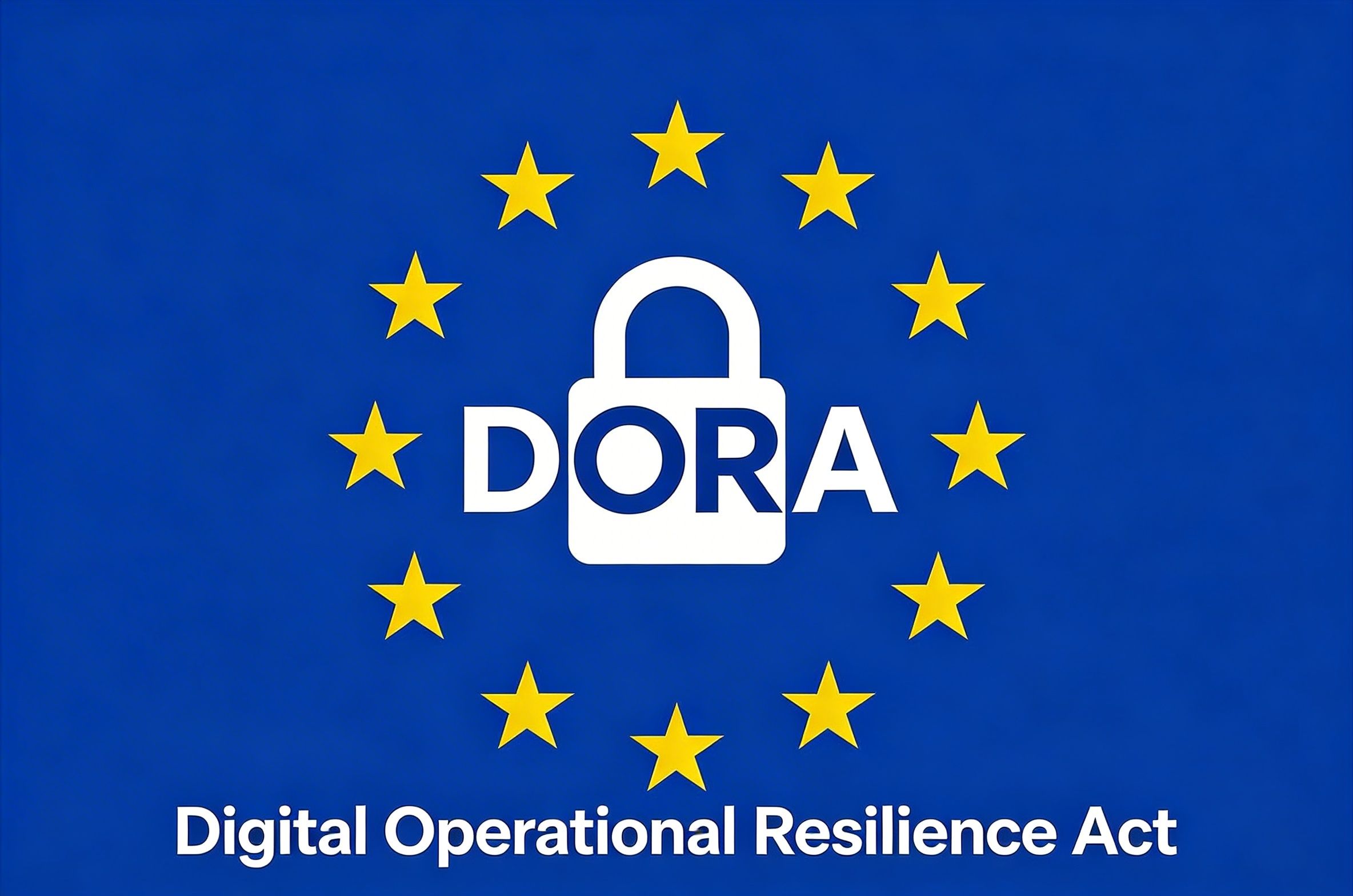
How the DORA regulation impacts businesses and what steps you should take
If you work in the financial or technology sector, you have surely heard of an acronym that is keeping more than one IT director up at night: DORA.
DORA is the Digital Operational Resilience Act, one of the European Union's most ambitious and demanding cybersecurity regulations.
From January 2025, the DORA regulation is a mandatory reality. But why is it so important, and what will it really change for your business? It's not just another law; it's a shift in mindset. Having a good firewall is no longer enough; now, authorities want proof that your company can withstand a cyberattack and continue operating as if nothing happened.
What exactly is the DORA regulation, and which sector does it primarily target?
Although the name sounds general, which sector the DORA regulation primarily targets is one of the most frequently asked questions.
The short answer is: to the financial sector,. but the long answer is much more interesting. Unlike previous regulations that only targeted large banks, DORA extends to:
- Credit institutions and payment establishments.
- Investment and asset management companies.
- Insurance and reinsurance entities.
- ICT service providers that provide support to the above.
This last point is critical. If your company is a technology firm that sells software or cloud services to a bank, the DORA regulation also applies to you. The European Union has identified that the biggest weakness of the financial system is not always the bank itself, but rather the digital supply chain.
The pillars of the DORA regulation and cybersecurity
The aim of this regulation is to create a robust framework for the European financial system to withstand serious incidents. To achieve this, the DORA cybersecurity regulation rests on several fundamental pillars that companies must address:
1. ICT risk management
Organizations must have a solid governance framework. . Delegating security solely to the IT department is no longer permitted; company management is now legally responsible for risk decisions.
2. Incident Management and Reporting
If something happens, it must be reported. And quickly. The regulations establish strict deadlines and harmonized formats for reporting serious ICT incidents to the relevant authorities.
3. Digital operational resilience tests
This is where things get serious. DORA requires companies to conduct regular testing of their systems. For the most critical entities, this includes the TLPT (Threat-Led Penetration Testing), or penetration tests based on threat intelligence.
4. Third-party risk management
As we mentioned earlier, the DORA regulation focuses on your suppliers. You must audit how they manage their own security, since a breach in their system is, for all practical purposes, a breach in yours.

Analysis and guide to the DORA regulation: from compliance to strategy
If you look for analysis and guidance on the DORA regulation, you'll see that most experts agree on one thing: compliance cannot be reactive. Many companies make the mistake of waiting for an audit to find out whether their systems are up to date.
However, the current threat landscape doesn't wait. According to data from various European security reports, ransomware attacks and credential theft have increased exponentially in the last two years, particularly affecting financial services companies.
How to move from theory to practice?
To comply with the regulations, it is necessary to adopt tools that not only analyze risk once a year, but also offer a continuous overview. This is where the concept of CTEM, Continuous Threat Exposure Management, becomes vital.
Traditionally, companies would do a "pentesting"annually. The problem is that if a new vulnerability emerges the day after the test, your report is useless. A CTEM strategy proposes a five-stage cycle:
- Discovery of assets and attack surfaces.
- Mapping of possible attack routes.
- Prioritization based on real risk (not just technical).
- Validation that the controls work.
- Mobilization to correct what really matters.
How Kartos from Enthec helps you with compliance
At Enthec,we understand that managing all this information can be overwhelming. That's why we've developed solutions that align perfectly with the philosophy of the DORA regulation.
For companies seeking professional and continuous management, our Kartos platform is the answer. It positions itself as a key tool for CTEM, enabling organizations to automatically and non-intrusively monitor their external exposure.
- Third-party surveillance. One of the most challenging aspects of DORA is monitoring your suppliers. Kartos allows you to analyze the risk level of your supply chain without installing anything on their systems or requesting special permissions. You'll get a real and objective picture of their digital health.
- Leak detection. Kartos scans the Deep and Dark Web looking for leaked credentials or confidential information from your company before cybercriminals can use it.
- Risk scoring. It provides a clear score on your security posture, which greatly simplifies life for CISOs when reporting to the board of directors, as required by the new regulatory framework.
If you are a freelancer or concerned about your personal digital identity, we also have Qondar, our cyber-surveillance solution for individuals that applies the same principles of prevention and continuous monitoring.
Important: The DORA regulations are not just a checklist. They are an opportunity for your company to become more competitive and build greater trust with its customers.
Practical steps you should take today
If your company falls under the umbrella of this regulation (or if you simply want to improve your cybersecurity), here's a simple roadmap:
- Find out if you are affected. Check whether your activity, or that of your main clients, falls within the scope of the DORA regulation.
- Map your assets and suppliers. You can't protect what you don't know. You need an up-to-date inventory of all your systems and, above all, your critical IT providers.
- Adopt a CTEM mentality. Leave static audits behind. Implement continuous monitoring tools, such as Kartos, to have 24/7 visibility into your external attack surface.
- Review your contracts. Make sure that agreements with your technology service providers include the security and incident notification clauses required by law.
- Training and awareness. Human error remains the primary entry point. Train your team and, above all, raise management's awareness of their new legal responsibilities.
The DORA regulation may seem like a huge logistical challenge, but with the right tools and a proactive approach, it can become the best shield for your organization's future.
Are you worried about how the new regulations will affect your infrastructure or your suppliers?
Get in touch with usand we'll help you assess your actual exposure through a Kartos demo. It's time to move from worry to prevention!
What is data encryption: features and how does it work?
What is data encryption: features and how does it work?
Data encryption is a fundamental security practice to protect digital information and ensure its integrity and privacy. In a context where cyberattacks are growing in volume and sophistication, protecting data through encryption techniques is an unavoidable strategic and legal obligation for any organization.
However, encryption only works on data you already control. The critical question is: do you know if sensitive company information is exposed on the internet, the deep web, or the dark web without your knowledge? Cyber-surveillance platforms like Kartos, developed by Enthec, automatically monitor open vulnerabilities and data breaches affecting an organization in real time, including exposed databases and compromised credentials, thus complementing the layer of protection offered by encryption.
In this article, you will find a comprehensive guide, updated to 2026, on what data encryption is, how it works, the different types available, its main use cases, and how it relates to the GDPR and current regulations.
Data encryption: definition
Data encryption is the process of transforming readable information (plaintext) into an encoded format (ciphertext) that can only be read by those in possession of a specific decryption key. This process ensures that data is inaccessible to unauthorised persons, thus protecting the confidentiality and integrity of the information. Its importance lies in several key aspects that ensure data integrity, availability, and confidentiality:
- Privacy protection: Data encryption ensures that sensitive information, such as personal, financial, and health data, remains private and secure. By converting plaintext to ciphertext, only authorised persons with the decryption key can access the information.
- Communications security: In digital communications, such as emails, instant messages, and online transactions, encryption protects against interception and eavesdropping. By encrypting transmitted data, it ensures that any attempt to intercept the communication results in information that is unreadable to attackers.
- Compliance: Many regulations and laws, such as the General Data Protection Regulation (GDPR) in Europe, require encryption to protect personal data. Compliance with these regulations not only avoids legal sanctions but also demonstrates an organisation's commitment to protecting its customers‘ and users’ information.
- Cyber-attack and fraud prevention: Data encryption helps prevent unauthorised access and misuse of information, preventing the risk of fraud and cyber-attacks. Attackers attempting to access encrypted data will face a significant barrier, hindering their efforts and protecting critical information.
- Intellectual property protection: In the business environment, data encryption protects intellectual property such as trade secrets, patents, and confidential documents. This is essential to maintain a competitive advantage and prevent the leakage of valuable information.
- Customer trust: The use of database encryption also helps build trust among customers and users. Knowing that an organisation takes steps to protect its personal information increases customer trust and loyalty, which can translate into long-term business benefits.
Main challenges of data encryption
Despite its benefits, data encryption presents challenges:
- Key management. The generation, distribution, and secure storage of encryption keys are critical and complex.
- Rendimiento. El cifrado puede afectar el rendimiento de los sistemas, especialmente en el caso de cifrado asimétrico.
- Compatibility. It is necessary to ensure that systems and applications are compatible with the encryption methods used.
- Quantum threat. Advances in quantum computing put current encryption algorithms at risk. Cybercriminals are already employing the "harvest first, decrypt later" strategy: they store encrypted data today to decrypt it as soon as quantum computing becomes feasible, thereby jeopardizing long-term information such as trade secrets, medical research, and government documents. In response, NIST published the first official post-quantum cryptography standards (FIPS 203, 204, and 205) in 2024. The roadmap is clear: RSA and ECC asymmetric ciphers will become obsolete by 2030 and will be banned by 2035, making cryptographic migration planning essential now.
How data encryption works
The data encryption process is performed using mathematical algorithms and encryption keys. Database encryption algorithms are mathematical formulae that transform plaintext into ciphertext. The encryption process consists of the following steps:
- Key generation. An encryption key is generated, which will be used to transform the plaintext into ciphertext.
- Encryption. The encryption algorithm uses the key to convert plaintext into ciphertext.
- Transmission or storage. Ciphertext is transmitted or stored securely.
- Deciphered. The authorised receiver uses the corresponding key to convert the ciphertext back into plaintext.
Most effective techniques for data encryption
Keys are essential for data encryption and decryption. There are two main types of encryption:
- Symmetric Encryption: uses the same key to encrypt and decrypt data.
- Asymmetric Encryption: uses a public and a private key pair. The public key encrypts the data, and only the corresponding private key can decrypt it.
Each of these is explained in more detail below.
Symmetric encryption methods
Symmetric encryption is an encryption method that uses the same key to encrypt and decrypt data. It is known for its speed and efficiency, making it ideal for large volumes of data. Some of the most common methods include:
- AES (Estándar de cifrado avanzado). It is one of the most secure and widely used algorithms. It offers different key sizes (128, 192, and 256 bits) and is resistant to cryptographic attacks.
- DES (Data Encryption Standard). Although older and less secure than AES, it is still used in some applications. It uses a 56-bit key.
- 3DES (Triple DES). It improves the security of DES by applying the algorithm three times with two or three different keys.
Symmetric encryption is efficient, but secure key distribution is challenging because both parties must share the same key without compromising its security.
Asymmetric encryption methods
Asymmetric encryption uses a pair of keys: a public key and a private key. The public key is used to encrypt the data, while the corresponding private key is used to decrypt it. This method is more secure for data transmission, as the private key is never shared.
- RSA (Rivest-Shamir-Adleman). It is one of the best-known and most widely used asymmetric encryption algorithms. It provides high security and is used in applications such as digital signatures and SSL/TLS certificates.
- ECC (criptografía de curva elíptica). It uses elliptic curves to provide a high level of security with smaller keys, making it more efficient in terms of performance and resource usage.
Asymmetric encryption is ideal for secure data transmission, although it is slower than symmetric encryption due to its mathematical complexity. If you want to keep up to date in this sector, we encourage you to access our content→ The 5 cybersecurity trends you need to know. Now that you know the examples of data encryption, it's time to discover its key benefits.
Key benefits of data encryption
Key benefits of database encryption include the following:
Data protection on different devices
Data encryption is an essential measure for protecting data on a variety of devices, including mobile phones, computers and servers. By converting information into a format unreadable to anyone without the decryption key, encryption ensures that sensitive data remains secure, even if the device is lost or stolen. This is especially relevant in a world where cyber-attacks are becoming increasingly common and sophisticated.
Maintaining data integrity
Encrypting data ensures that the information is not altered during storage or transmission. This is crucial to prevent malicious manipulation and to ensure that data remains accurate and reliable. In the context of data transmission, encryption protects information against unauthorised interception and modification. This is especially relevant in 2026, as ransomware has evolved beyond simply locking data: according to Picus Labs' Red Report 2026, the "data encryption for impact" technique decreased by 38% in one year, from 21% of samples in 2025 to 12.9% in 2026. Attackers now combine encryption with prior data theft to threaten the release of the stolen data (double and triple extortion). This makes defensive encryption a necessary but insufficient layer; if data is exfiltrated before being encrypted, the organization remains vulnerable.
Furthermore, encryption helps detect any alteration to the data, since any change to the encrypted information will result in unreadable data when decrypted without the correct key.
Data migration to cloud storage
Data encryption is essential for secure data migration to cloud storage. Encrypting information before transferring it to the cloud ensures that data remains protected from unauthorized access during migration. This is especially important because data can be vulnerable to interception and cyberattacks while moving over public or private networks.
By 2026, the shared responsibility model for cloud providers will be a well-established standard: the provider protects the infrastructure, but data encryption and key management remain the responsibility of the organization.
Options like BYOK (Bring Your Own Key) allow for maintaining cryptographic control even when data resides with third parties. In fact, according to Encryption Consulting's Global Encryption Trends 2026 report, 62% of the market is migrating to cloud-based HSM modules to balance rapid scalability with data residency laws and sovereignty requirements. This is also essential for GDPR compliance, which mandates appropriate security measures for the processing of personal data.
Data Encryption and GDPR: Obligations and New Developments in 2026
The relationship between data encryption and the GDPR is direct and close. The General Data Protection Regulation (EU Regulation 2016/679) sets out in Article 32 that data controllers must implement appropriate technical and organizational measures, including the encryption of personal data as a recommended security measure.
In practice, the GDPR and data encryption interact in several key scenarios:
- Reducing the risk of penalties: If a security breach occurs but the data was properly encrypted, supervisory authorities often consider the risk to data subjects to be low, reducing the notification obligation and applicable penalties.
- International transfers: Encryption is a complementary measure in data transfers to third countries without an adequacy decision, in accordance with standard contractual clauses.
- Privacy by design: The principle of "privacy by design" requires that encryption be incorporated at the design stage of systems and applications, rather than as a later addition.
In 2026, the regulatory scope has expanded on two fronts. First, the NIS2 Directive, in force since October 2024, requires operators of essential and critical services across the EU to implement encryption measures as part of their risk management, with penalties of up to €10 million or 2% of their total annual global turnover for non-compliance.
Second, Google will roll out mandatory HTTPS in Chrome during 2026 in two phases: in April for more than 1 billion users with Enhanced Protection enabled, and in October for the entire browser. TLS encryption on the web will thus cease to be optional and become the de facto universal standard.
Data encryption within a comprehensive cybersecurity strategy
Data encryption cannot be considered in isolation. To be truly effective, it must be integrated into a comprehensive cybersecurity strategy that includes continuous threat exposure management (CTEM), early vulnerability detection, and incident response.
Phishing prevention, Zero Trust policies, and data encryption together form a defense-in-depth model that significantly increases an organization's resilience against today's threats.
By 2026, this approach is no longer just a recommendation: the Global Encryption Trends 2026 report indicates that encryption has risen to the level of strategic discussion at the board level, driven by AI convergence, the shortening lifespan of certificates, and quantum risks. Organizations that have adopted centralized and automated crypto governance achieve annual savings exceeding $3 million and reduce breach response times by 45%.
Monitoring that encryption is properly implemented and that there are no gaps in its application requires continuous visibility.
Kartos automates this monitoring, allowing your security team to detect and correct vulnerable configurations before they are exploited. Contact us!
Ransomware 3.0: How malware evolves and what measures to take
Just a decade ago, the term "data breach" sounded like something out of a science fiction movie. Today, it's the biggest nightmare for any IT director and, increasingly, for any citizen who stores their life on a hard drive. But the danger has evolved.
We are no longer dealing with a simple virus that locks your screen; we have fully entered the era of ransomware 3.0.
In this article, we'll break down what this evolutionary leap means, why traditional defenses are becoming inadequate, and how, in Enthec, we can change this to help mitigate these risks before the damage becomes irreversible.
The evolutionary leap: from file blocking to total extortion
To understand where we are, we must first look back. The ransomware 1.0 was opportunistic: a mass email would go out, someone would click a link, and their files would be encrypted. Version 2.0 introduced "double extortion," in which attackers, in addition to encrypting data, stole it and threatened to publish it.
Ransomware 3.0 goes one step further.. It's no longer just malicious software; it's a highly professionalized and customized business model.
What characterizes this third generation?
This new phase focuses on triple extortion.. Cybercriminals not only target the main organization but also contact its customers, suppliers, and employees directly. If the company doesn't pay, they pressure its business partners by informing them that their private data is at risk.
Furthermore, ransomware 3.0 relies on the Ransomware-as-a-Service (RaaS) model. Malware developers rent their code to "affiliates" in exchange for a commission. In this way, even criminals with limited technical skills can launch devastating attacks using highly sophisticated infrastructure.
Why businesses remain vulnerable
Despite investment in antivirus and firewalls, security vulnerabilities continue to grow. Why is this happening?
The answer lies in the exposure.. Today's businesses operate in hybrid environments, with remote employees, cloud services, and a vast amount of digital assets they often don't even know they have. Attackers don't usually "break down" the door; they simply find a key someone left in the lock.
The importance of looking beyond the perimeter
The traditional approach to cybersecurity focused on protecting resources within the corporate network. But in the era of ransomware 3.0, the threat often originates from outside: in online dark web forums where stolen credentials are sold, or on misconfigured servers exposed to the internet without anyone noticing.
Aquí es donde aparece la Gestión Continua de la Exposición a Amenazas. . It's not enough to conduct an audit once a year; you have to monitor your exposure surface every minute of every day.
The human factor: why are you also in the spotlight?
We often think that these attacks only affect large multinational corporations. However, ransomware 3.0 has democratized the risk. Attackers have discovered that individuals are much easier to exploit and, when combined, offer enormous profitability.
Think about it for a moment: How many times have you used the same password for your personal email and for a shopping app? How much personal information is scattered across the internet due to security breaches in services you used years ago?
Most successful attacks do not begin with a complex hack, but with a human oversight or a prior information leak.
Qondar: protecting your digital identity
This is where prevention becomes personal. Qondar is the ally for the individual, the independent professional, or the manager who wants to protect their private sphere.
Qondar applies military-grade cyber surveillance capabilities tailored to individual needs. It alerts you if your email address appears in a leaked database, if your passwords are exposed, or if someone is using your identity for illicit purposes.
At this stage of the user journey, when you're already aware that the danger is real, having a tool that continuously monitors your exposure is essential digital hygiene. By protecting yourself with Qondar, you not only protect your files but also cut off the supply chain that feeds ransomware 3.0 cybercriminals.
Practical measures to mitigate the risk of ransomware 3.0
Beyond having monitoring tools, there are habits and strategies that should be part of the DNA of any conscientious organization or user.
1. Implement the Zero Trust model
The premise of the model Zero Trust is simple: trust nothing and no one, whether inside or outside your network. Every access attempt should be verified. This drastically limits malware's ability to spread once it manages to infiltrate a device.
2. Immutable backups
With traditional ransomware, restoring a backup was sufficient. With ransomware 3.0, attackers attempt to locate and delete your backups before encrypting your data. Immutable backups (those that cannot be modified or deleted for a specified period) are the only real guarantee of recovery.
3. Education and awareness
Phishing Phishing remains the number one entry point. Training teams to identify red flags, such as emails with unwarranted urgency or suspicious senders, is just as important as having the best software.
4. Constant external monitoring
As we mentioned with the CTEM approach, the risk changes every hour.. New vulnerabilities appear daily (the famous Zero-Days).). Using solutions that constantly scan your display surface, such as those we offer in Enthec, can mean preventing a disaster before it happens.
The future of cybersecurity is preventative.
The digital threat landscape is hostile, but not invincible. The evolution towards ransomware 3.0 forces us to stop being reactive.. We can't wait for a ransom note to appear on the screen before we start thinking about security.
Modern cybersecurity is all about visibility. Knowing what an attacker knows about us gives us a crucial competitive advantage. Whether you're a business concerned about continuity or an individual who values privacy, the key is proactive monitoring.
Continuous Threat Exposure Management tools are not just for experts; they are for anyone who wants to sleep soundly in an interconnected world.
Do you want to know what the internet knows about you?
Information is power, but only if you get to it before the criminals do. Don't wait to become just another statistic in next year's cybersecurity reports.
Would you like to analyze your current level of exposure and know how to protect yourself effectively? Contact us and discover how Qondar can protect your digital environment.