



How to protect your digital identity against major threats
Protecting our digital identity has become a priority. Our data is constantly exposed to risks from social networks to financial transactions. But do we know how to protect digital identity against the most common threats?
This article explains the main threats to digital identity, strategies to prevent them, and how specialized cyber surveillance solutions such as Qondar can improve protection.
What is digital identity, and why is it so important to protect it?
Your digital identity includes all your online personal information: names, passwords, emails, locations, bank details, photos, etc. This information forms the basis of your online interactions, and losing control of it can have serious consequences, from identity theft to financial loss.
We expand our digital footprint with every new account, online purchase, or social network. Cybercriminals, aware of this, develop increasingly sophisticated methods to steal and use this information for their purposes. If you're wondering why protecting your digital identity is essential, the answer lies in the serious repercussions that carelessness can have on your personal and professional life.

Top Threats to Digital Identity
To know how to protect your digital identity, it is essential that you discover the main threats.
Phishing
Phishing is one of the most common and effective attacks. Cybercriminals pose as trusted companies or individuals to trick you into obtaining your data. These attacks usually come via email, SMS, or even social networks.
For example, when you receive an email that appears to be from your bank asking you to verify your account using a link, you will make your credentials available to attackers.
How to protect yourself:
- Always check the sender's address.
- Never click on suspicious links.
- Use two-factor authentication whenever possible.
If you want to learn more about this prominent threat, we recommend you take a look→ Phishing: what it is and how many types there are.
Data leaks
Companies and online platforms are not exempt from security breaches. When this occurs, users' data may end up in the hands of unauthorized third parties.
To prevent data leakage, keep the following tips in mind:
- Change your passwords regularly.
- Use unique combinations for each account.
- Activate alerts to be alerted if your data appears in filtered databases.
Phishing and identity theft protection
With stolen data, cybercriminals can impersonate you. Thanks to this, they can carry out a large number of actions in your name, from opening bank accounts in their favor to making purchases or even committing crimes. This is one of the most common forms of identity theft, and its consequences can be devastating both financially and personally.
How to protect yourself:
- Keep your social media profile private.
- Avoid sharing unnecessary personal information online.
- Periodically review your bank accounts and financial movements.
Malware and spyware
Malware and spyware are malicious programs designed to access your device and collect information. Many times they are installed by downloading files from unsafe sources or clicking on unknown links.
How to protect yourself:
- Install reliable antivirus software.
- Avoid downloading files or apps from unofficial sites.
- Always keep your devices up to date.
Social media exposure
Posting too much personal information on social networks can make it easier for cybercriminals. From sharing your location to sensitive data, each post can be a piece of the puzzle of your digital identity.
How to protect yourself:
- Set your social media privacy.
- Think twice before sharing personal data or highly relevant information.
- Regularly review your profile settings.
Tips to protect your digital identity
In addition to being alert to the above threats, there are certain practices that you should implement in your day-to-day life to strengthen your digital security:
- Strong and unique passwords. It uses a combination of letters, numbers, and symbols. Tools like password managers can make this easier for you.
- Two-factor authentication (2FA). This method adds an extra layer of security.
- Constant updates. Ensure all your devices and apps are always updated with the latest versions.
- Avoid public Wi-Fi networks. If you need to use them, always do so with an active VPN.
- Constant monitoring. Keep regular control over your online accounts and data.
These steps are a great place to start if you want to implement actions to protect your digital identity.
Qondar: your ally to protect your digital identity
Despite all the precautions we may have, cybercriminals are always looking for new ways to attack. This is where specialized solutions such as Enthec's Qondar play a crucial role.
Qondar specializes in individual profiles and is a Continuous Threat Exposure Management (CTEM) solution designed to protect your digital identity. Its primary function is constantly monitoring your online presence to identify risks and alert you before a problem occurs.
What does Qondar offer?
- Early detection of threats. Identify if your data is exposed in leaked databases, dark networks, or other dangerous sources.
- Personalized alerts. You'll receive immediate notifications when a risk related to your digital identity is detected.
- Clear reports and actions to be taken. Detailed information about detected threats and recommended steps to protect yourself.
- Proactive protection. Qondar helps you foresee and prevent problems before they become obstacles.
Why choose Qondar
In such a dynamic and complex digital environment, Qondar stands out for its focus on prevention and continuous monitoring. It's more than a solution, it's a shield that protects you from major digital threats.
If you value your privacy and want to stay one step ahead of cybercriminals, Qondar is the perfect solution. Plus, backed by Enthec's expertise, you can trust its effectiveness and commitment to security.
Protecting your digital identity isn't optional; it's necessary today. You can take control of your online security by understanding the main threats, adopting preventive measures, and relying on specialized solutions like Qondar.
Don't leave your digital identity to chance. Discover ways to protect your digital identity and how Qondar can help you protect yourself effectively and easily. Act now and always stay one step ahead of cybercriminals.


How to Improve BYOD Security: C-Levels Personal Data Protection
BYOD (Bring Your Own Device) has gained popularity in recent years due to several factors, including the growing adoption of mobile devices and the need for flexibility in the workplace.
Read on to learn more about this trend and how it affects the organization's security and C-Levels.
What is BYOD, and what is its relevance to companies?
BYOD (Bring Your Own Device) is the company policy that allows employees to use their devices, such as smartphones, tablets, and laptops, to access corporate systems and data and perform work activities. This practice typically includes accessing corporate email, business applications, documents, and other company resources.
BYOD implementation varies by company but typically involves installing security and management software on personal devices to protect corporate data.

Why has BYOD become popular?
The emergence and adoption of BYOD policies in companies have been driven by various causes related to the business environment and the global market. These have created an exemplary scenario for companies to adopt BYOD policies and take advantage of their benefits.
- Increased labor mobility. Employees can now work from anywhere and anytime, which has caused companies to look for solutions that allow this flexibility.
- Demand for flexibility from employees. New generations of workers value flexibility and autonomy at work. BYOD allows employees to use devices they are familiar with and comfortable with, which can improve their satisfaction and retention.
- Reduction of operating costs. Allowing employees to use their own devices reduces hardware and maintenance expenses, which is especially beneficial for small and medium-sized businesses.
- Technological advances. The rapid evolution of mobile technology has made personal devices increasingly powerful and capable of handling complex work tasks.
- Enhanced connectivity. The expansion of high-speed networks has improved global connectivity, allowing employees to access corporate systems and data quickly and efficiently from anywhere
- Growth of remote work. The COVID-19 pandemic accelerated the adoption of remote work around the world. Many businesses were forced to adapt to this new reality quickly, and BYOD became a viable solution for allowing employees to work from home.
- Security and device management. Developing advanced device management and security solutions has enabled enterprises to implement BYOD policies securely.
Advantages and disadvantages of BYOD in companies
BYOD has many advantages and disadvantages that businesses should consider before implementing it to ensure successful and safe adoption.
BYOD advantages
- Increased productivity. Employees tend to be more productive when they use devices that they are familiar with and comfortable with. Learning time is reduced, and efficiency in the completion of tasks is increased.
- Cost reduction. Companies reduce purchasing and maintaining hardware costs by allowing employees to use their devices. This is especially beneficial for small and medium-sized businesses with limited budgets.
- Flexibility and employee satisfaction. BYOD allows employees to work from anywhere and anytime, improving work-life balance and, thus, satisfaction. For the company, this translates into more significant talent attraction and retention.
- Innovation and technological updating. Individuals generally tend to update their devices more frequently than businesses, which means they may have access to newer, more advanced technology.
BYOD disadvantages
- Security information, data, and communications are the primary concern, as personal devices can be more vulnerable to cyberattacks.
- Device compatibility and management. Managing various devices and operating systems can become complex and require additional resources.
- Employee privacy. Implementing management and security software on personal devices raises employee privacy concerns. Establishing clear and transparent policies to protect employees' data is essential.
- Hidden costs. Although BYOD reduces hardware costs, it can sometimes carry hidden costs associated with implementing and managing the policy.
BYOD Security Challenges and How They Affect C-Levels
While security issues within the BYOD system remain, those that affect C-levels are more relevant to the organization due to their high capacity for action.
Risks of BYOD to C-Levels Personal Data Privacy
When it includes C-levels, BYOD carries the same risks and threats as applied to any other employee. However, the type of information they handle and the activity that C-levels have access to within the organization make the associated risks more critical.
- Sensitive data: C-Level personal devices used as BYOD contain critical information about the organization. In addition, they contain a large amount of personal data that can be used to put the person and the organization at risk.
- Spear Phishing and Whale Phishing: Senior executives are attractive targets for highly targeted spear phishing attacks and other forms of social engineering.
- Lost or stolen devices: Personal devices are more susceptible to loss or theft, which can expose critical corporate data, especially for C-levels.
- Use of unsecured Wi-Fi networks: Connecting every day to public or unsecured Wi-Fi networks from personal devices during private activities is common.
- Security updates: Awareness of the need to keep personal devices up to date may be lower and may even conflict with some use outside the device's work environment (e.g., lack of sufficient memory).
- Mix of personal and work use: Combining personal and work data on the same device can easily lead to unauthorized access and exposure of sensitive information.
Common Security Threats to Using Personal Devices at Work
Using personal devices at work presents several security threats common for any worker, regardless of the responsibility of their position within the organization.
- Malware and malicious applications. Personal devices can download apps that contain different types of malware and compromise business data security.
- Phishing. Phishing attacks arrive through emails, SMS messages, social networks, and other applications to trick users into revealing sensitive information.
- Ransomware. This type of malware encrypts the data on the device and demands a ransom to release the information. Personal devices are often more vulnerable to these attacks.
- Unauthorized access. Personal devices are used in various places and situations, making unauthorized access easier.
- Insecure Wi-Fi networks. Connecting to public or unsecured Wi-Fi networks exposes devices to attacks and unauthorized access and is a common practice when in a public place with a personal device.
- Lost or stolen devices. If a personal device is stolen or lost, corporate and personal data can fall into the wrong hands.
Strategies to mitigate risks and protect critical data
To reduce or nullify the risks associated with BYOD, there are many recommended cybersecurity strategies:
- Cybersecurity training: Train employees on security best practices, such as safely identifying phishing emails and using personal devices.
- Digital identity protection: Implement strong authentication measures, such as multi-factor authentication (MFA), to ensure that only authorized users access sensitive data.
- Zero Trust Architecture: Adopting a security approach based on the concept of Zero Trust involves continuously verifying users' identity and context.
- Behavior-based protection: Use security solutions that detect and block suspicious device behavior.
- Update and Patch Policy: Ensure that all personal devices used for work are up-to-date with the latest security patches and software.
- Data encryption: Implement data encryption at rest and in transit to protect sensitive information in case of lost or stolen devices.
- Continuous monitoring: Conduct regular audits and assess the use of personal devices to detect and respond to any security incidents quickly.
Practices to improve BYOD security in C-Level profiles
Carry out a series of cybersecurity practices to mitigate risks and protect critical data in company C-level profiles with a BYOD policy.
Recommended technologies for protecting data on BYOD devices
Some technologies that can be incorporated into C-Level BYOD devices include:
- MDM (Mobile Device Management). It enables businesses to manage and secure mobile devices. With MDM, you can enforce security policies, control applications, and perform remote wipes in case of loss or theft.
- MAM (Mobile Application Management). More restrictive than the previous one, it focuses on managing specific applications instead of the entire device. This allows you to control access to corporate applications and protect data within them.
- VPN (Virtual Private Network). It provides a secure, encrypted connection between the device and the corporate network, protecting data in transit from potential interceptions.
- Data encryption. Encrypting the data stored on the devices is essential to protect it in case of loss or theft. Data encryption ensures that only authorized users can access the information.
- Multi-factor authentication (MFA). It adds an extra layer of security by requiring multiple verification forms before granting access to data or applications.
- Security containers. They separate corporate data from personal data on the device, ensuring that sensitive information is protected and not mixed with personal data.
Updated security policies
Regularly updating corporate security policies is essential to improving BYOD security, especially for C-Level profiles.
These periodic updates must include adapting policies to new threats, approving new legal regulations, conducting the latest risk assessments, applying new technologies and security protocols, providing staff training, and implementing changes in the organization's business structure or operational processes.
Staff training
To improve BYOD security in senior management profiles, it is important to design a specific training plan for C-Levels that considers their particular responsibility.
Such training should integrate awareness of general and particular threats, security best practices, compliance, incident management, cybersecurity culture, and, crucially, risk assessment, taking into account the specific context of each C-Level.
You may be interested in our publication→, Cybersecurity Risk Management for C-Levels.
Featured Examples of BYOD in Enterprises
BYOD is a policy followed by various companies, from small startups to large multinational corporations. Due to their work's mobile and flexible nature, technology and professional services companies are some of the most adopting this policy.
However, growing adoption is also seen in sectors such as education, health, and finance, where mobility and quick access to information are crucial.
Some prominent examples of companies that have successfully implemented BYOD include:
- IBM: Allows employees to use their devices to access corporate applications and data.
- Cisco: Uses BYOD to encourage employee flexibility and mobility.
- SAP: The company has experienced improvements in productivity and employee confidence since implementing BYOD.
- Unisys: The BYOD policy has enabled employees to work more flexibly and efficiently.
The Future of BYOD in Companies and Its Impact on Data Security
The future of BYOD in enterprises looks promising, but it poses significant challenges regarding data security. Allowing employees to use their devices to access corporate systems and data has gained popularity due to its potential to increase productivity and satisfaction. However, this practice also introduces security risks that companies need to address.
One of the main challenges is protecting sensitive data. Personal devices typically lack the same levels of security as corporate devices, making them more vulnerable to cyberattacks. In addition, the diversity of devices and operating systems can make it difficult to implement uniform security policies.
To mitigate these risks, companies must adopt comprehensive approaches to security. This includes implementing personal device management and automated monitoring solutions for real-time detection of data breaches and the breaches that have caused them. Educating employees on security best practices and establishing clear policies on using personal devices is also crucial.
Find out how Enthec can help you protect your organization's sensitive information and its C-Levels
Through its automated and continuous monitoring solutions, Enthec locates leaked and exposed sensitive information, neutralizing its use to carry out successful cyberattacks and detecting security breaches in the systems or devices that have caused them.
If you need to know more, do not hesitate to contact us.

Cyber Resilience: The Concept You Need to Know
Cyber resilience is an approach that extends an organization's traditional cybersecurity strategies, adding resilience and evolution capabilities to those of prevention and recovery.
Cyber Resilience: What It Is
Cyber resilience is a key concept in the cybersecurity industry that everyone is talking about now.
But what is cyber resilience and why is it so important?
Cyber resilience is the ability of a system or organization to anticipate, resist, recover and evolve in the event of cyberattacks or adverse conditions that prevent normal functioning in the digital environment.
Cyber resilience is a concept that goes beyond the traditional approach to cybersecurity, which is focused on protecting systems, networks, and data from attacks. It involves being prepared to nullify or minimize damage, maintaining activity during any cyberattack or incident, and learning to strengthen.
Cyber resilience is crucial for organizations because traditional cybersecurity measures are insufficient to ensure data security, proper infrastructure operation, and business continuity. Any organization must be able to prevent and contain attacks, respond appropriately, and recover as quickly as possible.
A well-implemented cyber resilience strategy helps protect a company through four pillars:
- Anticipation: locating vulnerabilities and threats to nullify them or knowing them to be prepared when used.
- Resistance: resist attacks and minimize damage, thanks to anticipation.
- Recovery: recover as soon as possible, maintaining activity at all times.
- Evolution: continuously improving the capabilities to prevent and overcome attacks.
Cyber resilience involves having the most evolved and appropriate tools, solutions, and systems to protect against cyber threats. It also requires adapting corporate processes to this approach and properly training people.
This includes implementing a continuous vulnerability location strategy, incident response and recovery plans, regular security testing, and a trained and ready cybersecurity team.
Differences Between Cybersecurity and Cyber Resilience
Cybersecurity and cyber resilience are two fundamental and complementary concepts in the field of information security, but they have some significant differences from the outset.
Cybersecurity focuses on prevention and protection, while cyber resilience focuses on adaptation and evolution. Cybersecurity is the prerequisite for cyber resilience, which thus emerges as an expansion of the scope of the concept of cybersecurity.
Cybersecurity focuses on preventing attacks and using technologies and practices to protect a company's digital assets. It involves keeping systems up to date, training employees in best practices, and investing in appropriate solutions and technologies to locate vulnerabilities and prevent attacks before they occur or minimize the damage caused.
Instead, cyber resilience is built so that not all cyberattacks can be prevented and focuses on an organization's ability to adapt and learn from them. Cyber resilience goes beyond the ability to recover from an attack; it also involves the ability to continue operating during an attack and minimize its impact on business operations.
To learn more about cybersecurity, access our publication→ The 5 cybersecurity trends you should know..
Why is cyber resilience important for companies?
Today, cyber resilience has become an essential component of business sustainability in the short and medium term, thanks to the benefits it brings:
Increased competitive advantage
Cyber resilience improves customer and partner trust, strengthening the company's reputation. In addition, a cyber-resilient company can innovate and adapt quickly to market changes, seizing digital opportunities securely.
Cyber resilience is a long-lasting competitive advantage sustained over time and adjusts to the constant changes in the cyber threat landscape.
Reduction of financial losses
Cyber resilience helps businesses minimize the financial losses associated with cyberattacks. By effectively resisting attacks, businesses avoid significant costs related to disruption of operations, data loss, and fines for regulatory non-compliance.
In addition, rapid recovery from an attack reduces downtime, limiting revenue losses while lowering long-term costs by preventing damage from customer churn. In this way, while the average cost of a successful cyberattack increases every year, cyber-resilient companies manage to reduce this amount significantly.
Compliance with legal and regulatory requirements
Cyber resilience helps organizations comply with national and international cybersecurity regulations, such as the Networks and Information Systems Directive (NIS) or the General Data Protection Regulation (GDPR).
Organizations implementing cyber resilience practices can demonstrate to regulators that they are proactively protecting critical data and systems. This helps avoid fines and penalties that result from regulatory non-compliance.
Reputation Protection
Cyber resilience plays a crucial role in protecting companies' reputations. In a digitized market, a single security incident can cause significant damage to a company's reputation and lead to a loss of trust from customers and partners.
By being cyber-resilient, companies demonstrate their commitment to security, strengthening their reputation and reliability. In addition, by minimizing the impact of cyberattacks, cyber resilience prevents negative publicity and helps maintain stakeholder trust.
Characteristics of a cyber-resilient company
Cyber-resilient companies share a series of characteristics associated with the ability to adapt and learn in the face of cyberattacks:
Dynamic positioning
Dynamic positioning allows companies to adapt to new threats, learn from security incidents, and continuously improve their defenses.
It involves anticipating, resisting, and recovering from cyberattacks and other critical events.
In an ever-evolving digital environment, cyber threats change and adapt quickly. Therefore, enterprises must be able to adjust their security posture dynamically to meet these challenges.
This is achieved through comprehensive security strategies, continuous monitoring, and personnel training. Cyber-resilient businesses must also be able to adapt to new cybercriminal tactics and keep up with the latest technologies and security standards.
In addition, they must have adequate contingency and recovery plans to minimize damage and maintain customer trust.
Analytical monitoring
Cyber-resilient companies know the need to
detect and respond to threats promptly.
Analytical monitoring allows these companies to collect, process, and analyze large volumes of security data in real-time. This provides complete visibility into different attack surfaces and enables early detection of vulnerabilities and suspicious or anomalous activity.
This visibility is achieved by implementing tools and systems to monitor potential threats and vulnerabilities. Analytical monitoring is crucial to identifying and responding to cyber incidents efficiently.
In addition, it allows cyber-resilient companies to anticipate and prevent attacks, minimize the impact of incidents, and protect their critical assets. Analytical monitoring also helps improve responsiveness and recovery.
Continuous analytical monitoring of different attack surfaces offers additional benefits that go beyond simple incident detection:
- Improved detection capability: This maximizes the ability to detect potential adverse conditions and reveal their extent, enabling a more effective and faster response to incidents.
- Attack anticipation: Helps anticipate and prevent cyberattacks, significantly reducing financial and reputational losses.
- Improved system security: In addition to helping respond to an attack and survive quickly, it also serves to develop and design protection strategies.
- Reduced chances of a cyberattack: By identifying and containing potential threats before they materialize, you can reduce your chances of falling victim to one.
- Improved responsiveness: Improves the ability to respond to incidents, allowing for faster and more effective recovery.
- Improved collaboration: Facilitates collaboration between different departments and with third parties, which is essential for an effective cyber resilience strategy.

Cybersecurity Practices and Policies
Strengthened cybersecurity practices and policies are a critical characteristic of a cyber-resilient enterprise. These policies define the rules and procedures that the organization follows to protect against cyber threats and respond effectively when security incidents occur.
This involves implementing robust security measures, such as complex passwords, multi-factor authentication, and regularly updating software and systems.
In addition, the organization should have clear policies on device and network use and ongoing training for employees on cybersecurity best practices. These measures help prevent and mitigate cyberattacks, reducing the organization's vulnerability. Likewise, an organizational culture that prioritizes cybersecurity is crucial, where all company members are committed to following the established protocols.
Comprehensive protection measures
These measures encompass a variety of strategies and technologies designed and combined to protect all aspects of a company's digital infrastructure and control different attack surfaces.
They encompass monitoring and analytics solutions to detect and respond to cyber incidents quickly. They also include physical security, such as controlling access to data centers, and digital security, such as firewalls, intrusion detection systems, and antivirus software.
In addition, they include data protection, such as encryption and key management, and application security, such as code review and penetration testing.
Finally, comprehensive protection measures involve incident preparedness, such as incident response planning and disaster recovery.
Find out how Kartos by Enthec can strengthen your organization's cyber resilience.
Our Kartos Corporate Threat Watchbots Cyber Surveillance platform makes it
easy for your organization to continuously monitor the external attack surface.
Thanks to the analytical capacity of its self-developed Artificial Intelligence and machine learning, Kartos reinforces organizations' cyber resilience by providing the information they need to deal with a cyberattack.
Contact us and learn about our solutions to make your company a cyber-resilient organization.
Cybersecurity Risk Management for C-levels
Cybersecurity risk management is essential for protecting an organization's digital assets, with C-Level-related assets being some of the most critical.
What is Cybersecurity Risk Management?
Cybersecurity risk management is an essential component of any information security strategy. It is an ongoing process that identifies, assesses, and mitigates the risks associated with digital threats to protect and preserve data integrity, confidentiality, and availability.
Firstly, risk management in cybersecurity involves identifying risks. This includes identifying valuable assets, such as customer databases, C-Level data, or intellectual property, and potential threats to these assets. These can be internal, such as misuse or neglect, or external, such as hackers or other types of malware.
Once identified, the risks must be assessed. This process consists of determining the probability of a threat materializing and its impact on the organization.
Risk assessment helps organizations prioritize their information security efforts.
One objective of risk management is risk mitigation. This involves implementing controls to reduce the likelihood or impact of a threat.
Controls can be preventive, such as firewalls and antivirus programs, reactive, such as incident response plans, or proactive, to detect and defeat them before they materialize.
It is very important that risk management is constantly reviewed and updated to align it with the organization's real situation and the evolution of threats.
Cybersecurity Risk Management Process
As steps in the cybersecurity risk management process we find:
Risk Framework
The risk framework provides a systematic structure for identifying, assessing, managing, and monitoring cybersecurity risks in an organization.
The first step in the risk framework is asset identification. This involves identifying information systems and data that could be targets of cyberattacks, such as customer databases, email systems, web servers, etc.
Next, risks must be identified. Potential threats to these assets, such as phishing attacks, malware, or human error, and vulnerabilities that these threats could exploit are identified.
Once the risks are identified, a risk assessment is conducted. This involves determining the likelihood of a threat materializing and its impact on the organization.
Risk assessment helps organizations prioritize their information security efforts.
The next step is cybersecurity risk management. This involves deciding how to manage each identified risk.
Finally, the risk framework involves constant risk monitoring. This ensures that the organization is aware of any changes in the threat landscape and can adjust its risk management accordingly.
This process is iterative and must be an integral part of an organization's operations to ensure effective management of cybersecurity risks.
Risk assessment
Risk assessment is the process of determining the magnitude of existing risks related to information security. It determines the probability and impact of the identified threats on information systems.
The risk assessment process typically follows these steps:
- Risk analysis. This analysis determines assets' vulnerability to these threats and the potential impact that a successful attack could have. An asset's vulnerability can be high if it is easily exploitable and does not have sufficient security measures. The impact refers to the negative consequences that an attack could have.
- Determination of probability and impact. The likelihood of each threat materializing and its effect on the organization if it does is evaluated.
- Risk prioritization. Based on likelihood and impact, risks are prioritized to determine which require immediate attention and which can be accepted or mitigated later.
Risk treatment
Risk treatment is implementing measures to address the risks identified during the risk assessment.
The risk treatment process generally follows these steps:
- Evaluation of options. Different strategies to treat each risk are evaluated.
- Accepting risk involves acknowledging the risk, but deciding not to take immediate action. This may be appropriate for low-impact risks or when the cost of mitigation outweighs the potential benefit.
- Risk mitigation involves implementing technical or administrative controls to reduce the likelihood or impact of risk.
- Transferring risk involves passing the risk to another entity, such as an insurance company.
- Risk avoidance is about changing business processes to completely eliminate risk.
- Development and implementation of controls. Controls are developed and implemented to manage cybersecurity risks. They can be preventive (to prevent a risk from occurring), detection (to identify when a risk occurs), or response (to manage a risk after it has occurred).
- Monitoring and review. Controls are regularly monitored and reviewed to ensure their effectiveness. If a control is not effective, it may need to be adjusted or replaced.
Monitoring and review
Monitoring and review are processes that ensure the effectiveness of the security measures in place and the organization's readiness for emerging threats.
The monitoring and review process typically follows these steps:
- Continuous monitoring Risks and the controls in place to manage them are constantly monitored. This may involve conducting security audits, penetration testing, log analysis, etc.
- Evaluation of the effectiveness of controls. The effectiveness of the controls implemented is regularly evaluated. If a control is not practical, it is adjusted or replaced.
- Identification of new risks. As the threat environment changes and the organization evolves, new risks can emerge. These risks must be identified and assessed.
- Review of the cybersecurity risk management framework. The risk management framework is regularly reviewed to ensure it remains relevant and effective as threats and organizational needs change.
Human Risk Management for C-Levels
Human risk management is critical to protecting C-levels in organizations. Due to their access to sensitive information, C-levels, such as CEOs and CTOs, are often targets of cyberattacks. Therefore, it is crucial for organizations to implement measures to protect board members.
The first step is to foster a culture of cybersecurity. C-levels must lead by example, receive specific training, and demonstrate a commitment to cybersecurity in their daily actions.
Security policies are another essential component. These policies should be designed with the special relevance of C-level-related assets to the organization's security in mind.
Access management is also critical to protecting C-levels, as they have access to highly sensitive information. This involves using two-factor authentication, limiting access based on the principle of least privilege, and regularly reviewing access rights.

Specific protection for C-Levels
Cyber protection is crucial for any organization but especially relevant for C-levels. These senior executives are responsible for making strategic decisions and, therefore, have access to sensitive information and critical assets that can make them attractive targets for cybercriminals.
For this reason, C-levels face specific cyber threats, such as targeted phishing, and their protection must also be specific.
Cybercrime's use of new technologies, such as AI or machine learning, forces organizations to shift the focus of cybersecurity strategies and incorporate these new technologies into them to stay one step ahead of cyberattacks, when it comes to protecting their C-Levels.
Asset monitoring related to C-levels has become a necessity for organizations. This practice involves continuous monitoring of the places and repositories where cybercriminals look for information that allows them to design attacks to detect any suspicious or unauthorized activity related to the assets of the C-levels.
In addition, detecting breaches and exposures of C-level-related information and data is another essential component of cyber protection. Cybercriminals often seek to access this confidential information to use it as a basis for a cyberattack on the organization and to use it directly to carry out other illicit purposes that can indirectly impact the organization.
New technologies allow this specific protection for C-Levels based on monitoring and detection to be automated, continuous, and real-time. In addition, AI and machine learning empower next-generation cyber-surveillance solutions to refine search results.
Improve the cybersecurity risk management of your C-Levels with Kartos by Enthec
Kartos Corporate Threat Watchbots, the Cyber Intelligence and Cybersecurity platform developed by Enthec, allows the organization to monitor beyond its IT perimeter to locate assets related to leaked and exposed C-Levels, as well as open security gaps and exposed vulnerabilities related to them. Thanks to Kartos, organizations can expand their cybersecurity strategy, providing specific protection for their C-Levels and digital assets.
What is CEO fraud, and how can it be avoided?
Cybercriminals benefit significantly from the success of cyberattacks known as CEO fraud and the evolution of technology behind the proliferation of this type of attack.
What is CEO fraud?
CEO fraud, or "Business Email Compromise" (BEC), is a cyber scam in which criminals impersonate a company's CEO or senior executive to deceive employees and obtain money transfers or confidential information. This type of fraud has gained notoriety in recent years due to its effectiveness and the significant financial impact on organizations.
CEO fraud is characterized by its sophistication and the use of social engineering techniques. Cybercriminals thoroughly investigate the targeted company, gathering information about its organizational structure, executives, and employees. They use this information to create forged emails, apparently sent by some senior official, that appear authentic and often contain a sense of urgency.
These emails may request money transfers to bank accounts controlled by the criminals or the disclosure of sensitive information.
Some of the techniques used to carry out CEO fraud are:
- Impersonation Scammers create email addresses that mimic those of the company's top executives. Sometimes, they even compromise executives' real email accounts to send fraudulent messages.
- Social engineering. Criminals use persuasion tactics to gain the trust of employees. They may impersonate the CEO or a senior executive, even mimicking their way of communicating and writing, and request urgent actions, such as money transfers, citing critical business reasons.
- Psychological manipulation. Fraudulent emails often contain a sense of urgency and pressure for employees to act quickly without following the usual verification procedures. This can include subtle threats or the promise of rewards.
The impact of CEO fraud can be devastating for businesses. Financial losses are often significant, and recovering stolen money is difficult or impossible.
You may be interested in our content→ How to prevent identity theft on social networks.

How CEO Fraud Works: Main Steps
As we've already seen, CEO fraud is a sophisticated tactic that cybercriminals use to trick a company's employees into obtaining financial benefits or sensitive information. This type of fraud relies on psychological manipulation and social engineering to achieve its goals.
The typical steps that fraudsters take to carry out CEO fraud are:
Research and information gathering
The first step in CEO fraud is thoroughly investigating the target company. Cybercriminals collect information about the company's organizational structure, senior executives' names and titles, and employees with access to finances or sensitive information.
This information is obtained through various sources, such as social networks, corporate websites, and public databases.
Impersonation
Once the scammers have gathered enough information, they create email addresses that mimic those of the company's top executives. Sometimes, they even compromise executives' real email accounts to send fraudulent messages.
These spoofed emails are designed to look authentic and often contain specific details that increase their credibility.
Sending the fraudulent email
Cybercriminals email company employees, posing as the CEO or a senior executive. These emails typically feel urgent and ask for immediate action, such as money transfers to bank accounts controlled by criminals or disclosing sensitive information.
Scammers use persuasion and psychological manipulation tactics to convince employees to act quickly without following the usual verification procedures.
Psychological manipulation
Emails involved in CEO fraud include psychological manipulation to increase the likelihood of success. For example, subtle threats, such as the possibility of losing a significant business opportunity, or promises of rewards, such as a promotion or bonus.
Fraudsters also take advantage of times of high market pressure or changes in the company, such as mergers or acquisitions, to increase the credibility of their requests.
Execution of the scam
Cybercriminals achieve their goals if employees fall for the trap and perform the requested actions. Money transfers are sent to bank accounts controlled by criminals and are almost impossible to trace, or the sensitive information obtained is used for other malicious purposes.
Strategies to avoid CEO fraud
Preventing CEO fraud requires taking security measures specifically aimed at these types of attacks, such as:
Establishing Verification Protocols
It is one of the most effective measures to prevent CEO fraud. These protocols ensure that any request for money transfer or disclosure of confidential information is verified before execution. Some best practices include:
- Verbal confirmation: Require that any request for money transfer be confirmed verbally via a direct phone call to the executive supposedly sending the email.
- Two-factor authentication: Implement a two-factor authentication system for financial transactions. Of note, for its effectiveness, is the obligation to have the approval of two or more people in the organization for any significant money transfer.
- Escalation procedures: Establish clear procedures for escalating suspicious requests to a higher management level for review and approval.
Email Protection
Email protection is crucial to preventing CEO fraud. Businesses should implement email security solutions that include:
- Advanced spam filters. Advanced spam filters block suspicious emails before they reach employees' inboxes.
- Email authentication. Implement email authentication protocols such as SPF (Sender Policy Framework), DKIM (DomainKeys Identified Mail), and DMARC (Domain-based Message Authentication, Reporting & Conformance) to verify the authenticity of incoming emails.
- Phishing detection. Phishing detection.
- Education and awareness. Train employees on identifying suspicious emails and what to do if they receive one. It includes teaching them to verify email addresses, look for grammar and spelling errors, be suspicious of unusual communication tones, and not click links or download attachments from unsolicited emails.
External confirmation procedures
Companies should establish external confirmation procedures and internal verification protocols to ensure the authenticity of money transfer requests.
- Verification with the bank. Before processing any money transfer, check the request with the bank to ensure it is legitimate. This may include confirmation of the applicant's identity and review of the destination bank account.
- Emergency contact list. Maintain an emergency contact list that includes the phone numbers and email addresses of senior executives and other key employees. It allows for quick and direct confirmation of any urgent request.
- Review of transactions. Implement a transaction verification process that includes verification of any significant money transfers by multiple people. This helps ensure that requests are legitimate and that proper procedures are followed.
Is it possible to detect signs to avoid being a victim of CEO fraud?
Knowing signs of potential CEO fraud is crucial to preventing such attacks. To do this, employees must be familiar with the various warning signs, and the organization must be aware of the threats to which it is exposed at all times that can be used to arm the attack.
Red Flags
Several red flags can indicate a fraud attempt by the CEO.
- Emails with grammatical, spelling, or tone errors: fraudulent emails often contain errors or unusual communication tones that should always alert and force verification.
- Urgent action requests: Scammers often create a sense of urgency for employees to act quickly without following standard vetting procedures.
- Suspicious email addresses: Email addresses that mimic those of senior executives but with slight variations are a clear sign of fraud.
- Unusual requests: Any request that does not follow the company's usual procedures should be considered suspicious and verified.
Monitoring techniques
To detect possible attempts at fraud by the CEO, it is convenient for companies to implement monitoring techniques that include all web layers.
Surface Web Monitoring
The surface web includes all websites accessible through conventional search engines. Monitoring tools track mentions of the organization, executive names, and other sensitive information on blogs, forums, and social media. They help identify potential attempts by cybercriminals to collect information.
Deep web monitoring
The deep web includes content not indexed by conventional search engines, such as databases, private forums, and password-protected websites. Specialized monitoring tools track suspicious activity on these sites. It includes searching for leaked information, such as login credentials, that cybercriminals could use to engineer a CEO fraud attack.
Dark web monitoring
The dark web is a part of the deep web that requires special software to access, such as Tor. It's commonplace to sell and share stolen information. Specialized monitoring tools track the sale of sensitive information, such as email credentials, financial data, and sensitive personal data. They provide an early warning that cybercriminals are collecting information for a potential attack.
Behavioral Analysis
Behavioral analysis tools help identify unusual activity in email accounts and financial systems. They detect anomalous behavior patterns, such as login attempts from unusual locations or unauthorized money transfers.
Regular audits
Regular audits of financial transactions and electronic communications are essential to detect anomalies. Audits help identify suspicious activity and patterns and ensure that proper security procedures are in place and followed.
Relevant Examples of CEO Fraud
We know some of these attacks when they jump into the media, but they are not all, as most companies try to prevent them from going public for reputational reasons.
- Ubiquiti Networks (2015). The scammers used spoofed emails to trick employees of this tech company into making money transfers to bank accounts controlled by the criminals. The financial loss amounted to $46.7 million.
- FACC (2016). Austrian aerospace company FACC suffered a CEO fraud that resulted in a €50 million loss. The scammers posed as the CEO and emailed employees requesting money transfers for a purported acquisition.
- Crelan Bank (2016). The Belgian bank Crelan Bank was the victim of CEO fraud, which resulted in a loss of 70 million euros after the scammers deceived some employees by asking for different transfers.
- Zendal Pharmaceutical Group (2020). In Spain, immersed in the pandemic, the group's CFO transferred €9 million following the alleged urgent and confidential order of the company's CEO, whose email had been tapped by a cybercriminal.
- Caritas Luxembourg (2024). Although it remains under investigation, Caritas Luxembourg's financial collapse, caused by the transfers of 61 million euros to 14 different bank accounts over five months, is blamed on CEO fraud, who deceived the organization's financial director.
Enthec helps you manage your organization's threat exposure
Thanks to its Threat Exposure Management (TEM) solutions, Enthec allows the organization to monitor the different layers of the web to locate the leaked and exposed information available to anyone who wants to use it to design a CEO Fraud attack. This includes sensitive corporate information and the personal information of the CEO and senior executives so that the organization can neutralize its effects even before the attack is executed.
Contact us to learn more about how Enthec can help you avoid CEO fraud and other social engineering techniques and the costly financial impact that comes with them.

Social engineering attacks on senior executives
Senior executives are desirable targets for social engineering attacks because they can access sensitive information and influence within the organization.
How Social Engineering Works
Social engineering is a psychological manipulation technique that cybercriminals use to trick people into revealing sensitive information or taking actions that compromise security. Unlike technical attacks that exploit vulnerabilities in systems and software, social engineering focuses on exploiting human vulnerabilities.
These attacks have the highest success rate because people are the weakest link in the cybersecurity chain.
Social engineering is based on exploiting psychological principles and human behaviors that are difficult for us to ignore. Attackers use a variety of tactics to manipulate their victims, taking advantage of factors such as trust, fear, curiosity, and urgency.
- Confidence. The attackers pose as people or entities the victim trusts to win them over and not raise their suspicions. They may impersonate colleagues, service providers, bank representatives, friends, and family. In this way, it is easy for them to persuade the victim to perform the action they are interested in.
- Authority. Cybercriminals pose as authority figures, such as CEOs, managers, or law enforcement representatives, to intimidate the victim into complying with their demands. The perception of authority makes people more likely to obey without question.
- Urgency. Creating a sense of urgency is a widespread tactic in social engineering. Attackers convey that immediate action is needed to avoid a negative consequence. The urgency and magnitude of the negative repercussions cause people to act quickly without taking the time to verify the authenticity of the request.
- Curiosity. Attackers use human curiosity to lure victims into malicious downloads or links through intriguing or sensational subjects.
- Fear. Fear is a potent tool in social engineering. Attackers threaten serious consequences, such as the disclosure of compromising information or the loss of money, to coerce the victim into complying with their demands.
The success of social engineering lies in the fact that victims have to fight against the instinctive reactions dictated by their own human nature to deal with it.
What is a social engineering attack?
As we've already seen, social engineering attacks are tactics cybercriminals use to manipulate people into revealing sensitive information or taking actions that compromise an organization's security.
These attacks are based on psychological manipulation and deception, taking advantage of the victims' trust, fear, curiosity, and urgency. Cybercriminals use various techniques to carry out these attacks, and senior executives are frequent targets due to their access to sensitive information and their influence within the organization.
Main characteristics of a social engineering attack
As characteristics of social engineering attacks, we highlight the following:
- Psychological manipulation: attackers use psychological manipulation techniques to influence the victim's behavior. These techniques include impersonating a trusted person, creating a sense of urgency, or tapping into the victim's curiosity.
- Deception: Social engineering attacks often involve deception to trick the victim into revealing sensitive information or taking harmful actions. Deceptions include sending fraudulent emails, creating fake websites, or making false phone calls.
- Exploitation of human vulnerabilities: Unlike technical attacks, which focus on vulnerabilities in systems and software, social engineering attacks focus on human vulnerabilities and create the necessary and sufficient context to exploit them successfully.
Successful social engineering attacks have severe consequences for organizations. These potential consequences include the loss of confidential information, reputational damage, financial losses, and compromised information security and corporate systems.
Senior executives are desirable targets for cybercriminals due to their access to sensitive information and influence within the organization. Understanding these attacks is crucial to developing effective prevention and protection strategies.
Types of Social Engineering Attacks on Senior Executives
The basis of all these types of attacks is social engineering, and they differ in the way it is carried out:
Phishing
Phishing is one of the most common types of social engineering attacks. It involves sending scam emails that appear to come from legitimate sources, such as banks, service providers, or even coworkers. The objective is to trick the victim into performing the specific action that interests the attacker.
Discover our post→ Phishing: what it is and how many types there are.
Baiting
Baiting seeks to lure the victim with a tempting offer to enter a fraudulent page and leave relevant data there or to download an attachment in the email with an attractive and harmless title.
Brand Impersonation
Brand spoofing is an increasingly common technique whereby attackers create fake websites or social media profiles that mimic legitimate organizations. Senior executives may be directed to these counterfeit sites through phishing emails or online advertisements so that they interact with them, thinking they are the real thing.
Surely you are interested→ Brand protection: strategies to prevent fraudulent use.
BEC Attack
The BEC (Business Email Compromise) attack is a type of fraud in which attackers impersonate senior executives or trusted vendors to trick employees or other executives into making money transfers or divulging sensitive information. These attacks are often very targeted and well-researched, making them particularly dangerous.
Vishing or Smishing
Vishing (voice phishing) and smishing (SMS phishing) are variants of phishing that use phone calls or text messages to trick the victim. Attackers may impersonate bank representatives, service providers, or co-workers to obtain sensitive information or convince the victim to take harmful actions. The evolution of new technologies is behind the sophistication of this type of attack.
Quid Pro Quo
Quid pro quo involves offering something, usually helping in a made-up problem caused by the attacker himself, in exchange for information or access. Senior executives, who are often busy and may not have time to verify the authenticity of the situation, are ideal targets for this type of attack.
How to avoid social engineering attacks
Avoiding social engineering attacks is achieved by combining strategies to protect corporate systems and strategies to train people. This ensures that they master instinctive reactions and use analytical skills first, whatever the scenario presented to them.
Implement access control policies
Implement access control policies
Implementing strict access control policies is one of the most effective ways to prevent social engineering attacks. These policies should clearly define who has access to information and under what circumstances. Some key measures include:
- Multi-factor authentication (MFA). Users must provide two or more verification forms before accessing sensitive systems or data. These can include something that the user knows (password), something that the user has (security token), or something inseparable from the user's own (fingerprint, face, etc.). This makes access difficult, as is the transfer of credentials to third parties under deception.
- Principle of least privilege. Limit access to information and resources to only those employees who need it to do their jobs. This reduces the attack surface and minimizes the risk of sensitive information falling into the wrong hands. This is a difficult point to define concerning senior executives.
- Regular review and audit. Conduct regular audits to review access permissions and ensure only authorized individuals can access critical information.

Conduct security training
Security training is essential to help senior executives and all employees recognize and prevent social engineering attacks. For senior executives, the training must be specific to their level of information and performance.
Some effective strategies include:
- Phishing simulations. Conduct phishing attack simulations to educate executives on identifying fraudulent emails and what to do if they receive one.
- Workshops and seminars. Organize regular workshops and seminars on the latest cybersecurity threats and best practices to protect against them.
- Clear reporting policies. Establish clear guidelines for reporting suspicious incidents and ensure executives know where, how, and who to turn to if they suspect an attack.
Employ cybersecurity or cyber intelligence technologies
The use of advanced cybersecurity and cyber intelligence technologies helps to detect and prevent social engineering attacks effectively. These technologies provide an additional layer of protection when managing threat exposure.
Some of these technologies are:
Phishing detection systems
Use software that scans incoming emails for signs of phishing, such as malicious links or suspicious senders. These tools block fraudulent emails before they reach the user's inbox.
Intrusion Prevention Systems (IPS)
Implement systems that monitor network traffic in real time and detect suspicious activity that may indicate an attempted attack. These systems automatically block malicious traffic and alert security administrators.
Behavioral Analysis
Use behavioral analysis tools to monitor user activities and detect unusual patterns indicating a social engineering attack. This way, the system can generate an alert if a senior executive tries to access information they don't usually use.
Monitoring of all layers of the web
Employ cyber intelligence solutions to monitor the web, deep web, and dark web, including social media and forums, for mentions of the organization or its senior executives and exposed corporate or personal information that can be used to design the social engineering attack.
These tools identify potential threats before they materialize and enable the organization to take preventative and mitigating measures.
Enthec helps you strengthen the protection of your organization and its senior executives against social engineering
Enthec`s threat exposure management solutions allow your organization to implement a proactive security and protection approach that completes its cybersecurity strategy.
Enthec's technology's capabilities for detecting the theft of corporate and personal identities, the location of exposed sensitive information, and the guarantee of eliminating false positives make it a unique weapon against social engineering attacks.
If you need more information on how Enthec can help protect your organization, please do not hesitate to contact us.
Cybersecurity solutions that you should apply in your company
Protecting your company's information, nowadays, is no longer an option to consider, it is a necessity. Cyberattacks are on the rise, and with them, the risks to businesses of all sizes. If you're not prepared, you could face financial loss, reputational damage, and, in some cases, legal consequences.
In this article, we'll discover the most important cybersecurity solutions for businesses, both preventive, such as our Enthec cyber surveillance solutions , and reactive, and how you can implement them in your organization.
The Need for Enterprise Cybersecurity Solutions
Digital transformation has revolutionized how businesses operate, but it has also expanded the attack surface for cybercriminals. The risks are more varied and sophisticated than ever, from ransomware to phishing attacks to sensitive data breaches.
Enterprise cybersecurity solutions protect information, ensure business continuity, increase customers' trust, and comply with legal regulations such as GDPR. However, choosing the proper measurements for your particular case is key.
Key cybersecurity solutions to protect businesses
Threats are not the same for all organizations, but several cybersecurity tools and strategies can be tailored to a business's specific needs. Here, we show you the most important ones.
Perimeter Protection Solutions
Perimeter protection is the first line of defense against unauthorized access to your network. This involves establishing controls at entry points, such as firewalls, intrusion detection and prevention systems (IDS/IPS), and network segmentation. These tools act as a wall that prevents cybercriminals from accessing internal systems.
For example, a firewall can block suspicious connections, while an IDS detects anomalous activity in real-time. This perimeter cybersecurity is specially relevant to preventing attacks targeting servers and connected devices.
Cyber Intelligence Solutions
Cyber intelligence is about collecting and analyzing data about potential threats before they occur. This includes using advanced platforms to monitor the digital environment for signs of malicious activity, such as suspicious patterns in emails or irregular network movements.
This approach allows companies to anticipate attackers and respond quickly. Corporate cyber-surveillance tools like Kartos identify vulnerabilities and plan mitigation strategies before irreversible damage occurs.
Data Protection Solutions
Data protection is essential for any company that handles sensitive information, whether from clients, employees or internal projects. Encryption tools, multi-factor authentication, and regular backups are essential measures. Furthermore, it is important to know that data protection solutions not only guarantee the privacy of information, but also protect its integrity. If an attacker manages to break into your systems, backups and encryption can be the last barrier to avoiding a catastrophe.
Differences between proactive and reactive cybersecurity solutions
A comprehensive approach to cybersecurity combines proactive and reactive security measures. Both approaches are complementary and necessary, but understanding their differences will help you prioritize according to your resources.
Proactive Threat Prevention Solutions
Proactive solutions seek to prevent an attack from occurring. They include security audits, training staff to identify phishing emails, attack simulations to assess system weaknesses and real-time detection of exposed vulnerabilities before they can be used by a cybercriminal to execute an attack, such as the Kartos platform.
These measures are crucial for businesses looking to stay ahead of cybercriminals and reduce risk before something happens.
Reactive solutions for incident recovery
Conversely, reactive solutions focus on responding to an incident after it occurs. This is where disaster recovery plans (DRP), system restoration via backups, and post-incident investigations come into play to prevent recurring problems.
While prevention is ideal, having a solid response strategy can make the difference between a brief disruption or a complete shutdown of the business.
Kartos: the advanced solution in enterprise cyber surveillance
Choosing a trusted provider to manage your company's cybersecurity is as important as the tools you implement. In this sense, Kartos is a leader in enterprise cyber-surveillance solutions.
Kartos offers a personalized approach through constant monitoring, vulnerability detection, and real-time support. This platform is designed for companies that want to stay one step ahead of cybercriminals.
Why choose Kartos?
- Real-time cyber intelligence. Identify threats before they become problems.
- 100% non-intrusive AI. It analyzes information on the Internet, Deep Web, Dark Web, and open sources to identify exposed data that cybercriminals could use. It is delivered to companies to protect themselves without carrying out attacks.
- Third-Party Risks In addition to protecting the organization and its risks, Kratos allows organizations that need it to manage third-party risks.
Investing in cybersecurity solutions is not just a technical issue but a strategic decision protecting your company's present and future. Whether you take proactive or reactive measures, the most important thing is to act now.
If you are looking for an ally to help you implement these measures effectively, Kartos is the answer. With their experience and advanced technology, you can be sure that your company will be in the best hands. Contact us today and take the first step towards a safer digital environment.
What is spyware and how to protect your digital assets
Our devices have become gatekeepers of personal and professional information. However, they have also become targets for cybercriminals. One of the most common, though not always visible, risks is spyware.
But what is spyware, how does it affect your digital assets, and, most importantly, how can you protect yourself? This article explains it all.
What is spyware?
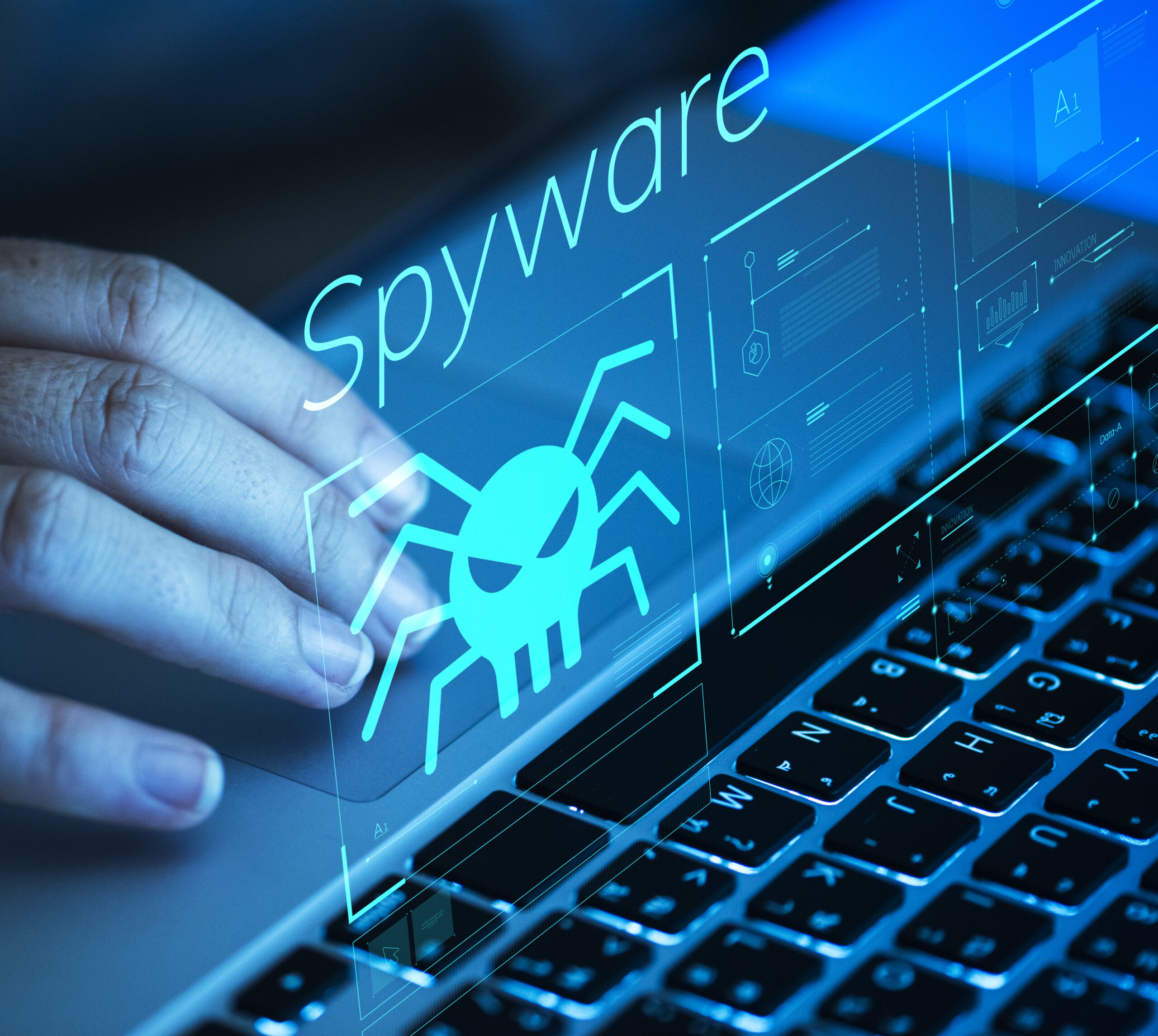
Spyware is malicious software designed to infiltrate devices and collect information without your consent.
This software works in the background, spying on your device's activity, such as the websites you visit, the passwords you enter, or even your private conversations. Sometimes, it can even take partial control of your computer or mobile to perform malicious activities.
Spyware compromises your privacy and digital assets, such as bank details, access credentials to sensitive services, or critical corporate information.

Most prominent types of spyware
Now that you know what spyware is, you should know that not all of them work the same way. Here are some of the most common types of spyware:
- Keyloggers. These programs record every keystroke you make on your device. They are used to capture passwords, usernames, and other sensitive data.
- Adware. While their primary intent is to display unwanted ads, some adware also collects browsing data to personalize those ads and sell your information to third parties.
- Remote Access Trojans (RATs). They allow attackers to control your device remotely. They can activate your camera, access your files, or even install other malware without you noticing.
- Mobile spyware. These programs are specifically designed to collect data from mobile phones. From text messages and GPS locations to contact lists or call recordings, this spyware can turn your phone into a spying tool.
Spyware: Famous Examples
Some spyware cases have achieved worldwide notoriety due to their massive impact:
- Pegasus. An extremely sophisticated spyware used to spy on journalists, activists, and politicians. This program infected mobile devices without the need for user interaction.
- CoolWebSearch. This spyware modifies the web browser to redirect to malicious pages and collect information from users.
- FinFisher. Used by governments and criminals alike, this spyware is designed to monitor devices in advanced ways.
These examples remind us that spyware is not a minor problem or limited to famous people. We can all be at risk at some point.
How do you remove spyware?
If you suspect that your device is compromised, here are the basic steps to detect and remove spyware:
- Identify signs of infection
- Your device is slower than usual.
- Unexpected pop-up ads appear.
- Changes to your browser, such as a new homepage.
- Unusually high battery or data consumption.
- Use anti-malware tools. Install reputable programs like Malwarebytes or Norton to scan your device and remove any detected spyware.
- Update your operating system and apps. Cybercriminals often exploit vulnerabilities in outdated software. Always keep your programs up to date.
- Reset your device to its factory settings. If the infection persists, this can be an extreme but effective solution. Make sure to back up your important data before proceeding.
- Consult a professional. If you're unsure how to proceed, contact a cybersecurity expert who can help you clean and protect your device.
How to protect yourself from future spyware attacks
You already know the primary keys to knowing what spyware is and should understand that prevention is the best defense against this attack. Here are some key practices:
- Only download apps from trusted sources. Avoid installing programs from unknown or dubious websites.
- Be wary of suspicious emails. Don't click on links or download files from senders you don't recognize.
- Use up-to-date security software. Install and keep a good antivirus and antimalware program active.
- Set up strong passwords. Use unique combinations of letters, numbers, and special characters, and avoid using the same password for different accounts.
- Turn on two-factor authentication (2FA). This adds an extra layer of security, making it difficult to gain unauthorized access even if someone gets your password.
Your Cyber Surveillance Ally: Protect What You Value Most
In today's landscape, protecting your digital assets is not an option but a necessity. At Enthec, we offer cyber surveillance solutions to protect your information from threats like spyware.
If you're looking to identify breaches and spot issues that have overcome guardrails, we're here to help.
Spyware is a real threat that affects both individuals and businesses. By knowing what it is, how it works, and how to prevent it, you can take a firm step towards protecting your digital assets. Remember: in cybersecurity, staying one step ahead of attackers is crucial.
Would you like to know more? Enthec is here to help.
Proactive security: What is it and why use it to prevent and detect threats and cyberattacks?
Proactive security involves a combination of technologies, processes, and practices designed to protect organizations from attacks or unauthorized access before they occur.
What is proactive security?
Proactive security is an approach to cybersecurity that focuses on preventing cyber threats before they occur rather than simply reacting to them once they have occurred.
This approach involves identifying and remediating security vulnerabilities and anticipating future threats to prevent potential security breaches.
Proactive safety is based on the premise that prevention is better than repair. Rather than waiting for a security incident to occur and then taking steps to minimize or repair the damage, organizations with a proactive approach to cybersecurity seek to prevent these incidents by identifying and eliminating vulnerabilities before cybercriminals can exploit them.
A key component of proactive cybersecurity is regularly assessing information systems and networks to identify vulnerabilities. This may involve conducting penetration tests, in which security experts attempt to breach the organization's systems to uncover weaknesses before attackers do.
Another proactive strategy is the continuous monitoring of the attack surface external to the organization – the internet, dark web, deep web, social media, and other sources – to detect leaked information, open breaches, exposed system vulnerabilities, and suspicious activity. This involves the use of continuously functioning automated cyber intelligence tools for real-time threat detection.
Security training is also an important aspect of proactive cybersecurity. By educating employees on security best practices and keeping them informed about the latest threats and attack tactics, organizations can reduce the risk of security breaches occurring due to human error or a lack of security knowledge.
By taking a proactive approach to security, organizations empower themselves to prevent threats before they occur, minimizing the risk of cyberattacks and protecting their valuable information assets.
Why use a proactive approach to security?
Today, cybersecurity is a critical concern for all organizations. However, many companies still take a reactive approach, responding to threats as they occur, and organizations need to adopt a proactive attitude to security due to the advantages it brings:
- Attack prevention. Proactive security focuses on preventing attacks before they happen. This is achieved by identifying and remediating vulnerabilities and anticipating future threats. By doing so, organizations avoid the costly downtime and data loss associated with consummate cyberattacks.
- Cost savings. Although implementing proactive security measures may require an upfront investment, the cost of these measures is often much lower than the cost of responding to a cyberattack and its aftermath. In addition, successful cyberattacks can lead to regulatory fines and litigation, which cause financial damage.
- Reputation protection. A cyberattack can significantly damage an organization's reputation. Your customers and business partners will lose trust in a company that can't protect their data. By taking a proactive approach, organizations demonstrate their commitment to data security, thereby enhancing their reputation.
- Compliance. Most countries have strict rules and regulations around data security. By taking a proactive approach, organizations can ensure they comply with these standards, thus avoiding fines and penalties, while facilitating partnerships and internationalization.
- Guarantee of business continuity. Organizations can avoid system downtime and keep their operations running smoothly by identifying and fixing vulnerabilities before they are exploited.
- Competitive advantage. Organizations that demonstrate a solid commitment to cybersecurity have a competitive advantage in an increasingly digitized market. Customers and business partners often prefer to do business with companies that take data security seriously.
Proactive Security Best Practices for Detecting Cyberattacks
A proactive security attitude involves deploying a series of best practices in the organization's cybersecurity strategy.
Endpoint Detection and Response (EDR)
It provides continuous visibility into network endpoints and enables rapid responses to cyber threats. EDR collects and analyzes endpoint data to detect, investigate, and prevent threats.
This proactive solution enables organizations to identify abnormal behavior, perform forensic analysis, and mitigate risks before they become security incidents, thereby improving their overall security posture.
Data Loss Prevention (DLP)
It focuses on identifying, monitoring, and protecting data in use, in motion, and at rest. DLP uses security policies to classify and protect sensitive and critical information, preventing users from sending, storing, or using sensitive data inappropriately.
By detecting potential data breaches before they occur, DLP helps organizations prevent the exposure of valuable information, comply with regulations, and protect their reputation.
Vulnerability Detection
Monitoring the external attack surface and locating exposed vulnerabilities is an effective proactive cybersecurity practice. It consists of identifying, classifying, and prioritizing vulnerabilities in the corporate system that are accessible to the public.
This practice allows organizations to detect potential cyberattack entry points, providing a clear view of potential threats. By locating and remediating these vulnerabilities, organizations strengthen their cybersecurity strategy, prevent intrusions, and minimize the impact of any attacks. This practice is essential for effective cybersecurity management.
Disaster Recovery Plan
It prepares an organization to respond to a cyberattack. It includes procedures for detecting, evaluating, and recovering from security incidents.
This plan helps minimize damage, accelerate recovery, and protect data integrity. It is essential to maintain business continuity, protect the company's reputation, and ensure customer trust. The goal is to restore normal operations as quickly as possible after a cyberattack.
Benefits of Proactive Security
Staying one step ahead of cybercriminals makes it possible to neutralize attacks before they are executed or minimize their consequences if they cannot be avoided.
A proactive attitude to security provides the organization with the following advantages:
Threat Anticipation
By anticipating threats, organizations can take preventative measures to protect their systems and data, reducing the risk of security breaches and minimizing the impact of any attacks.
Strengthening the relationship with the customer
Proactive cybersecurity strengthens the customer relationship by building trust and security. Customers value their privacy and the protection of their data.
By implementing proactive measures, organizations demonstrate their commitment to customer data security. This increases customer satisfaction, improves retention, and attracts new customers. In addition, in the event of a cyberattack, a quick and effective response can minimize the impact on customers, maintaining their trust in the organization.

Reducing business risk
Proactive cybersecurity reduces business risk by preventing cyberattacks. By identifying and mitigating vulnerabilities, exposure to threats is minimized, protecting the integrity of data and systems.
This avoids costly outages and information loss, maintaining customer trust while complying with privacy and data protection regulations. Proactive cybersecurity protects the company's value and reputation.
To stay up-to-date in this sector, we encourage you to access our content→ The 5 cybersecurity trends you need to know.
Discover the Kartos by Enthec CTEM platform
Kartos Corporate Threat Watchbots, the Continuous Threat Exposure Management platform for companies developed by Enthec, provides organizations with the most evolved Cyber Surveillance capabilities on the market to respond to attacks' evolutions and trends.
Using Artificial Intelligence internally developed and working automatedly and continuously, Kartos by Enthec obtains and delivers data on companies' open and exposed vulnerabilities, providing real-time alarms and issuing reports on their cybersecurity status and that of their value chain.
In this way, Kartos allows organizations to implement a proactive approach in their cybersecurity strategy and ensure the detection and nullification of open breaches and exposed vulnerabilities before they are used to execute a cyberattack.
If you would like to learn more about how Kartos can help you implement a proactive approach in your cybersecurity strategy, don´t hesitate to contact us.