



Offensive AI: How to Protect Yourself from Its Attacks
Artificial intelligence has ceased to be a science fiction concept and has become a tool present in the daily lives of businesses and users. However, its development is not always used for legitimate purposes. Offensive AI is already a reality and is changing the rules of the game in the world of cybersecurity.
This type of technology is used to automate and sophisticate cyberattacks,allowing attackers to work with greater speed, precision, and adaptability. From tailored phishing attacks to developing harder-to-detect malware, offensive AI multiplies the scale and impact of threats.
Before discussing how to prevent these types of risks, it is essential to emphasize that prevention and early detection are more crucial than ever today. This is where comes into play tools like Kartos, the Continuous Threat Exposure Management (CTEM) solution developed by Enthec.
Kartos enables organizations to continually monitor their level of exposure to attacks, including those driven by offensive AI, and take action before it's too late.
What is offensive AI, and why is it so dangerous?
When we talk about offensive AI, we refer to the use of algorithms and artificial intelligence models to attack systems, networks, or users.. Unlike traditional cyberattack techniques, offensive AI can learn and improve itself with each attempt, adapting to the defenses it encounters.
Some examples of AI cyberattacks include:
- Hyper-targeted Phishing: messages tailored to each victim, with language and style that perfectly mimic real contacts.
- Vulnerability Automation: AI can analyze thousands of systems in seconds to find weaknesses.
- Malware polymorphic: Malicious programs that constantly change their code to avoid being detected by antivirus software.
- Deepfakes and content manipulation: Fake videos, audios, and images that can fool even trained professionals.

How an AI cyberattack works
Although it may seem like a highly technical process, the operation of a cyberattack with artificial intelligence follows a recognizable structure:
- Gathering information: AI crawls social media, forums, and leaked databases to gather information about the victim or the organization.
- Vulnerability analysis: Using mass scanning techniques, AI identifies potential entry points.
- Attack design: A personalized plan is developed to optimize the probability of success.
- Automated execution: The attack is launched, adjusting in real time according to the defenses it encounters.
- Further learning: AI records the results and uses them to refine future attempts.
This ability to learn and improve continuously makes offensive AI a challenge that cannot be combated with static security measures.
You might be interested→AI vs. AI: The duel between artificial intelligences in the cybersecurity war
Strategies to protect yourself against offensive AI
The key to protecting yourself against this threat is to anticipate and reduce the exposure.. This is where concepts such as CTEM come into play, which proposes continuous risk monitoring and management.
1. Full visibility of your digital footprint
You can't protect what you don't know. Maintaining an up-to-date inventory of exposed digital assets (domains, subdomains, corporate emails, etc.) is the first step. Tools like Kartos perform this monitoring continuously, alerting you to new exposures.
2. Simulation and testing of attacks
The Red Team exercises and controlled simulations allow you to understand how your organization would react to a real attack. This includes testing specific offensive AI scenarios to uncover vulnerabilities before attackers do.
4. Real-time monitoring and response
It's not enough to have firewalls and antivirus software. You need to have detection and response systems (EDR/XDR) that analyze behaviors, not just known signatures.
The difference between protecting a company and protecting an individual
Although offensive AI techniques can affect anyone, the level of risk and the approach to protection differ.
- In companies:the main objective is to protect sensitive data and critical operations. Solutions like Kartos allow centralized and continuous control of all digital assets, minimizing exposure.
- In individuals: protection is based on preventing identity theft, impersonation, or fraudulent economic activity. To achieve this, Enthec offers Qondar, a cybersecurity tool designed for individuals who need to know if their personal data has been exposed or is being misused.
How Kartos fits into the fight against offensive AI
Kartos is not just a simple alert system. It is a platform that integrates the CTEM philosophy, providing:
- Dynamic inventory of exposed assets.
- Continuous analysis of threats and vulnerabilities.
- Early warnings of potential incidents, including those originating from offensive AI.
- Centralized panel to make quick decisions based on accurate information.
By incorporating this approach, companies not only react to attacks but also prevent risk scenarios before they occur.
The future of offensive AI and cybersecurity
Everything points to the fact that AI cyberattacks will continue to grow in number and complexity.. This doesn't mean that defense is lost, but it does mean that it will require constant evolution in protection strategies.
The combination of advanced technology, adaptive processes, and continuous training will be the foundation for mitigating the impact of these threats. Companies like Enthec, with solutions like Kartos and Qondar, are already leading this change.
The Offensive AI is changing the way we understand cybersecurity. . Its ability to learn, adapt, and scale attacks demands a proactive and dynamic approach to defense.
Whether you are a company that manages critical information or an individual concerned about your privacy, having tools for Continuous Threat Exposure Management is a necessity.
Do you want to know how to protect your organization from cyberattacks with artificial intelligence? Find out how Kartos can give you the edge you need.


Threat actors and your information security: what every consumer should know
We all leave a trail of information on the internet: photos on social networks, bank details, medical records, online purchases... and, although it may seem exaggerated, this information is valuable.
So-called threat actors are responsible for trying to exploit this data, whether for financial gain, espionage, extortion, or even for fun. Knowing who they are, how they operate, and what tools exist to protect us is essential to keeping our digital lives safe.
Before delving into the subject, it is worth introducing Qondar, Enthec’s cyber surveillance tool designed specifically for individuals. It is not an antivirus or a simple ad blocker: Qondar performs Continuous Threat Exposure Management (CTEM), proactively monitoring potential leaks or risks in your digital footprint, so you can act before an incident occurs.
What is a threat actor?
In the context of cybersecurity, a threat actor is any person, group, or organization with the intent and capability to carry out malicious activities against systems, networks, or information. They aren't always isolated hackers in a dark room; sometimes they are companies, organized groups, or even government entities.
Although the term may sound technical, in practice, it refers to the identity behind a cyberattack,. and knowing it is the first step to preventing risks.
Types of threat actors in cybersecurity
Cybersecurity experts often classify threat actors into several categories based on their motivations, resources, and methods.. Let's look at the most common ones:
1. Cybercriminals
They seek direct financial gain. They carry out attacks by threat actors such as phishing, credential theft, or malware installation to steal banking data. They often operate in clandestine networks and sell information on the dark web.
2. Hacktivists
Motivated by political or social causes, they use cyberattacks to draw attention to a cause. They may leak confidential information from governments or companies as a form of protest.
3. Insiders or internal threats
They are employees, former employees, or collaborators who already have access to the information and use it for their own benefit or out of revenge. This type of threat is difficult to detect because it comes from within.
4. States or government-sponsored groups
Their actions are linked to espionage, sabotage, and cyberwarfare. They have highly advanced resources, and their attacks can last for months without detection.
5. Script kiddies
Users with limited technical knowledge who employ pre-made tools to attack systems. Although less sophisticated, they can cause significant damage.
How threat actors act
Methods change over time, but some patterns repeat themselves:
- Phishing and smishing: emails or messages that impersonate companies to steal data.
- Malware and ransomware: Malicious programs that steal information or block access in exchange for a ransom.
- Brute force attacks: automated attempts to guess passwords.
- Exploitation of vulnerabilities: involves exploiting security flaws in software or devices.
- Social engineering: through social engineering, people are manipulated into providing data or performing unsafe actions.
The key is that each attack has an actor with a specific motivation behind it.. And that motivation dictates the type of threat.
Why are individuals also targeted?
There is a common misconception that only large companies or public figures are targets of cybersecurity threat actors. However, individuals are also exposed:
- Personal data is sold on the dark web.
- Access to bank or cryptocurrency accounts.
- Kidnapping of essential photos or documents.
- Identity theft for fraud.
According to the report “Data Breach Investigations Report 2025” from Verizon, 60% of data breaches include a human element, whether it be an error, a misconfiguration, or the voluntary (albeit deceived) provision of information.
How to protect your information from threat actors
The good news is that protecting yourself is possible if preventive measures are taken and the appropriate tools are used.
1. Control your digital footprint
Search your name online to see what information is publicly available. Set your social media privacy settings appropriately.
You may be interested in→ How to erase or reduce your digital footprint and minimize the risk of cyberattacks.
2. Use strong and unique passwords
Avoid using the same password for everything. Learn how to manage passwords or use a password manager and enable two-step authentication.
3. Keep your devices updated
Updates not only bring improvements, but also security patches against vulnerabilities.
4. Be wary of links and attachments
Before clicking on a link or opening a file, verify its source. If in doubt, it's best not to interact.
5. Use continuous threat exposure management solutions
This is where Qondar becomes an ally. This tool, developed by Enthec, continuously analyzes your digital footprint, detects if your information appears in leaked databases or if there are risks associated with your credentials, and alerts you so you can take immediate action.
Qondar: Your personal defense against threat actors
While many security solutions are reactive (acting only after an attack has already occurred), Qondar is proactive. Thanks to the CTEM (Continuous Threat Exposure Management) capabilities, the tool:
- Monitors continuously for possible leaks of your data.
- Identifies threats on forums, social media, the dark web, and other sources.
- Prioritizes the risks so you know what to attend to first.
- Notifies immediately when exposure is detected.
This means that it not only protects you from a targeted attack, but it also helps you reduce your exposure before threat actors can act.
Cybersecurity is not an issue exclusive to companies or governments. Every person is a potential target for a threat actor.. And while we can't prevent them from happening, we can reduce our exposure and react in time.
With tools like Enthec's Qondar, prevention ceases to be a complex task and becomes an accessible habit for anyone. Continuous threat exposure management is not just a technical concept; it's the most effective way to keep your information under control and out of the reach of those who want to take advantage of it.
Start today to discover your digital footprint and protect it before it's too late.

AI vs. AI: The duel between artificial intelligences in the cybersecurity war
.Artificial intelligence not only makes our daily tasks easier, but it also wages invisible battles on the internet. Until recently, cyberattacks were carried out by human hackers; we're now entering a new, much more complex scenario: IA vs IA.
On this new front, artificial intelligences face each other. . On the one hand, we have malicious artificial intelligence, trained to discover vulnerabilities, evade security controls, or automate cyberattacks. On the other hand, defensive AI works to detect, analyze, and neutralize these threats. And all this happens in milliseconds.
In the midst of this silent struggle, companies need tools that not only react but also anticipate the opponent's moves. . And that's where Kartos comes in, the solution designed by Enthec for companies that want to be one step ahead.
What is Kartos, and why does it stand out in this war?
Kartos is a cyber-surveillance solution developed by Enthec, designed to help organizations continuously manage their threat exposure.. The objective is clear: to offer a detailed, accurate, and up-to-date view of the cyber risk that companies face from the outside in—that is, from the attacker's perspective.
Using advanced technology and an AI-based architecture, Kartos analyzes, detects, and alerts on exposed assets, security breaches, data leaks, and other key indicators that cybercriminals could exploit.
It's not just about monitoring. Kartos interprets information and helps prioritize actionsso that cybersecurity leaders can make informed and rapid decisions in an environment where every second counts. These types of solutions help us stay protected and avoid falling victim to the next automated attack.
Discover how Kartos can help you protect your business right now. Request a free demo and see how it works in your real-life environment.
AI vs. AI: A real-life battle or science fiction?
What a few years ago might have sounded like a futuristic movie script is now a reality in the digital world. On this new game board, Artificial intelligences compete against each other, with a speed and precision that surpasses human intervention.
The new dynamics of automated cybercrime
For years, cyberattacks were mainly the work of individuals or organized groups. Today, thanks to the accessibility of specific algorithms and platforms, attackers use artificial intelligence to automate their strategies.
From phishing to more sophisticated tools that test thousands of passwords per second, AI has become a dangerous weapon in the wrong hands.
At the same time, cybersecurity teams have not been left behind. They are developing systems that use machine learning and predictive analytics to detect suspicious patterns, anticipate movements, and close doors before they are opened.
The battle of IA vs IA is already underway.
Why is offensive AI so difficult to detect?
One of the reasons this war is so complex is that the AI used by attackers learns and evolves rapidly. . They can modify their behavior, disguise themselves as legitimate traffic, or replicate user habits to avoid suspicion.
According to a study by the consulting firm Capgemini, 97% of companies say they have suffered security breaches related to artificial intelligence,. which shows that defense against AI is no longer a luxury but a necessity.

From prevention to continuous management: the role of CTEM
Now, traditional prevention falls short,and it's necessary to adopt models that operate continuously and automatically. The CTEM approach has become an essential tool for companies that want to maintain control in an environment where attackers learn and adapt faster than ever.
What is CTEM, and why is it so important?
Continuous Threat Exposure Management (CTEM) is an approach that is proactive and adaptive, allowing organizations to continuously and automatically understand, assess, and reduce their exposure to cyber risk. In today's environment, where cyberattacks can be directed and executed by artificial intelligence, having a static system is no longer an option.
Unlike traditional methods, which rely on periodic reviews or manual audits, the CTEM model evolves in real time and adapts to the pace set by offensive AI. Threats no longer wait; they are generated, learned, and mutated with the same algorithmic logic that should defend us.
And in an environment where intelligences attack and defend, the key is to detect the unknown before the attacking AI does.. Continuous threat exposure monitoring (CTEM) enables defenses to not only react to, but also anticipate adversary movements with a constant, live data-driven approach.
How does Kartos fit into this approach?
Kartos not only detects exposed assets (such as open domains, servers, or services) but also classifies and assesses their criticality and puts them in context with real-world data.. The AI built into the tool learns from the environment, analyzes behaviors, and improves its alerting capabilities over time.
This continuous focus results in a lower probability of incidents and greater response capacity when something unexpected happens. Instead of putting out fires, companies can anticipate and make decisions before a problem erupts.
AI vs. AI and the future of cybersecurity
The evolution of cybersecurity is closely linked to the evolution of AI. As threats are becoming more intelligent and more autonomous,defenses must be equally dynamic. The future points to collaborative artificial intelligence, which will play a key role in anticipating, containing, and neutralizing attacks before they materialize.
Are we prepared for what's coming?
The good news is that most organizations are already beginning to understand that the traditional cybersecurity model is becoming obsolete. But the bad news is that attackers are always looking for ways to get ahead, and in many cases, they succeed.
In this scenario, the key is to combine technology, processes, and human talent.. AI doesn't replace professionals, but it does enhance their response and analysis capabilities. Tools like Kartos allow security teams to focus their efforts where it really matters.
Furthermore, in the not-too-distant future, we are likely to see collaborative AI,which will not only react but also work in a network with other defenses to stop attacks in real time and on a large scale, a collective artificial intelligence at the service of global cybersecurity.
The AI vs. AI war is not a distant threat; it is the present of cybersecurity. Every day, thousands of attacks are launched and stopped without our knowledge, thanks to systems that learn, adapt, and respond autonomously.
For companies, the best strategy is not to wait to be attacked, but to prepare before it happens.
Enthec, with its innovative approach to cyber-surveillance and commitment to continuous threat management, is an essential ally in this new digital era for achieving maximum security thanks to artificial intelligence.

Bot Attacks: What They Are and How to Stop Them
We spend more and more time online, use multiple devices throughout the day, and move fluidly between websites, apps, and social media.
But while we browse, bots do too. And many of them are looking for vulnerabilities, stealing data, or crashing servers.. This is called a bot attack.
In this article, we are going to explain what exactly a bot attack is, why they are a real threat to both individuals and businesses, and how you can protect yourself effectively. . We will also tell you about Qondar, an Enthec tool designed to help you with that protection.
What is a bot attack?
A bot is an automated program designed to perform tasks without human intervention. In principle, they're not bad: some bots are used to index web pages (like Google's), to automate repetitive tasks, or even to provide customer service.
The problem arises when they are used for malicious purposes.. So we're talking about bot attacks: automated actions aimed at exploiting, spying on, or harming systems, services, or people.
Bot attacks can take many forms. Some common examples include:
- Bots that force passwords through dictionary attacks or brute force.
- Bots that fill out forms en masse to saturate a system.
- Bots that generate fake traffic to manipulate statistics or bring down a website.
- Bots that crawl the Internet for sensitive information, including sensitive data that is poorly protected.
The key is in its volume: a single bot is usually not a problem. The danger lies in the botnets, also called bot networks:thousands (or even millions) of coordinated bots acting simultaneously. They are fast, persistent, and challenging to detect.
The impact of bot attacks
Bot attacks are not a distant threat, nor are they exclusive to large corporations. Any company or person with an online presence can be a target.. And the consequences are not small:
- Data theft, personal or corporate.
- Loss of reputation, if the attack compromises sensitive information or affects the service.
- Economic impact that result from website crashes, advertising fraud, or system saturation.
- Fines and penalties, especially if there is a data leak and the GDPR has not been complied with.
How do you know if you are a victim of a bot attack?
The indicators of a bot attack are usually:
- A sudden increase in web traffic without justification.
- Forms filled with false data or incomplete.
- Failed login attempts to your social networks en masse.
- Slow or unstable performance in your digital services.
- Security alerts related to unusual accesses.
Often, these indicators can go unnoticed or appear to be isolated technical problems. That's why it's essential to have active monitoring tools that not only react when it's too late, but also continuously monitor your exposure to threats.
If you would like to delve deeper into some of the aspects discussed:
▷ How to prevent identity theft on social networks
▷ How to manage business passwords and credentials easily and securely to avoid online threats
Qondar: Active surveillance against digital threats
You don't need to have a website with millions of visitors to worry about bots. Individual users can also suffer from these types of attacks: credential theft, identity theft, exposure of personal data...
For these cases, Enthec offers Qondar, a tool designed to protect your digital identity.. It's beneficial for freelancers, managers, C-level executives, and anyone looking to control their online presence.
What if I'm worried about my business?
This is where it comes Kartos, Enthec's solution designed for companies that want to take control of their digital security. Kartos is not just an antivirus or a firewall: it's a Continuous Threat Exposure Management (CTEM) tool.
Kartos monitors social networks, forums, domains, leaks, and public databases to give you a complete picture of your digital exposure. It's like having a cyber intelligence team working 24/7, but automated, fast, and scalable.
How to stop a bot attack (or prevent it from happening)
Bot attacks don't just affect businesses. Your personal email, social networks, online banking, or even your purchase history are potential targets for these types of threats. Therefore, you must take preventive measures before an incident puts your information or digital identity at risk.
Here are some key recommendations to protect yourself:
1. Strengthen your passwords and access
Avoid using the same password across multiple services and combine letters, numbers, and symbols. Whenever possible, Activate two-step verification: This way, even if a bot steals your password, it will still need a second code to access.
2. Watch your digital footprint
A bot may be collecting information about you without you realizing it. Qondar, Enthec's solution for individuals, continuously monitors whether your personal data, passwords, or documents have been leaked on the web or dark web, and alerts you before they can be used in fraud.
3. Keep your devices updated
Both the operating system and the applications you use should always be at their most recent version. Many vulnerabilities exploited by bot attacks have already been fixed in the updates, but if you don't install them, you're still exposed.
4. Be careful what you share
Posting too much information on social media can make it easier for a bot to build a very detailed profile about you. Adjust your account privacy settings and think twice before uploading personal or location information.
5. Use real-time protection
In addition to a good antivirus, having a tool like Qondar allows you to receive alerts when your digital identity is at risk, even if the breach occurred outside of your devices.
The future of fighting bots
Artificial intelligence has made it easier to create more sophisticated and difficult-to-detect bots. At the same time, Cybersecurity also relies on AI to defend.. The key is to stay one step ahead.
Tools such as Kartos and Qondar offer that strategic advantage: anticipating threats instead of always lagging. And that, in the digital world, is essential.
Don't wait to be a victim. Start monitoring your digital security today with Enthec.
Do you have questions about how to protect your business or personal data from bots and online threats? Contact the Enthec team and receive personalized advice for your case.
Do you know the 5 phases of cyberattacks?
Cyberattacks have become one of the biggest threats to businesses of all sizes. We're no longer just talking about large corporations: any organization connected to the Internet is a potential target.
Have you ever wondered how cybercriminals act?What steps do they take before launching an attack? Understanding the typical phases of a cyberattack is essential to being able to anticipate, protect, and respond effectively.
The first thing we're going to look at is how we can get ahead of attackers. This is where are essential tools like Kartos, Enthec's cyber surveillance solution designed specifically for businesses.. Kartos enables organizations to perform Continuous Threat Exposure Management (CTEM), which means it doesn't just react to incidents, but analyzes and proactively monitors potential attack vectors. Detect, classify, and alert on real risks before they become a problem.
If you are concerned about the security of your company, Kartos can help you understand where you are vulnerable and how to protect yourself best.
Why is it important to know the phases of a cyberattack?
Understanding the phases of a cyberattack not only helps us protect ourselves better but also allows us to detect anomalies before damage is done.. Each phase offers an opportunity to stop the attacker if you have the right tools. From reconnaissance to final execution, there's a clear strategy that cybercriminals follow time and time again.
Let's break down this process so you can identify each step and understand how it affects your business security.
Phase 1: Recognition (or passive recognition)
The first step of any cyberattack is the same as that of any well-planned operation: gather information.
Attackers research their target to understand its structure, identify its weaknesses, and locate possible entry points.. This collection can be done passively, without directly interacting with the organization, using public sources such as:
- Corporate web pages
- Profiles on social networks
- Information leaked on forums or the dark web
- Domains, subdomains, and public DNS records
During this phase, it is also common to look for exposed credentials, sensitive data, or behavioral patterns that can be exploited later.
Kartos automatically detects this type of exposure in open and hidden sources, allowing action to be taken before information is located for an actual attack.
Phase 2: Vulnerability Scanning and Analysis
Once the attacker has sufficient information, they move on to the scanning phase. This is a more active interaction with the target infrastructure.
The most common at this stage is:
- Detect open ports
- Scan active services
- Scan systems and applications for known vulnerabilities
For example, if a company uses an older version of software that has security flaws, an attacker can exploit this vulnerability to plan their entry.
These types of actions can go unnoticed if there are no monitoring systems in place. Continuous monitoring, such as that offered by Kartos, alerts you to abnormal changes or unusual access.

Phase 3: Initial Access (Exploitation)
At this point, the attacker has already identified where to sneak in. This is the most delicate phase, as it involves the login.
It can be done in multiple ways:
- Exploiting a software vulnerability
- Using leaked or stolen credentials
- Through phishing or social engineering
- Through poorly configured remote access
Once inside, the objective is clear: maintain undetected access and move towards more critical systems.
At this point, if you do not have a well-configured alert system or active surveillance of the digital perimeter, the attacker can operate without raising suspicion for days or even weeks.
Phase 4: Up and lateral movements
It's not enough to just get in. Now it's time to explore the network from within, search for administrator credentials, access sensitive databases, servers, or storage systems.
The attacker tries to escalate privileges and move through systems stealthily.. His goals can range from data breaches to creating ransomware that shuts down the entire network.
This is where many companies realize the attack is too late. However, continuous management of threat exposure, as we find in Kartos, allows us to detect suspicious signs much earlier.
Phase 5: Execution and final objectives
The last phase varies depending on the attacker's intention:
- Filter data and sell it on the black market.
- Encrypt systems and ask for a ransom (ransomware).
- Sabotage services, damage reputation, or cause losses.
- Install rear doors for future attacks
This is the most destructive stage, and often the only time the victim even realizes the problem. Response time is crucial.
You may be interested in→ How to protect yourself amid a wave of cyberattacks on businesses.
How can Kartos help you deal with the stages of cyberattacks?
Kartos works since phase zero.. Even before the attacker begins his reconnaissance, it is already watching for you.
Its main advantages:
- 24/7 Cyber Surveillance in open sources, deep, and dark web
- Early warnings about exposed credentials, fake domains, or dangerous configurations
- Tracking your attack surface in real time
- Periodic threat exposure reports and action recommendations
In addition, it does not require any implementation in the corporate IT system for its operation, and that is why it is ideal for both large companies and SMEs.
The phases of a cyberattack do not occur overnight:they're part of a carefully designed strategy. But they're also an opportunity: If you're aware of them, you can identify warning signs early.
That's why tools like Kartos by Enthec are essential today. It's not just about protecting your company; it's about understanding its exposure and acting before it's too late.

Fake news in companies: How can you tell if your brand is being used to spread misinformation?
Social media, forums, and messaging channels are potent tools, but they can also become weapons when used for malicious purposes.
One of the most significant risks for any company today is the spread of fake news about the company,. and we're not just talking about large corporations; any brand can fall victim to a disinformation campaign.
But how do you know if your company is being used to spread false content? How can you detect if your brand image is being manipulated to deceive the public, damage your reputation, or even influence consumer or investment decisions?
Detecting fake news targeting companies or those who use brands to create confusion is not a simple task. It requires constant focus, a global perspective, and tools that enable timely action. For example, Kartos, the solution for Continuous Threat Exposure Management (CTEM) by Enthec.
Kartos allows companies to monitor their digital exposure in real time, detecting everything from data breaches to Spear Phishing,malicious mentions, impersonations, or fake content involving the brand. Its value lies not only in its technical analysis but also in its ability to alert and provide helpful context for quick and accurate action.
What is fake news, and why should you be concerned as a business?
The fake news is not just harmless rumors. In a business context, they can have serious consequences. The news doesn't have to be credible; it just needs to be circulating.
A viral tweet, a dubious blog post, or a mention on a high-traffic forum can be enough to generate distrust, damage your brand image, or alter the behavior of your customers and partners.
You may be interested in→ Brand Protection: Strategies to Prevent Fraudulent Use.
Fake news as a tool to damage companies
In many cases, these campaigns are not accidental. They can be driven by competitors, disgruntled former employees, ideological groups, or even anonymous users seeking attention.
There are also cases in which disinformation serves an economic objective, such as causing a drop in stock market value, boycotting a product, or influencing a public tender.
How to detect if your brand is being used to spread misinformation?
It's not always obvious. Sometimes, disinformation doesn't attack directly, but uses your name or logo in manipulated contextsto give credence to other people's hoaxes. Here are some warning signs:
Sudden increase in negative mentions
If your brand starts appearing in negative conversations for no apparent reason, it could be a sign. Tools like Kartos enable the detection of these fluctuations in real time.
Viral campaigns with dubious content
A viral video or tweet that involves your brand and generates controversy should be analyzed as soon as possible, especially if it lacks a clear source or contains false information.
Unauthorized use of your logo or visual identity
One of the most common ways fake news harms companies is through visual impersonation, where fake news or advertisements are created using legitimate logos to confuse users.
Fake pages or profiles on social networks
The appearance of accounts with names similar to yours, sharing toxic content or misinformation, is a clear warning sign.
How fake news affects a company
The impact can vary depending on the sector, the size of the company, or the nature of the campaign, but some common effects include:
Impact on reputation
Even if the news is proven to be false, the fingerprint remains.. Many users only see the headline, not the correction.
Loss of customers or partners
A well-orchestrated campaign can generate distrust among customers or suppliers, affecting agreements, sales, or future negotiations.
Legal or financial risk
.Fake news can harm companies or brands, and it can also influence stock market prices, public tenders, or internal audits.
What can you do if you detect fake news about your company?
It's not enough to deny in a statement. The response must be fast, coordinated, and constant.. Here are some key steps:
Act quickly, but with data
Avoid responding impulsively. First, verify the source and scope. Tools such as Kartos help you identify the root of the content and its spread.
Contact platforms or media
If the content is hosted on a social network, blog, or other media, you can request its removal for defamation or identity theft purposes.
Issue a clear public response
Sometimes it's a good idea to publish that the news is fake through official channels, clarifying the misunderstanding and providing verified data.
Use the legal team when necessary
If the campaign has caused real damage or is a coordinated action, consider taking legal action for defamation or unfair competition.
How can Kartos by Enthec help you?
Kartos is a solution developed by Enthec, designed for companies that understand that protecting their digital brand is no longer optional. . Through automated cyber surveillance processes, Kartos detects:
- Malicious mentions of your brand in open sources and on the deep web.
- False or manipulative content involving your brand, products, or representatives.
- Orchestrated campaigns that seek to affect your reputation or digital presence.
By offering a base approach focused on CTEM (Continuous Threat Exposure Management), Kartos enables continuous monitoring, making it ideal for anticipating these risks and acting before the situation gets out of control.
Worried about how your company is mentioned online? Discover how Kartos can help you safeguard your brand.
The fake news in companies is a growing threat in a digital environment where viral misinformation often supersedes the truth. The most important thing is to know how to detect them promptly and act effectively.
Today, taking care of your brand isn't just a matter of marketing or communications; it's a comprehensive approach that encompasses all aspects of your business. It's a strategic necessity. And having solutions like Kartos can help you maintain your reputation in a world where misinformation spreads faster than the truth.
Do you want to protect your business from fake news and other digital threats? Discover more about Kartos by Enthec and start managing your digital presence today.
Cybersecurity in law firms: How to know if your confidential data has already been exposed
Information is worth more than ever.. In the case of law firms, this takes on a critical dimension: we are not just talking about sensitive personal data, but of highly confidential information related to court cases, contracts, businesses, inheritances, international litigation, or even legal strategies.
The leak of just one of these documents can lead to devastating consequences for both clients and the office itself.
And the question is inevitable: Do you know if your data, or that of your customers, has already been exposed without your knowledge?
Cybersecurity in law firms: an urgent challenge
Cybersecurity in law firms is not a luxury, nor a fad, nor something that can be put off until tomorrow. It is an obligation.
The legal sector has historically been one of the most conservative in technological terms, resulting in a significant gap between the digitalization of its processes and the level of protection it offers.
As law firms adopt technological solutions to work more efficiently, so do attack vectors: emails, misconfigured servers, employee accounts, collaborative tools, and a long list that cybercriminals are well aware of.
Is your data already exposed online?
One of the most common mistakes is to think that only large companies or high-profile cases are targeted. The reality is different: Attacks do not discriminate by size or notoriety;. in many cases, criminals target smaller firms because they know their defenses are weaker.
This is where the concept of Continuous Threat Exposure Management (CTEM) comes in. This approach goes beyond traditional antivirus or firewalls: it's about constantly monitoring the digital perimeter of your office to detect leaks, vulnerabilities, or data that are already circulating on the network, including the dark web, without anyone being aware of it.
Kartos: A cybersecurity tool to take control
In this context, Kartos, the solution developed by Enthec, stands out as a cyber surveillance tool adapted to the real needs of law firms.
Kartos is a Continuous Threat Exposure Management platform that monitors in real-time whether a firm's digital assets, such as domains, emails, credentials, and devices, are compromised or at risk. And not only to protect the firm itself, but also to monitor the cybersecurity status of its clients, providing a competitive and operational advantage that is increasingly valued in the legal sector.
Thanks to Kartos, law firms can:
- Detect proactively leaks of confidential information.
- Verify if there are email accounts associated with the office that have been compromised.
- Obtain certified digital evidence that may be helpful in litigation or claims by clients who are victims of cyberattacks.
- Control regulatory compliance for client companies, thereby offering an added service of great value.
What if your firm could detect a security issue at a client company before it becomes news?
How do you know if your office has already been affected?
Red Flags
Your firm may have suffered a security breach without your knowledge. Some signs that should put you on alert:
- Clients are receiving suspicious emails that appear to come from the firm.
- Appearance of your internal documents in strange places.
- Leaks of emails, passwords, or databases.
- Suspicious movements in bank accounts related to the firm.
- Unexplained incidents such as account lockouts or unauthorized changes.
If you want to take action before these warning signs occur, we recommend you take a look at our post → How to manage business passwords and credentials easily and securely to avoid online threats.
Check if you are exposed
The best way to check if your data is already circulating on the internet or in shadowy environments, such as the dark web, is to use specialized tools. Kartos automates this analysis and generates a comprehensive report that identifies assets at risk, their location, level of exposure, and the severity of the issue.
The important thing is not only to detect, but to act quickly.
The legal advantage of staying ahead with cybersecurity in law firms
It's not just about protecting the firm's interests. In the legal context, anticipating risks is also a matter of professional responsibility.. If your client suffers a cyberattack and you, as their legal advisor, can provide objective and verifiable reports on the status of their digital exposure, you will be taking a step forward in your role as a professional.
In addition, Kartos provides the possibility of monitoring the cybersecurity of third parties, making it a key tool for expanding services in the area of technological compliance or claims related to cybersecurity incidents.
And what about self-employed workers or individual lawyers?
For self-employed legal professionals, Enthec has also developed Qondar, a personal cyber surveillance solution that allows you to detect whether your digital identity has been compromised.
Cybersecurity is part of your professional reputation as a lawyer.
The prestige of a law firm is not based solely on its successful rulings or the reputation of its partners. Today, trust is also built in the digital realm.. A client who submits their most personal or business documentation expects, at the very least, that it will be responsibly protected.
Cybersecurity in law firms is no longer an option; it's an operational and reputational necessity.
Want to know if your firm data has already been exposed?
Start now by contacting us, and discover Kartos, Enthec's solution that is already helping law firms throughout Spain protect their reputation and clients.
Applying OSINT to cybersecurity: A valuable guide for professionals and teams
Protecting the information is no longer just a task for large corporations or government departments. Every company, regardless of size, is exposed to risks that evolve at a dizzying pace.
In this context, open source intelligence (OSINT) has become a key tool in cybersecurity. But what exactly does applying OSINT mean in the professional field, and how can it make a difference in an increasingly hostile digital environment?
Before delving into the details, it's worth highlighting the role of Kartos, Enthec's solution designed specifically for companies seeking to elevate their cybersecurity strategy to the next level. Kartos allows you to continuously monitor your exposure to external threats, automating processes for collecting and analyzing public information about the company, its employees, and its digital infrastructure.
What is OSINT?
The term OSINT (Open Source Intelligence)refers to a process by which publicly available information is collected, analyzed, and utilized, information that is legally accessible to anyone, to obtain practical knowledge.
In cybersecurity, this means detecting potential attack vectors before they are exploited, finding leaked information from an organization, or anticipating vulnerabilities using data available on the network.
Why is OSINT important in cybersecurity?
Applying OSINT techniques enables security teams to anticipate threats, gain a deeper understanding of their public exposure, and identify and address weaknesses before malicious actors can exploit them. It's like conducting an audit from the attacker's point of view.
Among the most relevant benefits, the following stand out:
- Early identification of information leaks.
- Detection of fake domains or profiles that impersonate the brand.
- Assessment of the level of exposure of key employees.
- Discovery of leaked credentials on forums and dark websites.
All of this can be accomplished without compromising the legality of the process, as all the information is extracted from open-source OSINT sources, including search engines, social networks, public databases, forums, among others.
The OSINT process step by step
Although there are many methodologies, the OSINT process is typically divided into five fundamental phases. Understanding them is key to effectively integrating this discipline into cybersecurity workflows.
1. Definition of objectives
Before you start searching for data, it's essential to know what you're looking for. This could include research on a specific company's exposure, a manager's fingerprint, or the evaluation of an external supplier.
2. Selection of OSINT sources
This is where open-source OSINT comes in: from Google and social media, to logs, DNS records, pastebin services, forums on the deep web, or platforms like Shodan or Have I Been Pwned.
3. Data collection
At this stage, we utilize automated or semi-automated OSINT tools to facilitate the gathering of large amounts of information. . This is essential to document this phase well, so that the data is traceable and verifiable.
4. Analysis and correlation
Data alone is worthless if it's not interpreted correctly. Here, the collected information is analyzed, irrelevant information is discarded, and hypotheses about potential risks or vulnerabilities are generated.
5. Presentation and performance
Once the level of exposure is understood, action is necessary: delete sensitive information, change leaked passwords, and contact platforms to remove unauthorized content, among other measures.
Apply OSINT with a strategic vision
OSINT is often associated with specific investigative tasks, such as "ethical hacking." However, the true power of OSINT lies in its integration into a continuous defense strategy, known as CTEM (Continuous Threat Exposure Management).
In this sense, Kartos allows you to make that leap in quality by offering:
- Daily automation of the OSINT cycle.
- Customized reports for each company.
- Proactive detection of leaks, malicious domains, data leaks, and impersonation.
- Integration with existing cybersecurity team workflows.
With a tool like Kartos, companies can stop being defensive and start playing offense digitally, understanding what sensitive information is being leaked or published without authorization.
Good practices for applying OSINT in teams
In addition to having adequate tools, it is essential to develop operational routines and internal policies that allow you to get the most out of OSINT:
- Train employees about what information they can share on networks.
- Establish periodic controls on the organization's digital footprint.
- Define clear responsibilities within the security team to manage these tasks.
- Combine OSINT with other disciplines, such as threat intelligence, red teaming, or risk management.
The use of OSINT in cybersecurity is not a fad or a mere technical curiosity. It is a real necessity in a context where every leaked or mismanaged piece of data can be a security breach.. Therefore, adopting a proactive approach, with tools like Enthec's Kartos, can mean a considerable advantage for companies that prioritize their digital security.
Cybersecurity is not just about reacting to incidents; it's about anticipating them. And to anticipate, nothing better than seeing what the attackers see.
Do you want to know what information about your company is circulating online before it's too late?
Discover Kartos, our solution that automates and monitors your exposure to digital threats. Start protecting your organization from a professional, real-time OSINT perspective. Contact us.
Enthec, specialists in cyber surveillance, OSINT, and proactive digital exposure management. With solutions like Kartos for businesses and Qondar for individual users, we help prevent rather than cure.
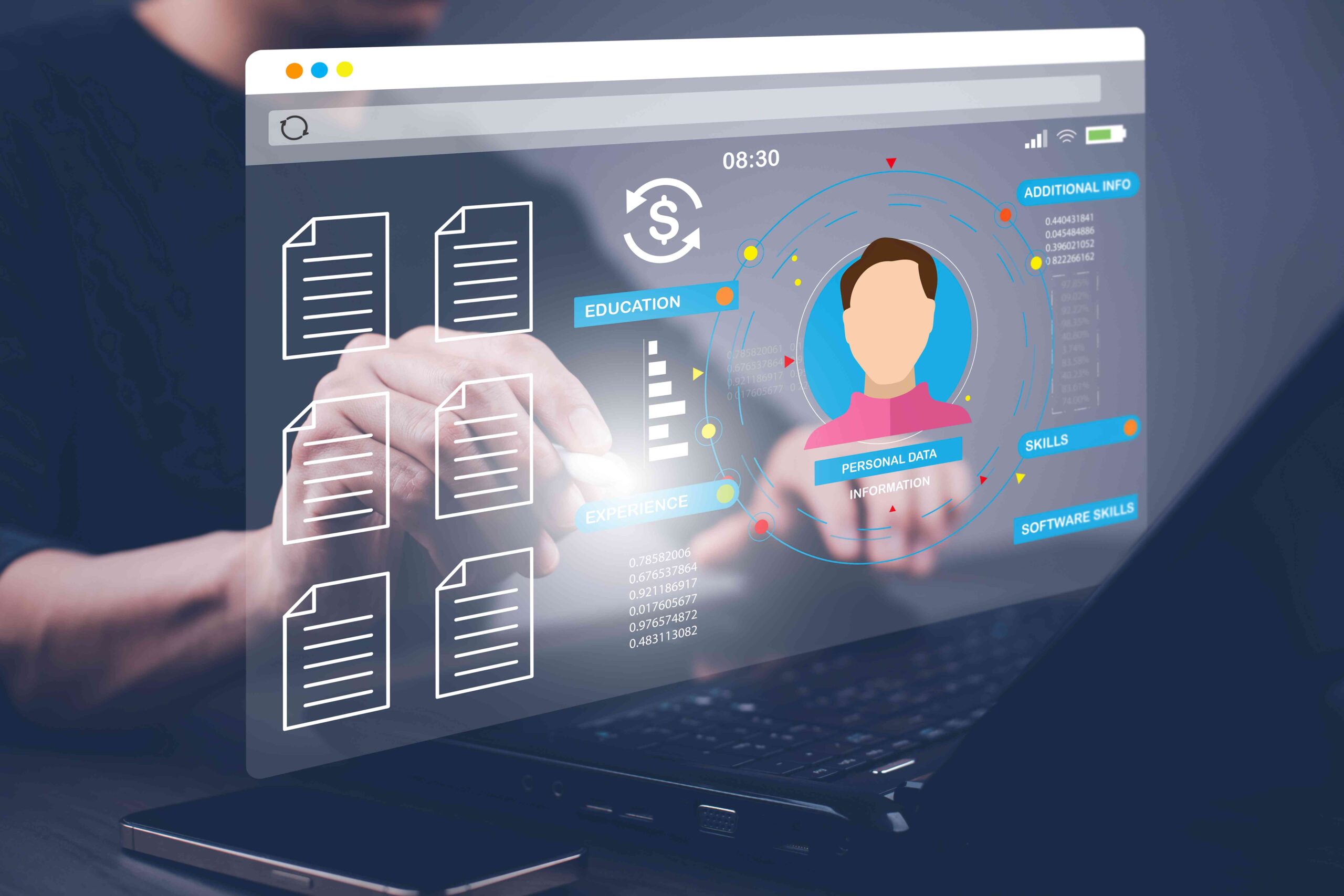
Is your sensitive data circulating on the internet without your knowledge? Here's how to check.
Shopping online, booking a trip, managing your bank account from your mobile phone, or simply signing up for a social network means leaving a trail. The worrying thing is that, often, we are not aware of the extent to which our sensitive data is exposed, or worse still, is already circulating on the network without our knowledge.
In this article, we will discuss how to verify if your sensitive data has been compromised, what types of information are considered critical under the GDPR, and how to protect it with specialized tools, such as Qondar.
First of all, what exactly is sensitive data?
Not all personal data is equally relevant or requires the same level of protection. According to the General Data Protection Regulation (GDPR), sensitive personal data is that which reveals:
- The ethnic or racial origin
- The political opinions
- The religious or philosophical convictions
- The Union membership
- Data genetic or biometric
- Data related to the health
- The sexual life or sexual orientation of a person
In addition to these, sensitive data is also considered to be that which, by its nature, may pose a greater risk if it falls into the wrong hands, such as identity documents, bank accounts, passwords, physical addresses, personal phone numbers, or information about your children.
Knowing what a person's sensitive data is is crucial to understanding why it is so attractive to cybercriminals.
You might be interested→ How to protect your digital identity against major threats.
Why is it so easy for your data to end up in the wrong hands?
In many cases, you're not doing anything wrong. One of the platforms you're registered with simply suffers a breach, or you inadvertently access an unsecured public Wi-Fi network. Even a simple download can open the door for your information to end up in a black market database.
The worrying thing is not just the leak itself, but the time that passes until the user finds. that data may have been circulating on obscure forums for months (or even years) without even knowing.
How do you know if your sensitive personal data is already online?
Digital exposure is more common than it seems
You don't have to be a public figure or a company executive to be a victim. Indiscriminate attacks are the most frequent, and many cybercriminals operate under the logic of “the more, the merrier.”
There are free platforms to check if your email or passwords have been leaked, such as Have I Been Pwned. However, these tools provide limited vision and shallow insight into the problem.
Qondar, your ally for continuous protection
This is where Qondar comes in, a solution developed by Enthec, specializing in cybersecurity and cyber surveillance. Qondar goes a step further than conventional platforms: it doesn't just alert you if your email has been leaked, but also performs a continuous surveillance on the open web, the deep web, and the dark web to detect whether your sensitive data is being traded, shared, or used without your consent.
Qondar is part of a new generation of Continuous Threat Exposure Management (CTEM) tools, a proactive approach that enables you to anticipate potential cyberattacks rather than just react after they occur.
Thanks to its automated intelligence engine, Qondar monitors your fingerprint and alerts you in real-time if any information is compromised, including passwords, card numbers, identification documents, or sensitive personal data.
What can I do if I discover my data has been leaked?
We recommend:
- Cambia tus contraseñas inmediatamente. Start managing passwords for your most sensitive accounts, including email, banking, and social media.
- Activate two-step verification whenever possible.
- Keep a close eye on your bank accounts and digital platforms with increased attention during the following months.
- Contact the affected services to know the extent of the leak.
- Consider using a tool like Qondar to receive early warnings and make timely decisions.
The importance of prevention: reacting is not enough
The reality is apparent: Protecting your sensitive data is not optional; it is necessary. . Doing it just once isn't very useful. Digital exposure is dynamic and constantly changing. Therefore, the approach must be continuous, as proposed by Continuous Threat Exposure Management.
With Qondar, you have a solution that is efficient, automatic, and in real-time, designed for individuals who value their privacy and security in today's digital world.
What sets Qondar apart from other solutions?
- Complete coverage: Tracking multiple layers of the internet, not just the surface.
- Proactive detection: Qondar doesn’t wait for a crisis to act.
- Simple interface: No advanced technical knowledge required.
- Clear and helpful alerts: You will know exactly what information is compromised.
Furthermore, being developed by Enthec, a company with extensive experience in the business field thanks to Kartos (the corporate solution), Qondar benefits from a solid and proven know-how record in the world of cybersecurity.
What if nothing has ever happened to me?
That is precisely the trap. Many leaks do not generate immediate effects. and can take months for someone to use that data against you. A hacked account could be silently used to spy on, send spam to, or even impersonate you on other platforms.
According to a 2022 Norton study,1 in 5 people in Spain have been victims of some cyber fraud,but only half were aware of it at the time it occurred. The other half discovered it late, after the damage had already been done.
Protect yourself now. Because tomorrow could be too late.
If you've made it this far, it's because you know something isn't quite right about how we protect (or don't protect) our information on the Internet. Good intentions are not enough.. Your information circulates, with or without your permission. The question is: do you want to know before it happens or after it happens?
Qondar can help you regain control. Start your digital surveillance today and keep your sensitive data out of the hands of cybercriminals.
Are you unsure whether your sensitive personal data has already been exposed? Find out today with Qondar. Because in the digital world, the best defense is anticipation.
Request more information here.